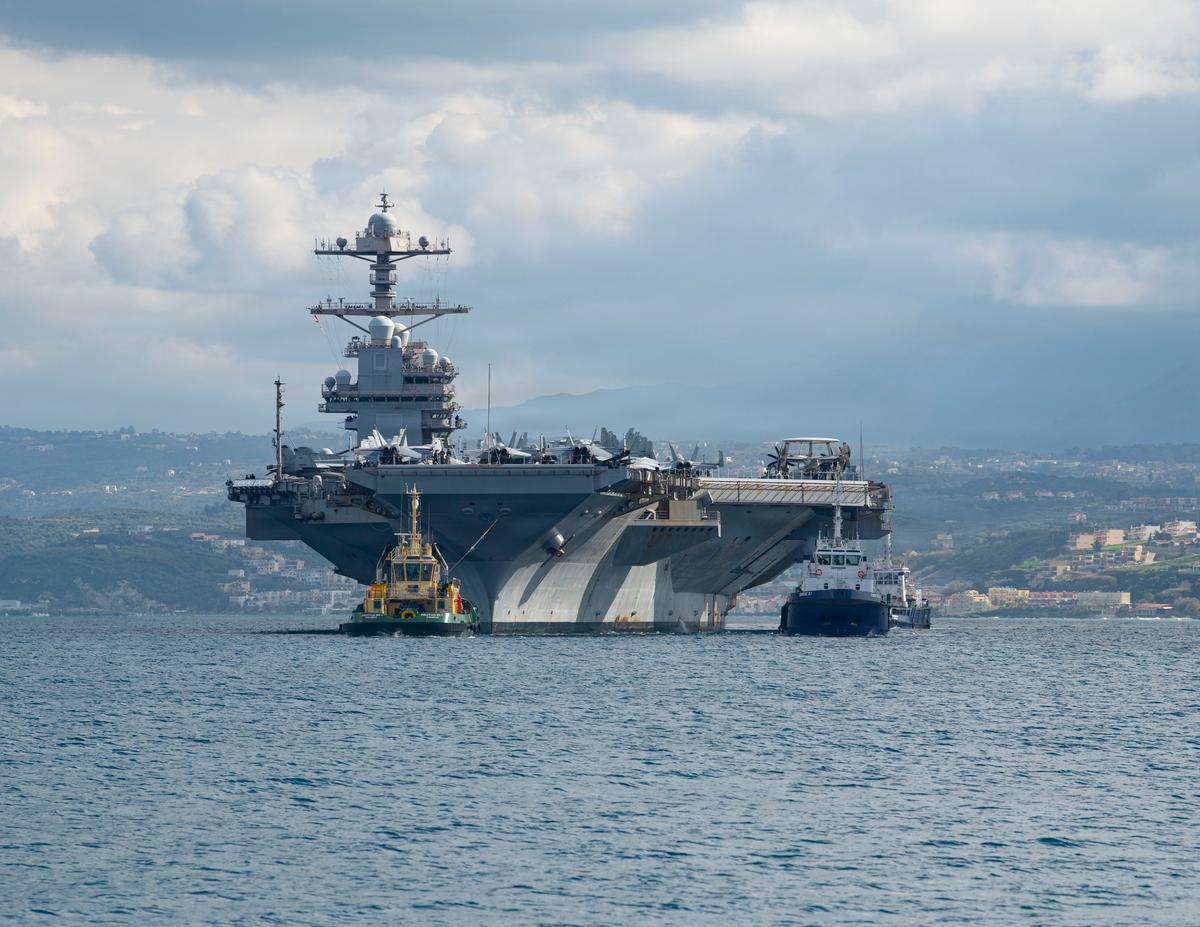
US Navy Is Reviewing Cost of Future Ford-Class Carriers to Ensure They ‘Make Sense’
Why It Matters
The outcome will determine whether the Navy continues to fund expensive Ford‑class carriers or pivots to more cost‑effective platforms, directly impacting future fleet composition and defense spending priorities.
Key Takeaways
- •Navy reviews Ford-class carrier costs for CVN-82, CVN-83.
- •Gerald R. Ford cost $13 billion; future ships lack price estimates.
- •Review includes build, sustainment, electromagnetic catapult ROI.
- •Findings due May 2026 could affect FY2027 shipbuilding budget.
- •Program scrutiny extends to all Navy acquisitions.
Pulse Analysis
The Navy’s decision to re‑examine the financial underpinnings of its next two Ford‑class carriers arrives at a pivotal moment for U.S. maritime power. With the Gerald R. Ford already costing roughly $13 billion to build, the lack of transparent procurement figures for CVN‑82 and CVN‑83 raises questions about affordability amid a $1.5 trillion defense budget. By scrutinizing both acquisition and life‑cycle costs, the service aims to ensure that each dollar spent aligns with strategic objectives and does not jeopardize other critical shipbuilding programs.
A core focus of the review is the electromagnetic aircraft launch system (EMALS), touted as a revolutionary upgrade over legacy steam catapults. Proponents argue EMALS delivers higher sortie rates, reduced maintenance, and crew savings that could offset its upfront expense. However, former Secretary Phelan highlighted the need for hard data to substantiate claims of a $5 billion savings narrative. The analysis will compare actual sortie generation, reliability metrics, and maintenance footprints against the Nimitz‑class baseline, providing a clearer picture of EMALS’ return on investment.
Budgetary implications extend beyond the carriers themselves. The FY 2027 Navy shipbuilding allocation of $65.8 billion funds 18 battle‑force ships and 16 auxiliaries under the Golden Fleet initiative. If the review uncovers cost overruns or marginal performance gains, Congress and the Pentagon may reconsider the mix of high‑cost carriers versus more numerous, lower‑cost vessels. The findings, due by the end of May 2026, could therefore reshape procurement strategy, influence future carrier design decisions, and set a precedent for rigorous cost‑benefit analysis across all Navy programs.
US Navy is reviewing cost of future Ford-class carriers to ensure they ‘make sense’
Comments
Want to join the conversation?
Loading comments...