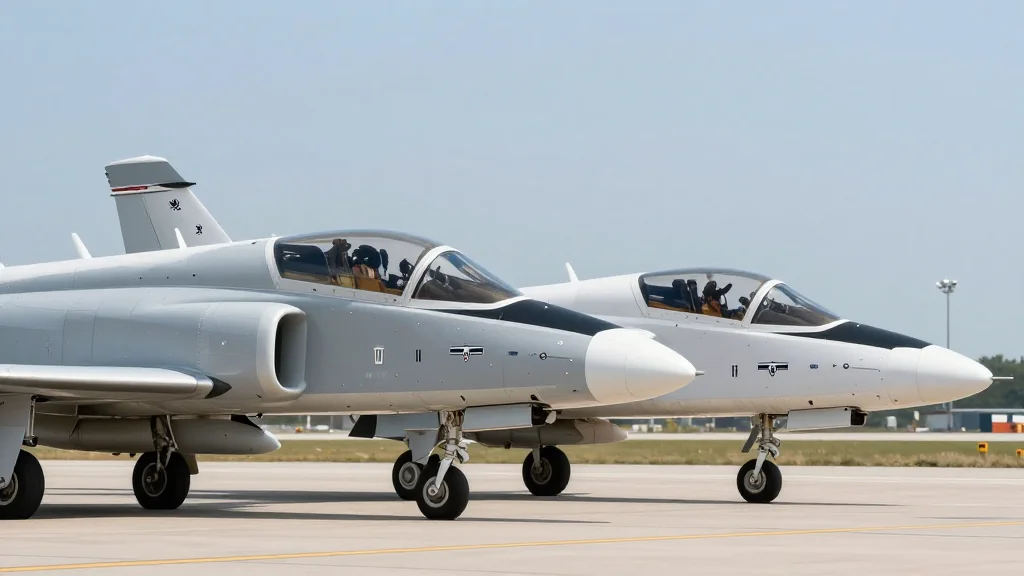
US Navy Jet Trainer Competition Down to Two Final Contenders
Companies Mentioned
Why It Matters
The chosen trainer will define the Navy’s pilot pipeline for a decade, influencing readiness and industrial competition in the defense aerospace sector.
Key Takeaways
- •Boeing and Lockheed Martin withdrew from UJTS competition
- •Two remaining contenders are Northrop Grumman and Textron
- •Navy seeks aircraft to replace T-45 Goshawk by 2030
- •Decision will shape training pipeline for Navy and Marine pilots
Pulse Analysis
The Undergraduate Jet Training System is the Navy’s cornerstone for converting newly commissioned officers into carrier‑qualified pilots. The legacy T‑45 Goshawk, in service since the mid‑1990s, is increasingly costly to maintain and lacks the performance envelope needed for modern combat aircraft. By modernizing the trainer fleet, the Navy aims to reduce attrition rates, lower operating costs, and better align training syllabi with fifth‑generation fighters like the F‑35C.
Northrop Grumman’s entry leverages its existing T‑38 platform, upgraded with advanced avionics, digital cockpit displays, and a more powerful engine to meet carrier‑compatible performance. Textron, meanwhile, proposes a derivative of its T‑6 platform, enhanced with composite airframe sections, fly‑by‑wire controls, and an open‑architecture mission system that can be reconfigured for emerging training needs. Both proposals promise lower acquisition costs than a clean‑sheet design, but they differ in growth potential and integration timelines, prompting the Navy to weigh immediate readiness against long‑term flexibility.
The outcome of this competition carries weight beyond pilot training. A contract award will inject billions of dollars into the U.S. aerospace supply chain, sustaining jobs at prime contractors and their subcontractors. Moreover, the selected trainer will influence future procurement strategies, potentially setting a precedent for modular, upgradable platforms across other service branches. As the Navy confronts evolving threats in the Indo‑Pacific, ensuring a steady flow of proficient aviators remains a strategic imperative, making the UJTS decision a bellwether for broader defense modernization efforts.
US Navy Jet Trainer Competition Down to Two Final Contenders
Comments
Want to join the conversation?
Loading comments...