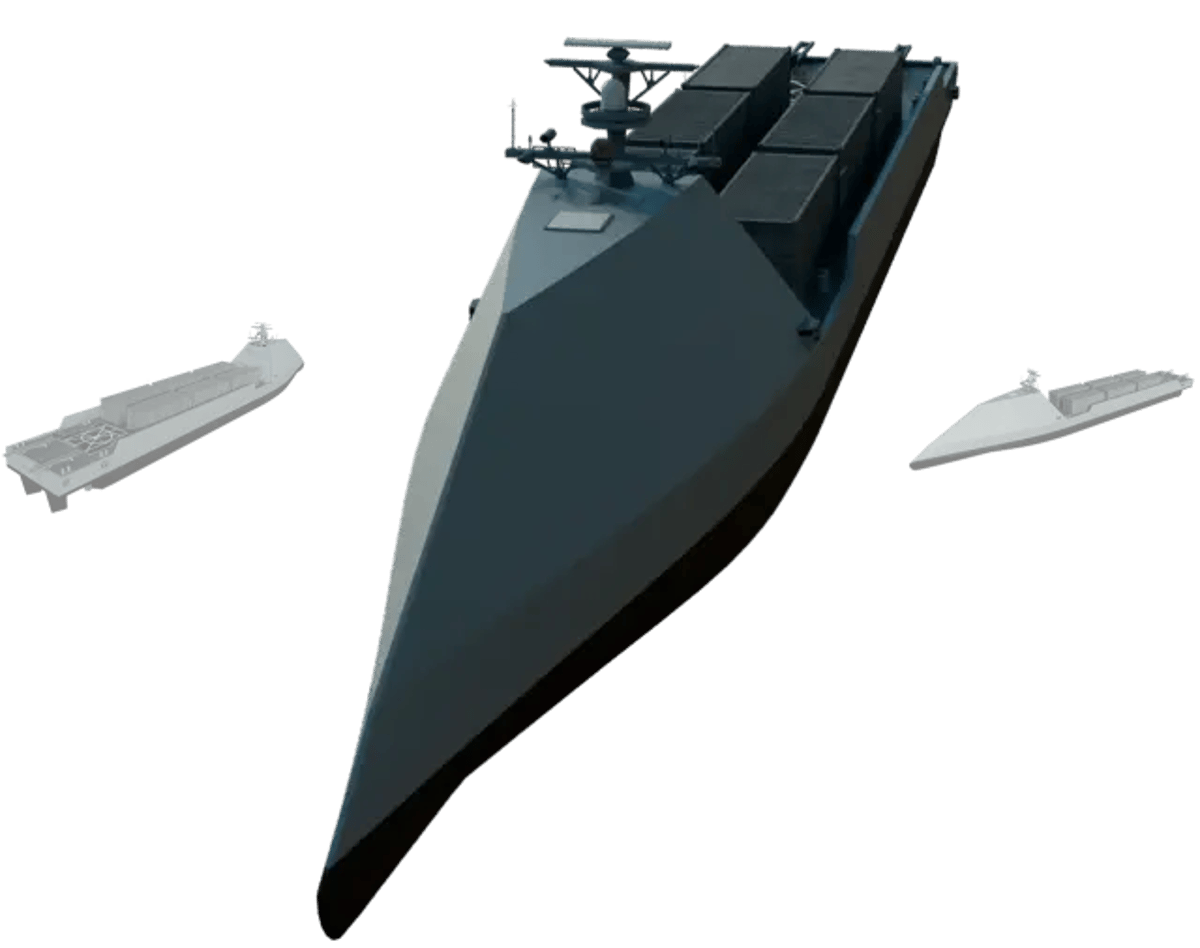
U.S. Navy Selects 7 Contenders for the MUSV Program
Companies Mentioned
Why It Matters
Accelerating MUSV development gives the Navy a cost‑effective way to replenish force numbers and expand autonomous capabilities, directly supporting its multi‑billion‑dollar unmanned fleet strategy.
Key Takeaways
- •Seven firms receive $15 million each for MUSV testing.
- •Vessels must travel 2,500 nm, carry 25 t payload, 25 kt speed.
- •FY 2026 budget allocates $1.95 billion, $3 billion over five years.
- •Plan calls for 81 MUSVs procured by FY 2031.
- •Marketplace procurement shifts R&D risk to industry, accelerating delivery.
Pulse Analysis
The Navy’s Medium Unmanned Surface Vessel (MUSV) program entered a critical phase this month, naming seven contenders to move from concept to sea‑trial status. Sea Machines, Leidos, Saronic Technologies, Galliano Marine Services, PacMar Technologies, Birdon and Huntington Ingalls Industries each secured an extra $15 million to fund a four‑month testing window that begins in June and wraps up in October. This infusion brings the FY 2026 allocation for MUSV to $1.95 billion, part of a broader $3 billion investment slated for the next five years. By front‑loading resources, the Navy hopes to validate multiple designs simultaneously and fast‑track the most promising vessels into low‑rate production.
The contract structure reflects a “marketplace” approach, pushing research, development and early production risk onto private firms rather than the services. Each MUSV must meet a demanding performance envelope: 2,500 nautical‑mile range, 25 metric‑ton payload, 25 knots in Sea State 4, and a degree of autonomous operation. Designers are leveraging modular, containerized payload bays that can be swapped for strike weapons, intelligence‑surveillance‑reconnaissance suites, or logistics cargo, enabling rapid mission re‑configuration. This flexibility not only reduces lifecycle costs but also aligns with the Navy’s broader push for plug‑and‑play unmanned platforms across surface and subsurface domains.
Strategically, the MUSV effort is a cornerstone of the Navy’s ambition to field 83 unmanned vessels by FY 2031, a fleet that will outsize its auxiliary ships while costing a fraction of traditional hulls. The FY 2026 budget earmarks 36 vessels, with incremental buys through FY 2031 to reach a total of 81 MUSVs, complementing other UUV and small USV programs. By embedding autonomy at scale, the service aims to regain numerical superiority, expand distributed lethality, and preserve combat power in contested littorals without the expense of manned warships.
U.S. Navy Selects 7 Contenders for the MUSV Program
Comments
Want to join the conversation?
Loading comments...