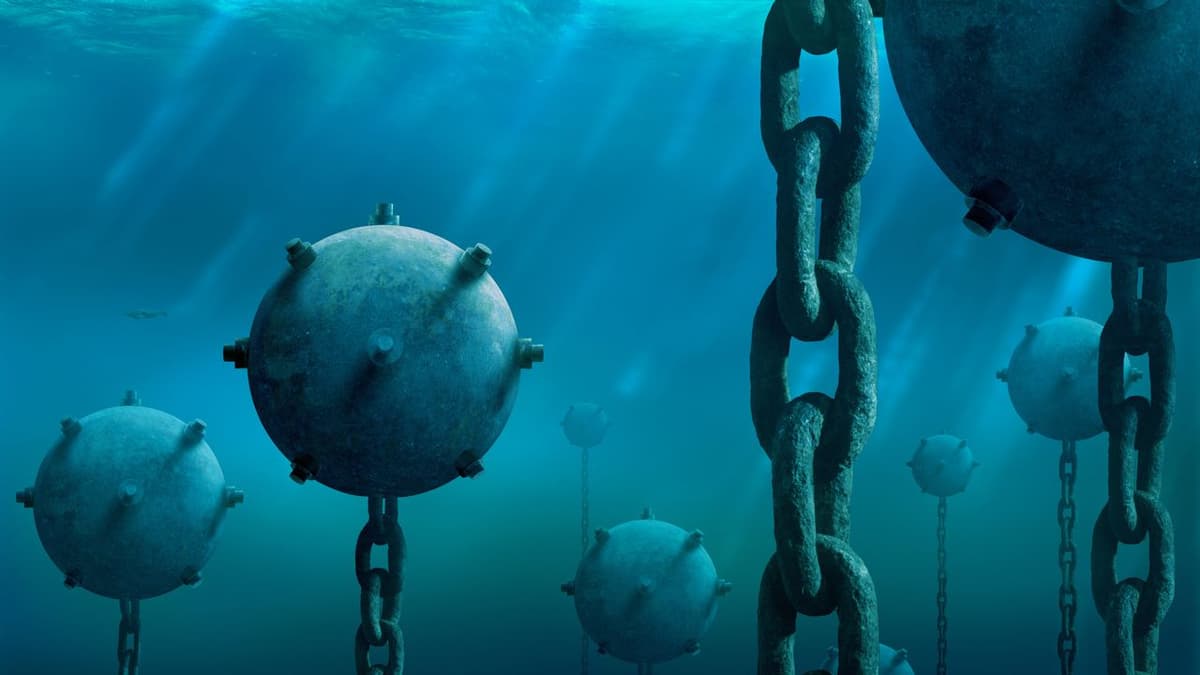
US Navy Signs Deal with AI Firm for Training Underwater Drones to Detect Mines in Strait of Hormuz — $100 Million Would Allow Drone Minesweepers to Update Their Detection Algorithms in Days Instead of Months
Why It Matters
The accelerated AI updates dramatically cut the time needed to counter emerging underwater threats, enhancing naval safety and preserving the flow of oil and cargo through a vital chokepoint. This contract also signals the Pentagon’s broader shift toward embedding generative AI across combat platforms.
Key Takeaways
- •Navy contracts Domino Data Lab for $99.7 million AI drone upgrade
- •Detection algorithms can be refreshed in days, not months
- •Technology targets mine threats in Strait of Hormuz
- •Real‑time sensor fusion enables on‑board model corrections
- •AI integration reduces sailor risk and speeds maritime trade flow
Pulse Analysis
The Strait of Hormuz remains one of the world’s most contested maritime corridors, where even a handful of hidden mines can halt the transit of millions of barrels of oil daily. Traditional mine‑countermeasure vessels rely on labor‑intensive sonar sweeps and lengthy post‑mission data analysis, creating bottlenecks that expose sailors to hostile environments. As geopolitical tensions with Iran flare, the Navy’s need for a faster, more autonomous solution has become a strategic imperative.
Domino Data Lab’s platform tackles this challenge by embedding a suite of AI models directly onto unmanned underwater vehicles (UUVs). Leveraging side‑scan sonar, high‑resolution cameras, and real‑time data pipelines, the system can detect anomalous shapes, classify mine types, and self‑correct its algorithms while in the field. This on‑board learning loop shrinks the update cycle from months—when engineers must return to shore‑based labs—to mere days, enabling rapid adaptation to novel Iranian mine designs or unexpected seabed conditions.
Beyond the immediate operational gains, the deal underscores a broader defense trend: the migration of generative and adaptive AI from cloud‑centric labs to edge‑deployed platforms. By proving that high‑stakes, safety‑critical missions can benefit from continuous AI refinement, the Navy sets a precedent for other services seeking to modernize legacy hardware. Industry observers anticipate a cascade of similar contracts, accelerating the commercial market for AI‑enabled autonomous systems and reshaping the future of maritime security.
US Navy signs deal with AI firm for training underwater drones to detect mines in Strait of Hormuz — $100 million would allow drone minesweepers to update their detection algorithms in days instead of months
Comments
Want to join the conversation?
Loading comments...