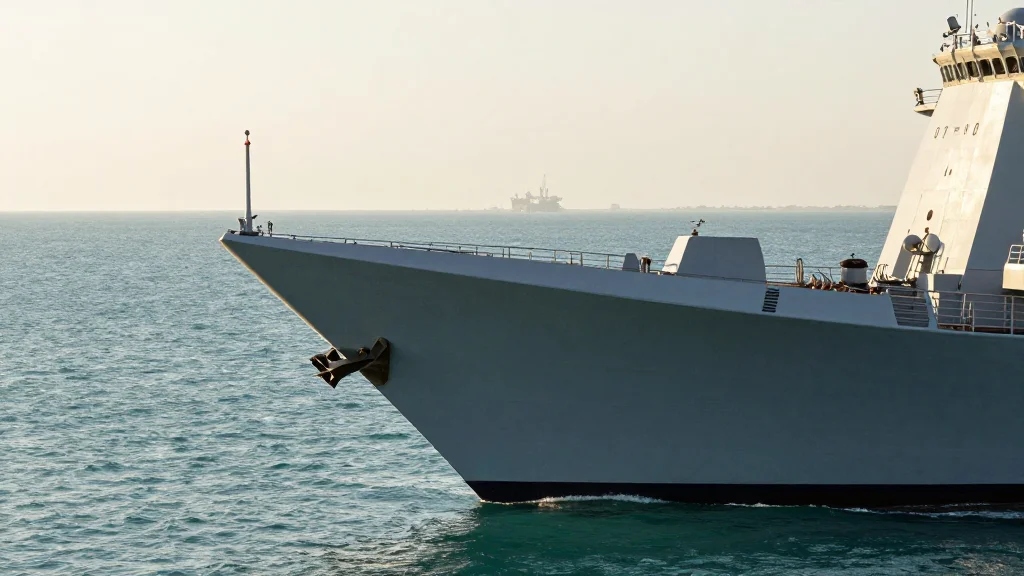
US Navy Starts Blockade of Iranian Ports Amid Trump-Pope Clash Over Iran War

Why It Matters
The blockade marks the first time the United States has imposed a comprehensive maritime embargo on Iranian ports since the 1979 revolution, signaling a willingness to use naval power to achieve diplomatic objectives. By targeting Iran’s export lifelines, the U.S. aims to force concessions on its nuclear program and regional behavior, but the move also risks widening the conflict, drawing in regional actors, and destabilizing global oil markets. The public feud between President Trump and Pope Leo XIV adds a diplomatic dimension rarely seen in defense affairs. The pope’s moral authority and calls for negotiation contrast sharply with Trump’s hard‑line posture, highlighting how non‑state actors can influence, or be drawn into, high‑stakes security calculations. The clash may affect U.S. soft power and complicate coalition‑building efforts needed to sustain a prolonged maritime operation.
Key Takeaways
- •U.S. Navy began a full blockade of Iranian ports on Monday at 10 a.m. EDT.
- •President Trump attacked Pope Leo XIV on Truth Social, linking the pope’s peace calls to “weak on crime.”
- •Iranian officials warned the blockade would provoke retaliation, citing “major untouched levers.”
- •Oil prices surged 7‑8 % after the announcement, with Brent crude reaching $102.29 a barrel.
- •The blockade allows non‑Iranian vessels to transit the Strait of Hormuz, a step down from Trump’s original vow.
Pulse Analysis
The decision to block Iranian ports reflects a strategic shift from limited naval posturing to a broader economic warfare campaign. Historically, the U.S. has relied on sanctions and targeted strikes to curb Tehran’s behavior; a full maritime embargo escalates the pressure by directly choking export revenue. However, the move also tests the limits of international maritime law, where freedom of navigation is a cornerstone principle. If the blockade persists, it could invite legal challenges at the International Court of Justice and strain relationships with allies who favor multilateral approaches.
From a market perspective, the immediate price spikes underscore how tightly linked defense actions are to energy economics. A sustained embargo could push oil prices well above $110 a barrel, prompting inflationary pressures in import‑dependent economies and potentially accelerating the shift toward alternative energy sources. Companies in the defense sector stand to benefit from increased demand for naval assets, mine‑countermeasure vessels, and surveillance platforms, while also facing heightened scrutiny over the cost and political fallout of prolonged deployments.
Politically, the Trump‑Pope confrontation illustrates how personal rhetoric can amplify geopolitical risks. By framing the pope’s peace advocacy as a betrayal, Trump not only alienates a global moral authority but also narrows the diplomatic space for de‑escalation. The pope’s influence, though soft, can sway public opinion and diplomatic overtures, especially among nations that view the Vatican as a neutral mediator. The clash may force U.S. policymakers to balance hard‑line tactics with the need for broader coalition support, a delicate act that will shape the next phase of the Gulf standoff.
US Navy Starts Blockade of Iranian Ports Amid Trump-Pope Clash Over Iran War
Comments
Want to join the conversation?
Loading comments...