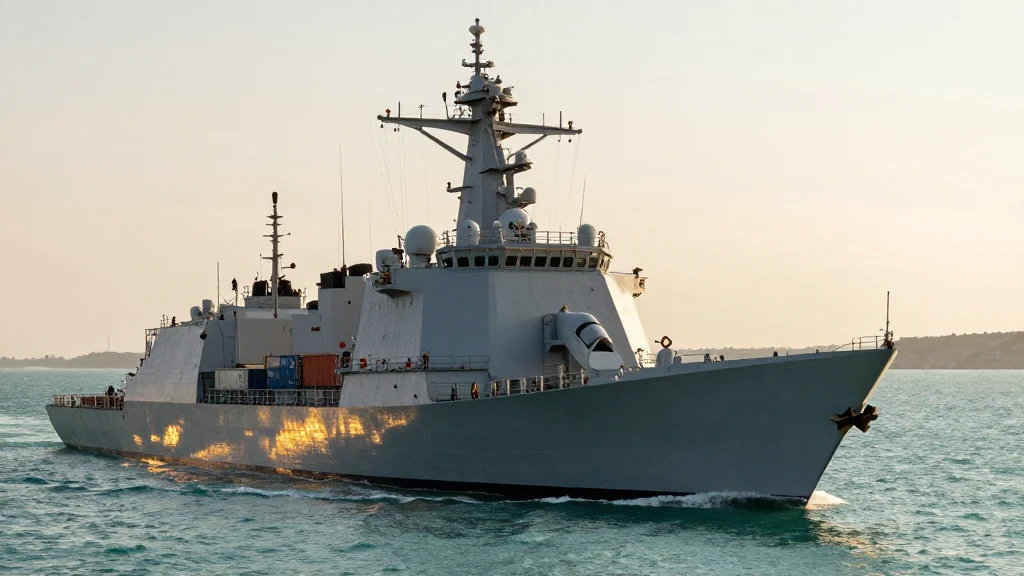
U.S. Navy Steps Up Escorts for Gulf Vessels as Bypass Pipelines Move Forward

Why It Matters
The U.S. Navy’s discreet escort of commercial vessels underscores a nuanced shift in American security strategy: maintaining freedom of navigation while avoiding overt confrontation in a volatile region. As Gulf states move toward bypass pipelines, the strategic relevance of the Strait of Hormuz could wane, reshaping the calculus for Iran, regional allies, and global energy markets. The United States’ willingness to provide quiet support signals to both allies and adversaries that it will continue to protect commercial interests, even as the underlying infrastructure evolves. If the bypass projects succeed, the reduced dependence on Hormuz could diminish Iran’s ability to leverage the strait as a political tool, potentially lowering the risk of future closures. Conversely, a decline in traffic might also reduce the justification for a heavy U.S. naval presence, prompting a reassessment of force allocation and budgeting for the Fifth Fleet. The current escort operations therefore serve as a barometer for how the United States balances deterrence, commercial security, and diplomatic restraint in a rapidly changing environment.
Key Takeaways
- •U.S. Navy is quietly escorting commercial ships through the Strait of Hormuz, per Zero Hedge.
- •Gulf states (Saudi Arabia, UAE, Oman) are advancing feasibility studies for bypass pipelines.
- •The strait handles about 20% of global oil shipments, making any security shift globally significant.
- •Assistance includes navigation support and security escorts; specific asset numbers were not disclosed.
- •The operation aims to maintain free flow of commerce while avoiding escalation with Iran.
Pulse Analysis
The United States is walking a tightrope between overt power projection and subtle risk mitigation. By opting for low‑visibility escort missions, Washington avoids the headline‑grabbing posturing that could provoke Tehran while still delivering a tangible security guarantee to commercial operators. This approach mirrors the broader trend of ‘smart’ naval engagement, where the presence of a few surface combatants and maritime patrol aircraft can deter hostile actions without the need for a massive carrier strike group.
Historically, the U.S. has used a heavy naval footprint in the Persian Gulf to reassure allies and deter aggression. The current strategy reflects a recalibration driven by two forces: the diminishing strategic value of Hormuz as bypass pipelines mature, and the domestic pressure to curtail defense spending. If the pipelines reduce transit volumes, the U.S. may gradually shift resources toward other theaters, but it will likely retain a rapid‑response capability to re‑escalate presence should the security environment deteriorate.
From a market perspective, the quiet escort program helps stabilize oil transport costs, which have been volatile amid geopolitical jitters. Traders can price in a lower risk premium for Hormuz‑bound cargoes, supporting steadier futures markets. However, the lack of transparency also introduces uncertainty: shipping firms cannot predict how long the U.S. will maintain this discreet support, nor how quickly the bypass projects will come online. The next phase will hinge on the interplay between infrastructure development timelines, regional diplomatic overtures, and the United States’ willingness to keep the safety net in place without drawing a new line of confrontation.
U.S. Navy Steps Up Escorts for Gulf Vessels as Bypass Pipelines Move Forward
Comments
Want to join the conversation?
Loading comments...