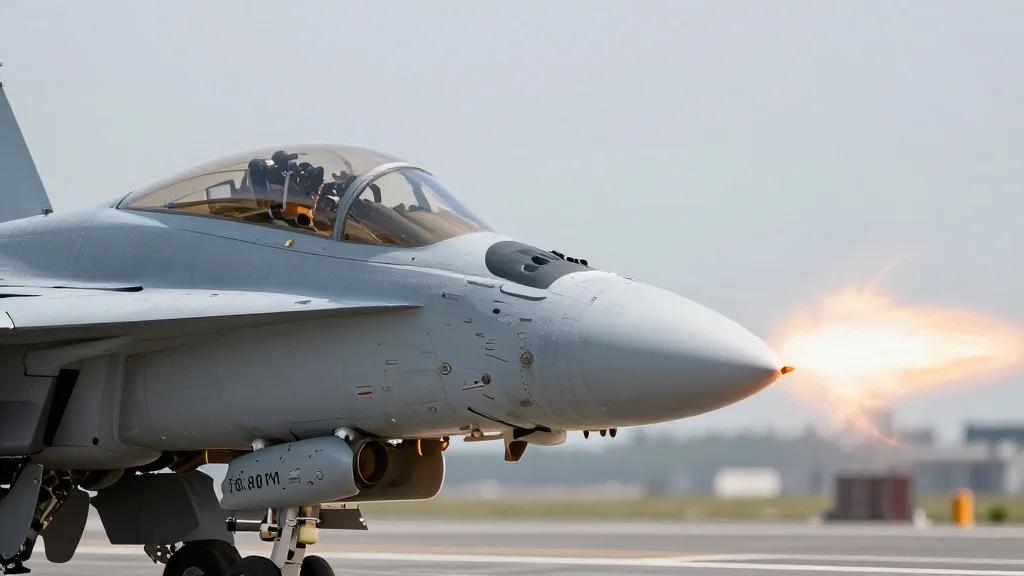
U.S. Navy Super Hornet Disables Iranian Tanker Breaching Hormuz Blockade

Why It Matters
The disabling of the M/T Hasna illustrates how the United States is willing to employ precise kinetic action to enforce sanctions and protect a critical global shipping lane. By targeting the tanker’s rudder rather than sinking the vessel, the Navy demonstrated a calibrated response designed to deter future violations without escalating to full‑scale conflict. The incident also highlights the interplay between military pressure and diplomatic negotiations, as the U.S. simultaneously pauses Project Freedom and pursues a memorandum with Iran. The outcome will influence regional stability, global oil markets, and the credibility of U.S. enforcement mechanisms in contested maritime zones. For allies and commercial operators, the event underscores the heightened risk environment in the Gulf of Oman and the importance of adhering to U.S. directives when navigating the Strait of Hormuz. A sustained blockade could disrupt oil flows, increase freight costs, and prompt broader geopolitical realignments, while a diplomatic resolution could restore a measure of normalcy to one of the world’s most vital trade arteries.
Key Takeaways
- •U.S. F/A‑18E Super Hornet fired 20 mm cannon rounds at Iran‑flagged M/T Hasna, disabling its rudder.
- •Blockade of the Strait of Hormuz was instituted on April 12 after a Trump announcement on Truth Social.
- •Project Freedom, a four‑week operation protecting commercial shipping, was paused pending diplomatic talks.
- •Approximately 15,000 U.S. service members are deployed around the strait to enforce the blockade.
- •Cease‑fire remains in place per Gen. Dan Caine, but negotiations for a memorandum to end hostilities are ongoing.
Pulse Analysis
The Hasna incident marks a tactical shift toward low‑level, precision strikes that achieve compliance without provoking a broader escalation. Historically, U.S. naval interdictions in the Persian Gulf have ranged from boarding operations to full‑scale missile engagements. By opting for a 20 mm cannon shot that merely crippled the vessel’s steering, the Navy signaled a calibrated use of force that respects the delicate cease‑fire while reinforcing the credibility of the blockade. This approach may become a template for future enforcement actions, especially as the United States balances kinetic deterrence with ongoing diplomatic overtures.
Economically, the Strait of Hormuz remains a linchpin of global energy supply. Any perception that the U.S. cannot reliably enforce its maritime restrictions could embolden Iran to test the limits of the blockade, potentially prompting a surge in oil prices. Conversely, a successful diplomatic resolution could lift the blockade, stabilizing markets but also raising questions about the long‑term efficacy of sanctions as a policy tool. The presence of 15,000 U.S. personnel underscores the high stakes and the resource commitment required to maintain a credible deterrent.
Looking ahead, the pause in Project Freedom suggests that Washington is weighing the political cost of continued kinetic operations against the strategic benefit of a negotiated settlement. If talks yield a memorandum, the U.S. may transition to a monitoring role rather than active interdiction, reshaping the operational posture in the Gulf. However, any breakdown in negotiations could see a rapid re‑escalation, with the Navy likely to revert to the same calibrated strikes that proved effective in the Hasna case. Stakeholders should monitor both the diplomatic track and any subsequent U.S. rules of engagement updates for signals about the future of maritime security in the region.
U.S. Navy Super Hornet disables Iranian tanker breaching Hormuz blockade
Comments
Want to join the conversation?
Loading comments...