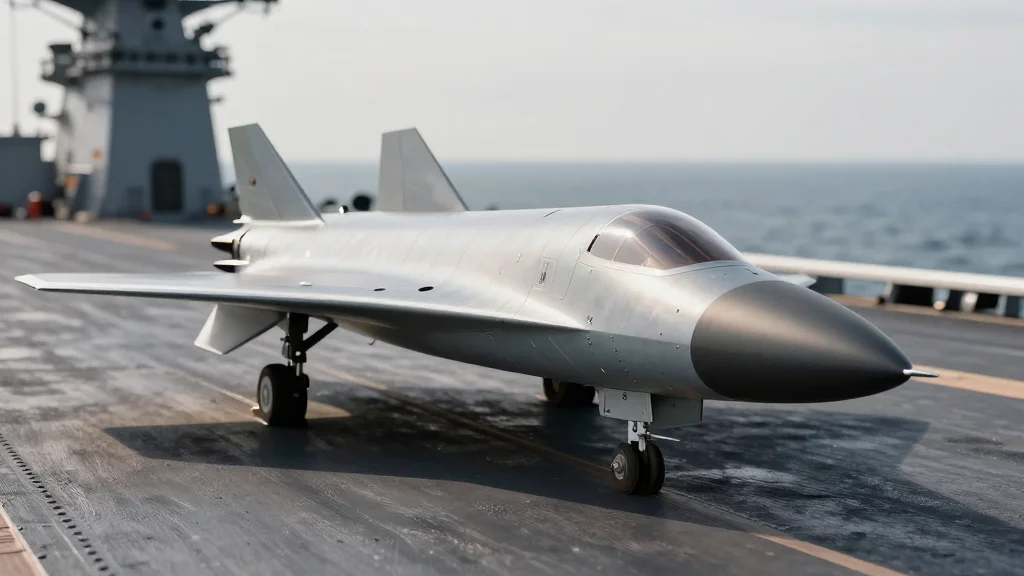
U.S. Navy to Procure ~4,500 Air‑Launched Hypersonic Missiles Under MACE Program

Companies Mentioned
Why It Matters
The MACE program represents a decisive shift toward mass‑produced hypersonic strike assets, moving the technology from a niche, high‑cost domain into a scalable, fleet‑wide capability. By embedding hypersonic missiles on carrier‑based aircraft, the Navy gains a rapid, sea‑based launch option that can penetrate advanced air‑defense systems, thereby enhancing deterrence and giving the United States a credible counter to peer adversaries investing heavily in similar weapons. Beyond the immediate tactical advantage, the program tests a procurement model that leverages small‑business innovation and aggressive timelines. If successful, it could serve as a template for future high‑technology acquisitions, accelerating the fielding of next‑generation systems while containing costs—a critical factor as defense budgets face competing priorities.
Key Takeaways
- •U.S. Navy plans to buy ~4,500 air‑launched hypersonic missiles under MACE.
- •$1.6 billion allocated for 4,157 missiles FY2028‑2031; $156 million for FY2027.
- •Average missile cost projected at $384,000, far lower than typical hypersonic weapons.
- •Castelion’s Blackbeard missile identified as likely winner; 95‑lb warhead, fits carrier‑based fighters.
- •Service entry targeted for 2027 with early operational capability the same year.
Pulse Analysis
The Navy’s MACE initiative is more than a procurement sprint; it is a strategic gamble on volume over singular performance. Historically, hypersonic programs have been characterized by low‑rate production and high unit costs, limiting their operational impact. By driving the per‑missile price below $400,000, the Navy is betting that sheer numbers will offset the relatively modest warhead size and that a dispersed, sea‑based launch architecture will complicate enemy targeting. This approach mirrors the shift seen in conventional precision‑strike munitions, where affordability enabled widespread adoption across platforms.
From a market perspective, the rapid award to a small firm like Castelion could reshape the defense industrial base. If the company can scale to 500‑plus missiles per year, it will demonstrate that boutique innovators can meet the demands of large‑scale warfighting, potentially prompting the Pentagon to lean more heavily on SBIR pathways for future high‑tech acquisitions. However, the program also carries risk: meeting aggressive cost and schedule targets will require a mature supply chain, rigorous testing, and seamless integration with legacy aircraft—areas where past hypersonic efforts have stumbled.
Strategically, the timing aligns with heightened great‑power competition in the Indo‑Pacific, where China and Russia are fielding their own hypersonic arsenals. By fielding a fleet‑wide hypersonic capability, the Navy not only bolsters its own deterrent posture but also forces adversaries to allocate resources to counter a threat that can be launched from carriers operating far from home ports. The success or failure of MACE will likely influence how the U.S. approaches hypersonic procurement across all services in the coming decade.
U.S. Navy to Procure ~4,500 Air‑Launched Hypersonic Missiles Under MACE Program
Comments
Want to join the conversation?
Loading comments...