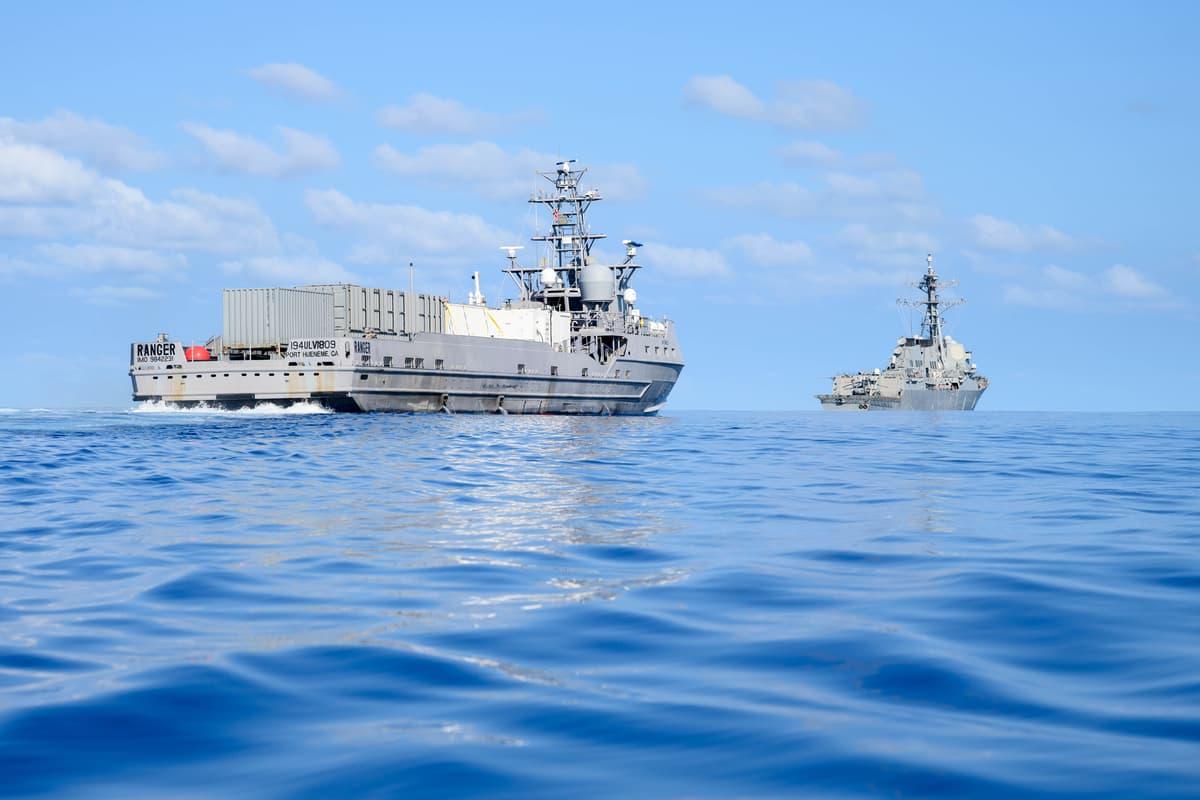
US Navy Unmanned Surface Vessel Fleet to Grow Sevenfold in Indo-Pacific
Why It Matters
A larger uncrewed fleet gives the Navy persistent, low‑cost presence in a contested region, enhancing deterrence against near‑peer rivals such as China. It also drives a new wave of defense‑industry contracts and reshapes how naval operations are sustained.
Key Takeaways
- •Navy plans 30 medium USVs in Indo-Pacific by 2030.
- •Current fleet of four medium USVs will expand sevenfold.
- •Thousands of small USVs and unmanned aircraft will support operations.
- •New USV divisions created; Sea Hawk and Sea Hunter to deploy 2026.
- •Uncrewed squadrons will rely on contractor-led maintenance.
Pulse Analysis
The Indo‑Pacific has become the focal point of great‑power competition, prompting the U.S. Navy to accelerate its uncrewed maritime strategy. By targeting a thirty‑strong medium USV fleet by 2030, the service aims to field persistent surveillance, logistics and anti‑submarine platforms that can operate in contested waters without risking crew lives. This scale‑up aligns with the Navy’s 2045 force vision and mirrors China’s rapid deployment of autonomous surface craft, underscoring a technology race that extends beyond traditional shipbuilding.
Beyond sheer numbers, the Navy’s approach emphasizes integration and sustainment. Medium USVs such as the Sea Hawk and Sea Hunter will work alongside manned destroyers and frigates, extending sensor ranges and providing flexible payload options. The creation of dedicated USV divisions and a contractor‑led maintenance model seeks to streamline logistics, reduce downtime, and allow rapid upgrades. By treating uncrewed vessels as modular assets, the fleet can adapt to emerging threats and mission sets without the lengthy acquisition cycles that have historically hampered naval innovation.
The expansion carries significant implications for the defense industrial base. Contracts for autonomous navigation, power‑train systems and AI‑driven decision‑making are expected to surge, offering opportunities for both legacy shipbuilders and emerging tech firms. Moreover, the emphasis on uncrewed squadrons signals a shift in naval doctrine toward distributed lethality and resilient, networked operations. As the Navy refines its robotic and autonomous systems strategy, other services and allied nations are likely to follow, reshaping the future of maritime warfare.
US Navy unmanned surface vessel fleet to grow sevenfold in Indo-Pacific
Comments
Want to join the conversation?
Loading comments...