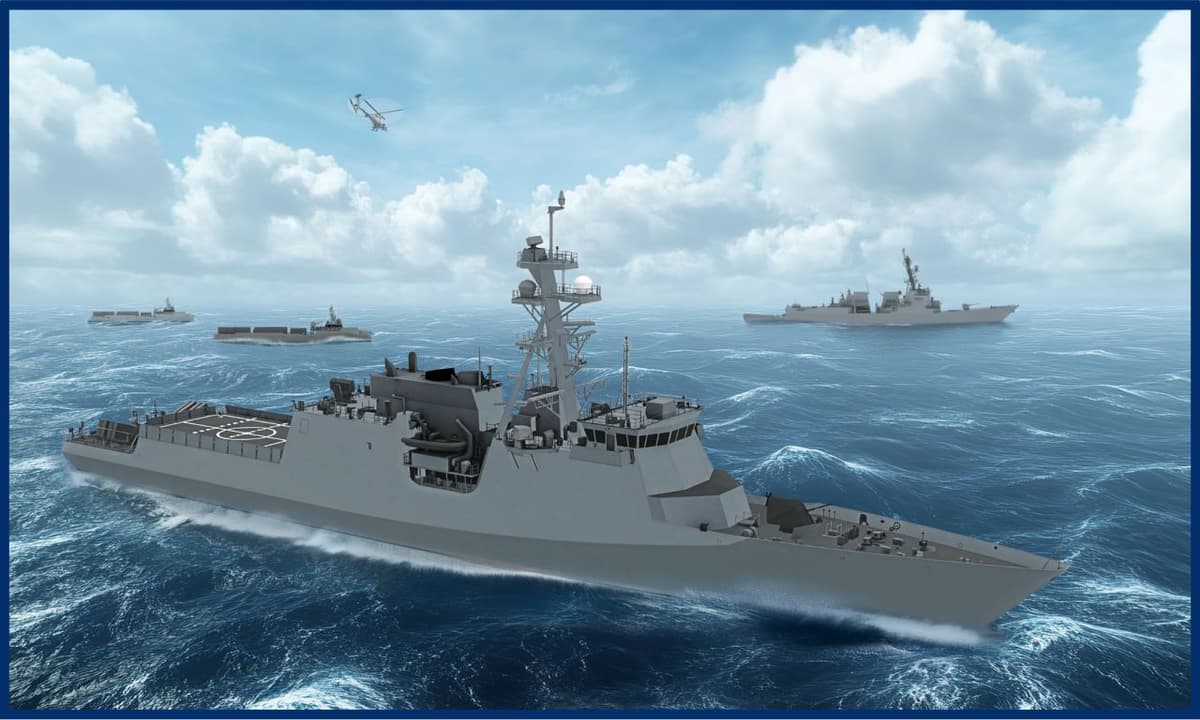
U.S. Navy Wants First FF(X) Frigate in the Water by 2028
Why It Matters
Fast‑track delivery gives the Navy a near‑term surface‑warfare platform to counter emerging threats, while the modular design promises cost‑effective scalability for future missions.
Key Takeaways
- •First FF(X) frigate slated for water in Q1 FY2029 (late 2028)
- •Program aims to deliver lead ship by Q3 FY2030, a four‑year timeline
- •$1.429 billion FY2027 funding covers procurement; $212 million earmarked for R&D
- •Flight 2 may add vertical launch system, boosting missile and ASW capability
Pulse Analysis
The Navy’s decision to fast‑track the FF(X) frigate reflects a broader shift toward rapid acquisition in a contested maritime environment. By re‑using the hull and systems of the cancelled Legend‑class cutter, Huntington Ingalls Industries can sidestep the lengthy design phase that typically delays surface‑ship programs. This approach not only compresses the schedule to a historic four‑year window from program start to delivery, but also leverages existing supply chains and proven shipyard tooling, reducing risk and cost. The FY 2027 budget’s $1.429 billion procurement allocation underscores the urgency of fielding a versatile, lower‑cost surface combatant capable of filling the gap left by the aging Littoral Combat Ship fleet.
Beyond the lead ship, the FF(X) architecture is built around modular payload bays and a rolling‑airframe missile launcher, enabling the Navy to experiment with emerging technologies such as unmanned surface vessels and containerized weapons. The $212 million R&D investment will validate combat systems, integrate advanced radar like the SPS‑77, and refine the ship’s ability to host interchangeable mission packages. This modularity aligns with the Department of Defense’s push for “plug‑and‑play” warfighting solutions, allowing rapid reconfiguration for anti‑submarine warfare, surface strike, or humanitarian missions without extensive refits.
Looking ahead, the Flight 2 iteration could incorporate vertical launch system (VLS) cells, dramatically expanding the frigate’s firepower to include ESSM, SM‑2, SM‑6 and VL‑ASROC missiles. Such an upgrade would elevate the FF(X) from a low‑end escort to a multi‑role combatant, supporting both air‑defense and anti‑submarine operations across the 55‑60‑ship planned fleet. By delivering a capable, adaptable platform on an accelerated timeline, the Navy positions itself to counter near‑peer naval threats while maintaining fiscal discipline, a balance that will shape surface‑warfare procurement for the next decade.
U.S. Navy wants first FF(X) frigate in the water by 2028
Comments
Want to join the conversation?
Loading comments...