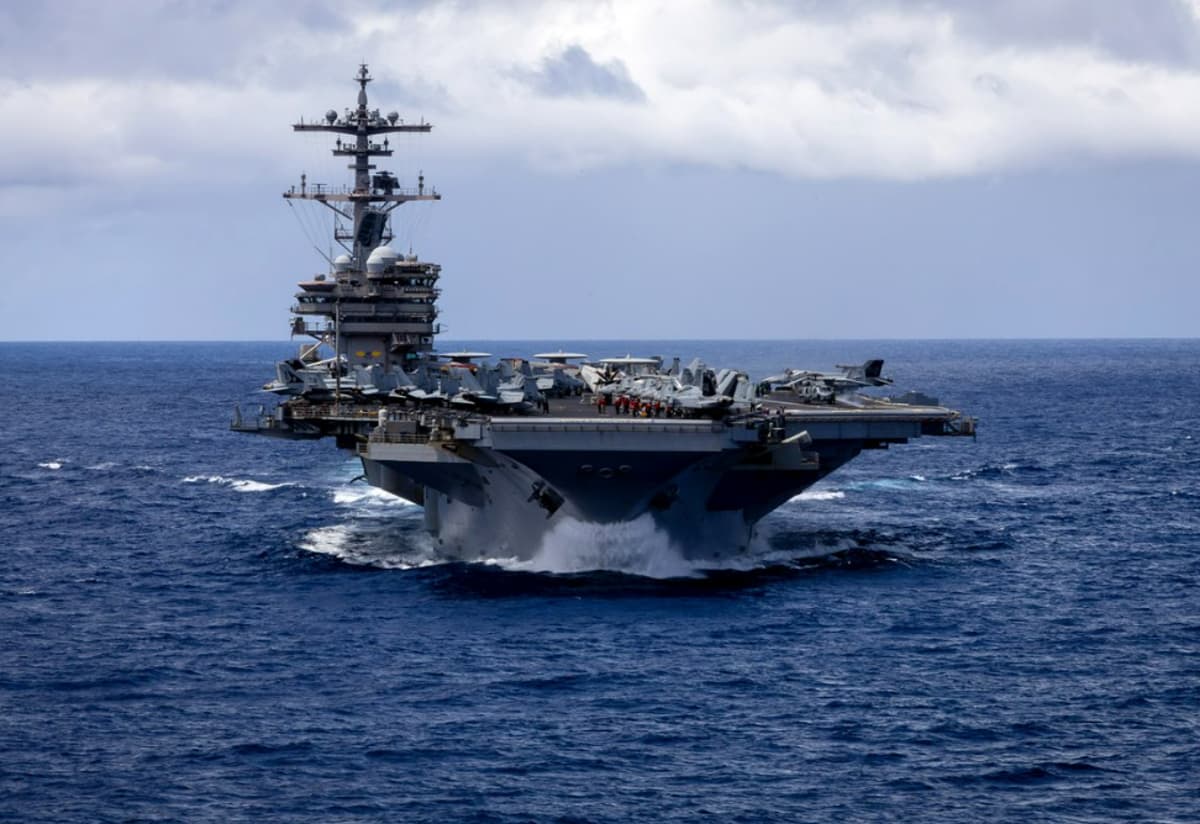
US Navy’s Aircraft Carrier that Tested New Drone-Killing Laser Weapon Arrives in Middle East
Why It Matters
The deployment bolsters U.S. power projection and deterrence in a volatile region while demonstrating the operational integration of directed‑energy weapons, a shift toward next‑generation naval combat capabilities.
Key Takeaways
- •USS George H.W. Bush entered CENTCOM area on April 23.
- •Carrier joins USS Abraham Lincoln and USS Gerald R. Ford in region.
- •Strike group includes destroyers Ross, Donald Cook, and Mason.
- •LOCUST laser previously destroyed drones in October 2025 test.
Pulse Analysis
The arrival of USS George H.W. Bush in the U.S. Central Command’s area of responsibility underscores a deliberate escalation of naval presence amid heightened tensions in the Middle East. By positioning three Nimitz‑class carriers—Bush, Abraham Lincoln and Gerald R. Ford—the United States signals a robust commitment to freedom of navigation, rapid response, and deterrence against regional adversaries. The carrier’s flight deck, now bristling with strike aircraft, provides a mobile air‑power platform capable of projecting force across the theater, supporting both conventional operations and emerging mission sets.
Beyond sheer firepower, the carrier’s recent history highlights a pivotal technological milestone: the October 2025 live‑fire test of the palletized LOCUST high‑energy laser. Conducted in partnership with AeroVironment and the Army’s Rapid Capabilities office, the system proved it could neutralize hostile drones at sea, offering a low‑cost, virtually unlimited‑ammunition solution to the growing swarm threat. Integrating directed‑energy weapons onto a moving warship demonstrates the Navy’s push to modernize its arsenal, reduce reliance on kinetic interceptors, and protect high‑value assets from asymmetric attacks.
The strategic implications extend to doctrine and industry alike. As the George H.W. Bush strike group, which includes three Arleigh Burke‑class destroyers, sails through contested waters, the Navy will gather real‑world data on laser performance, command‑and‑control integration, and crew training. Successful fielding could accelerate procurement of next‑generation laser systems across the fleet, reshaping future carrier strike group compositions. For defense contractors and policymakers, the deployment offers a tangible case study of how emerging technologies are transitioning from test labs to operational theaters, influencing budget priorities and alliance interoperability in the years ahead.
US Navy’s aircraft carrier that tested new drone-killing laser weapon arrives in Middle East
Comments
Want to join the conversation?
Loading comments...