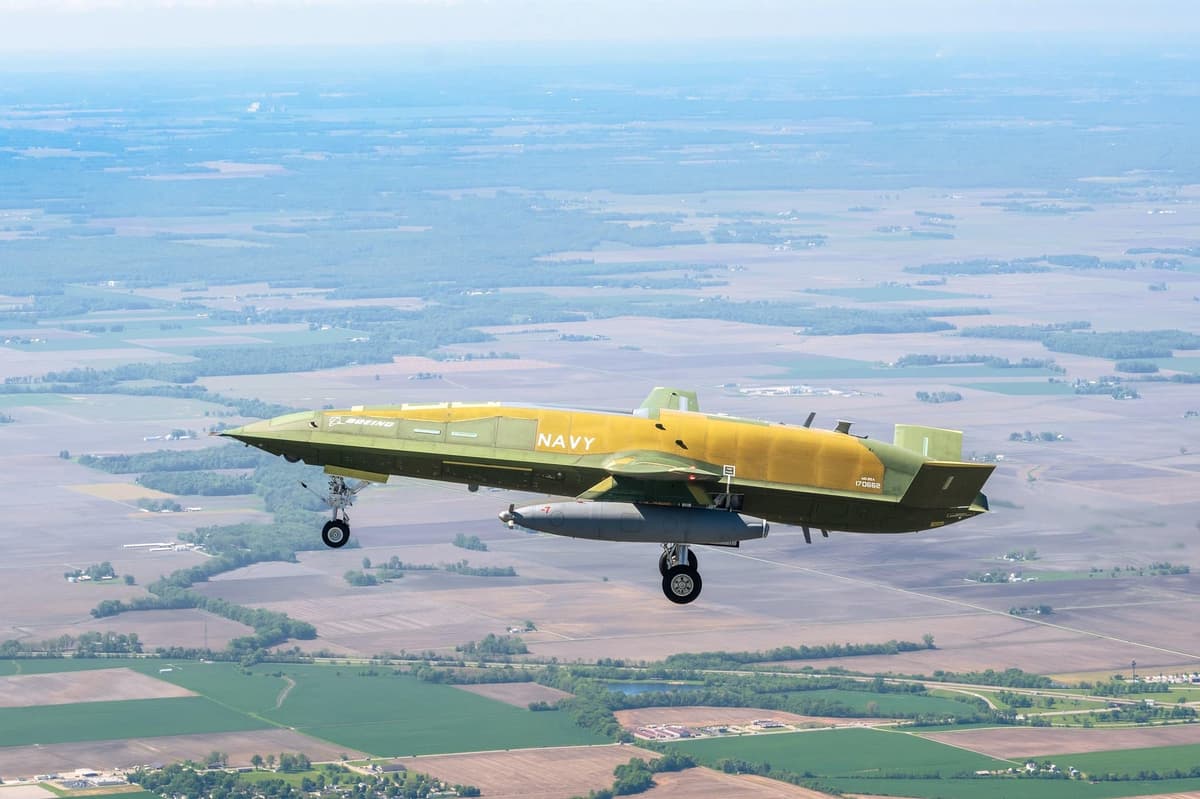
U.S. Navy’s First Carrier Operated Unmanned Tanker Cleared for Production
Companies Mentioned
Why It Matters
Serial production of the MQ‑25 will extend carrier air‑wing reach while preserving valuable F/A‑18E/F Superhornets for strike and air‑defense missions, strengthening the Navy’s operational flexibility. The move also signals a major step toward a fully autonomous refueling capability that supports next‑generation carrier platforms.
Key Takeaways
- •MQ-25 moves to serial production after Milestone C clearance
- •Navy to buy three more MQ-25s in FY 2027, total six
- •Unmanned tanker will extend carrier air wing range, freeing Superhornets for combat
- •Production will occur at Boeing’s new 300,000‑sq‑ft MidAmerica St. Louis facility
- •MQ-25 can refuel F‑35C, E‑2D, and other carrier aircraft via Cobham pod
Pulse Analysis
The MQ‑25 "Stingray" marks the Navy’s first carrier‑based unmanned tanker, a program that began in 2017 and survived multiple schedule slips. Reaching Milestone C in 2026 signals that the aircraft has satisfied critical design and safety criteria, allowing the transition to low‑rate initial production. Boeing’s new 300,000‑square‑foot plant at MidAmerica St. Louis will fabricate the airframes, leveraging a supply chain that includes Rolls‑Royce engines and BAE systems, while the FY 2027 budget allocates roughly $771 million for three additional units.
Strategically, the MQ‑25 addresses a long‑standing carrier constraint: the need to use manned F/A‑18E/F Superhornets as “buddy” tankers, which reduces the number of jets available for strike, air‑to‑air, and surveillance missions. By providing autonomous aerial refueling, the Stingray extends the combat radius of carrier air wings, enabling fighters such as the F‑35C and early‑warning platforms like the E‑2D to stay on station longer without sacrificing payload. This capability is especially valuable as the Navy plans to operate larger, more dispersed fleets in contested environments.
Looking ahead, the Navy expects to move from low‑rate to full‑rate production by the early 2030s, ultimately fielding up to 67 serial‑production MQ‑25s. The incremental procurement approach mitigates risk while allowing the service to refine integration with carrier deck operations and command‑and‑control systems. Successful deployment will not only reduce wear on legacy aircraft but also cement the United States’ lead in unmanned carrier aviation, influencing future procurement decisions across allied navies.
U.S. Navy’s First Carrier Operated Unmanned Tanker Cleared for Production
Comments
Want to join the conversation?
Loading comments...