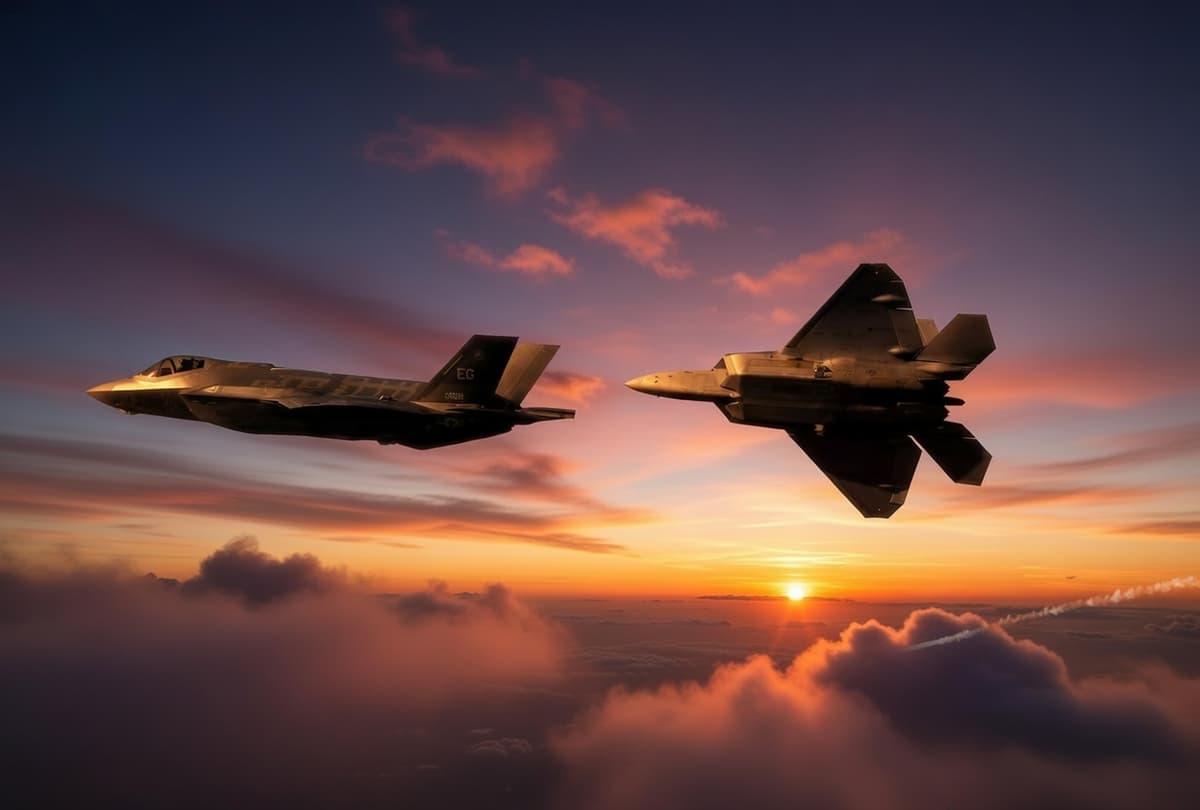
U.S. Outclasses “Combined Fleet” Of China, Russia & the World: Meet the Aircraft Giving USAF Unrivaled Air Power
Companies Mentioned
Why It Matters
A dominant tanker fleet gives the U.S. unmatched global power‑projection capability, forcing rivals to confront a logistical gap that limits their expeditionary reach. Maintaining this advantage is critical for sustaining U.S. strategic deterrence and rapid response options.
Key Takeaways
- •USAF operates ~610 aerial refueling tankers, ~75% of global fleet.
- •Russia fields 18 tankers; China only 9 dedicated, 35 with conversions.
- •Allies contribute ~57 tankers, boosting US coalition refueling capacity.
- •Tanker superiority enables nonstop global bomber/fighter missions, e.g., 44‑hour B‑2 strike.
- •China’s Y‑20U program may narrow gap, but US still leads.
Pulse Analysis
Aerial refueling is the logistical backbone of modern air power, turning range‑limited fighters into truly global assets. The United States commands an unrivaled fleet of roughly 610 tankers—primarily KC‑135 Stratotankers, the newer KC‑46 Pegasus, and KC‑130 variants—accounting for three‑quarters of the world’s operational capacity. This sheer volume not only supports routine deployments but also underpins extraordinary missions, such as nonstop 44‑hour B‑2 bomber sorties, demonstrating how logistics can eclipse sheer aircraft technology in strategic impact.
China and Russia lag far behind in tanker numbers, a disparity that constrains their ability to project force beyond regional theaters. China’s dedicated fleet totals just nine aircraft, though its broader count rises to about 35 when including converted transport platforms like the Y‑20U. Even with ambitious plans to field up to 30 Y‑20 tankers, the PLA Air Force remains a step behind the U.S. in sustained, long‑range operations. Russia’s 18 Il‑78s suffer from maintenance challenges and sanctions‑driven parts shortages, limiting their operational tempo and reducing the credibility of its Arctic and nuclear deterrence missions.
Allied contributions further cement the United States’ logistical edge. NATO partners such as France, the United Kingdom, Italy, and non‑NATO allies like Israel and Singapore collectively add roughly 57 tankers to the coalition pool. This integrated network expands refueling coverage, enhances interoperability, and ensures that U.S. and partner aircraft can operate seamlessly across continents. As China accelerates its Y‑20U conversions and Russia seeks to modernize its fleet, the strategic calculus will hinge on whether they can close the tanker gap or whether the United States will continue to leverage its logistical superiority to shape global air power dynamics.
U.S. Outclasses “Combined Fleet” of China, Russia & the World: Meet the Aircraft Giving USAF Unrivaled Air Power
Comments
Want to join the conversation?
Loading comments...