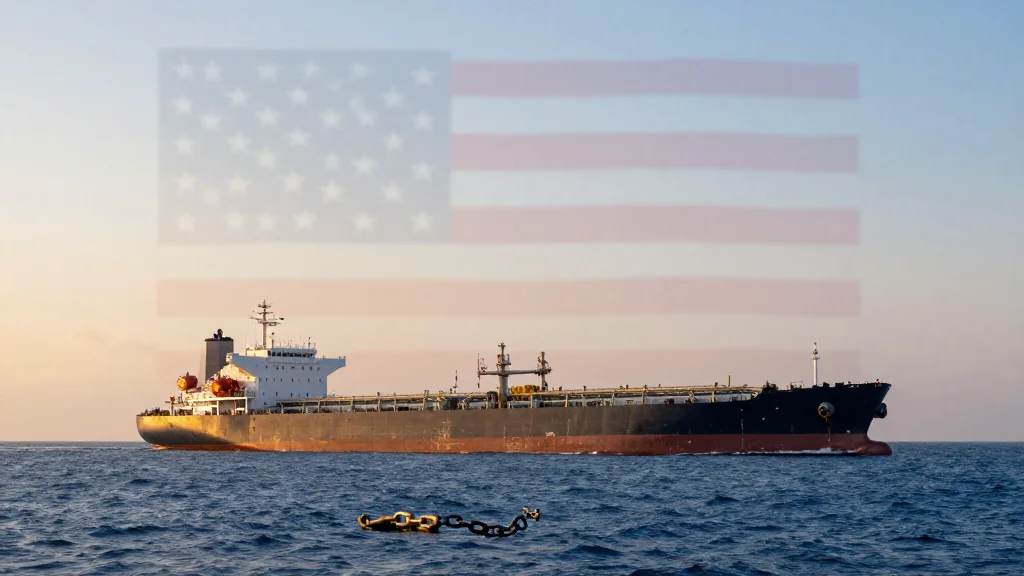
U.S. Sanctions Hit 17 Iranian Oil Entities and 9 Tankers Amid War Talks

Why It Matters
The sanctions strike at the financial lifelines that fund Iran’s regional proxy wars and its capacity to control the Strait of Hormuz, a chokepoint that moves roughly 20% of global oil shipments. By targeting the shipping network’s leadership and vessels, the United States aims to force Tehran back to the negotiating table and reduce the risk of a broader maritime conflict that could destabilize global energy markets. Beyond the immediate revenue impact, the move tests the effectiveness of secondary sanctions in an increasingly multipolar financial system. If non‑U.S. banks and ship owners comply, it reinforces the credibility of U.S. economic coercion; if they find workarounds, it could signal a weakening of Washington’s leverage, prompting a reassessment of the maximum‑pressure toolkit in future geopolitical contests.
Key Takeaways
- •U.S. Treasury blacklists 3 individuals, 17 entities, and 9 oil tankers linked to Iran's oil network.
- •Designations target a shipping operation run by Mohammad Hossein Shamkhani, son of senior official Ali Shamkhani.
- •Sanctions aim to cut off revenue streams worth hundreds of millions of dollars daily from Iranian maritime trade.
- •The action coincides with a two‑week cease‑fire nearing its end and a U.S. naval blockade of Iranian ports.
- •Potential secondary sanctions could pressure non‑U.S. banks and global shippers to avoid the listed parties.
Pulse Analysis
Washington’s latest blacklist reflects a classic use of financial warfare to achieve strategic objectives when kinetic options are limited. By focusing on the oil logistics chain, the Treasury is attempting to create a choke point that mirrors the physical constraints the U.S. Navy has imposed through its blockade. Historically, such dual‑track pressure—military and economic—has forced adversaries to the negotiating table, but it also carries the risk of pushing them toward illicit networks that are harder to monitor.
The timing is critical. With the cease‑fire deadline looming, Tehran faces a stark choice: endure a deepening economic squeeze that could cripple its ability to fund proxy militias, or concede on contentious issues like the Strait of Hormuz. The inclusion of high‑profile figures such as the Shamkhani family signals that the U.S. is willing to target elite patronage networks, a tactic that could erode internal support for the war effort. However, the efficacy of secondary sanctions will depend on the willingness of key financial hubs—particularly in Europe and Asia—to enforce U.S. directives, a willingness that has been tested in recent years.
Looking ahead, the sanctions could serve as a catalyst for a broader realignment of regional energy logistics. If Iran successfully reroutes oil through alternative corridors, it may diminish the strategic value of the Strait of Hormuz, reshaping global supply dynamics. Conversely, sustained pressure could drive Tehran to accelerate its nuclear program as a bargaining chip, raising the stakes for future diplomatic engagements. The next few weeks will reveal whether economic coercion can complement military posturing to achieve a durable resolution.
U.S. Sanctions Hit 17 Iranian Oil Entities and 9 Tankers Amid War Talks
Comments
Want to join the conversation?
Loading comments...