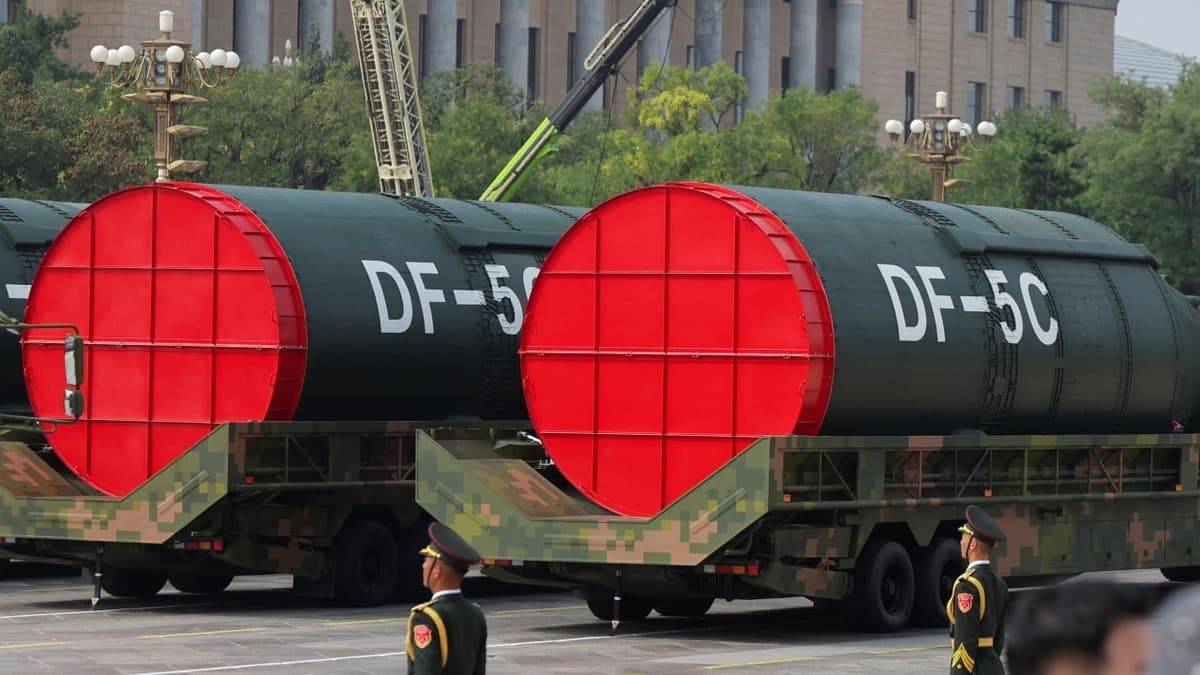
US Senate Warns of China’s Nuclear Capabilities Hours Before Xi-Trump Summit
Why It Matters
The stark contrast between China’s rapid arsenal growth and the U.S. contemplating a testing revival could destabilize strategic balance and undermine global arms‑control frameworks.
Key Takeaways
- •Senator Wicker cites hundreds of new Chinese missile silos.
- •Trump administration considers resuming nuclear tests after 33 years.
- •U.S. seeks China's participation in the expired New START treaty.
- •Defense Secretary Hegseth joins historic U.S. delegation to China.
- •NNSA officials argue technical certainty eliminates need for testing.
Pulse Analysis
The Senate hearing underscored a growing alarm in Washington over China’s accelerated nuclear buildup. By highlighting new silo construction, expanded mobile missile units and a burgeoning bomber fleet, lawmakers framed Beijing’s strategy as an attempt to outpace U.S. deterrence within a decade. This narrative sets a confrontational tone for the upcoming Trump‑Xi talks, where the United States hopes to extract a commitment from China to re‑enter the New Strategic Arms Reduction Treaty, the last remaining bilateral arms‑control pact.
Simultaneously, the Trump administration’s flirtation with restarting nuclear explosive testing marks a seismic policy shift. Since the 1992 moratorium, U.S. confidence in the reliability of its stockpile has rested on sophisticated sub‑critical experiments and computer modeling, a stance repeatedly affirmed by the NNSA and the nation’s weapons labs. Yet political pressure and perceived gaps in China’s arsenal have prompted calls to revive full‑scale tests, a move that could erode the de‑facto non‑testing norm among the five recognized nuclear powers and provoke reciprocal actions.
The convergence of these dynamics—China’s rapid arsenal expansion, U.S. pressure to re‑engage in arms‑control talks, and the potential abandonment of the testing moratorium—creates a volatile strategic environment. Allies in Europe and Asia will be watching closely, as any escalation could reshape deterrence calculations and compel revisions to NATO’s nuclear posture. Ultimately, the outcome of the summit and subsequent policy decisions will influence whether the U.S. and China can find a path to stability or descend into a new era of nuclear competition.
US Senate warns of China’s nuclear capabilities hours before Xi-Trump summit
Comments
Want to join the conversation?
Loading comments...