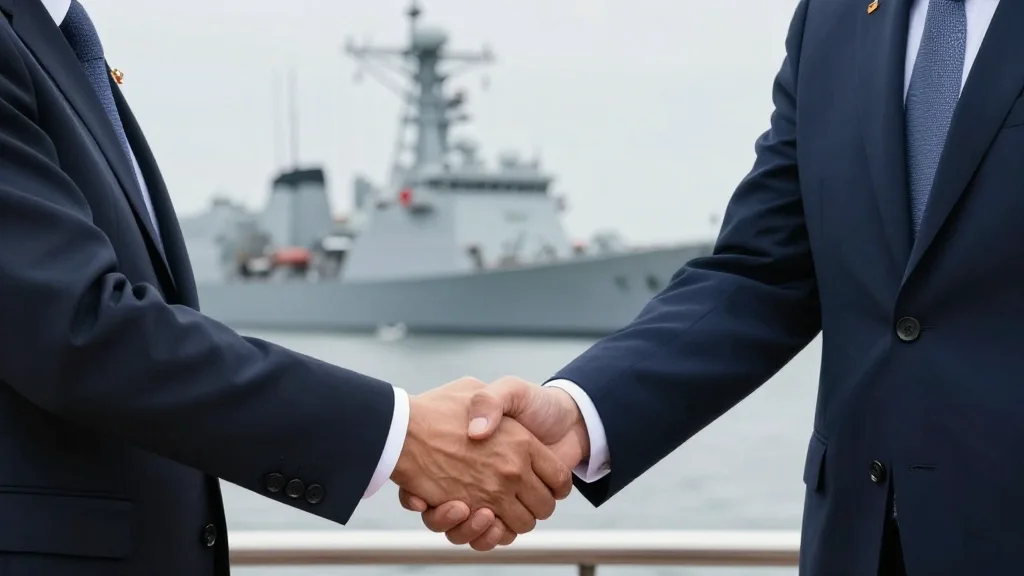
U.S. Senators Back Taiwan's $40 Billion Special Defense Budget Amid Rising Cross‑Strait Tensions

Why It Matters
The U.S. endorsement of Taiwan’s $40 billion defense budget signals a deepening of American security commitments in the Indo‑Pacific, directly challenging Beijing’s long‑standing claim over the island. By backing the budget, Washington not only reinforces Taiwan’s ability to procure advanced weaponry but also sets a precedent for future congressional support of foreign defense initiatives that align with U.S. strategic interests. The episode also highlights the growing diplomatic friction among the United States, China, Taiwan, and Japan. As Beijing tightens economic and political pressure on allies of Taiwan, the episode could reshape alliance dynamics, prompting Japan and other regional partners to reassess their own security postures and engagement strategies with both Washington and Taipei.
Key Takeaways
- •Four bipartisan U.S. senators visited Taiwan to support a stalled $40 billion special defense budget.
- •Taiwan’s opposition‑controlled parliament has yet to approve the budget, delaying procurement of new missile, naval and air‑defense systems.
- •China’s foreign ministry warned the U.S. to cease official exchanges with Taiwan, citing sovereignty concerns.
- •Japan condemned Chinese sanctions on lawmaker Keiji Furuya as unacceptable, underscoring regional diplomatic strain.
- •The upcoming May summit between President Donald Trump and President Xi Jinping will likely address U.S. arms sales to Taiwan.
Pulse Analysis
Washington’s public backing of Taiwan’s special defense budget marks a calculated escalation in the U.S. strategy to counter China’s maritime assertiveness. By aligning congressional voices with Taipei’s security needs, the United States is signaling that defense financing, not just weapon sales, is a viable lever in the broader geopolitical contest. Historically, U.S. support for Taiwan has been measured through arms sales; this shift toward endorsing a specific budget reflects an evolution toward deeper fiscal involvement.
The timing of the senators’ visit—just weeks before a high‑stakes Trump‑Xi summit—suggests a coordinated effort to embed Taiwan’s defense needs into the larger diplomatic agenda. If the budget clears the legislative hurdle, it could trigger a cascade of procurement contracts worth billions, reinforcing the island’s asymmetric defense capabilities and complicating Beijing’s coercive calculus. Conversely, a failure to pass the budget would provide Beijing with propaganda fodder, potentially emboldening its hardline stance.
Regional actors are watching closely. Japan’s swift condemnation of Chinese sanctions indicates that Tokyo may be prepared to side more openly with Washington and Taipei, especially as it seeks to counterbalance China’s growing influence in the East China Sea. The episode underscores how Taiwan’s defense financing has become a multi‑layered diplomatic arena, where budgetary decisions reverberate through alliance structures, trade relationships, and the risk calculus of cross‑strait conflict. Future developments will hinge on whether legislative inertia in Taiwan can be overcome and how the Trump‑Xi summit frames the narrative of U.S. arms sales in the context of broader strategic stability.
U.S. Senators Back Taiwan's $40 Billion Special Defense Budget Amid Rising Cross‑Strait Tensions
Comments
Want to join the conversation?
Loading comments...