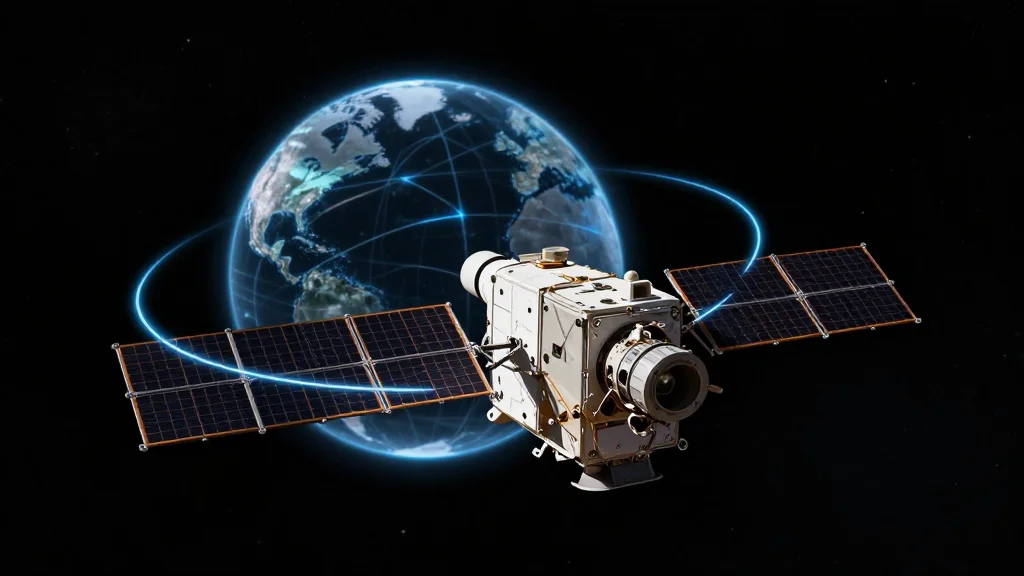
U.S. Space Command Advances Work on Maneuver Warfare Strategy
Why It Matters
A maneuver‑centric space doctrine could give the United States a decisive edge in future peer conflicts, forcing adversaries to contend with agile, hard‑to‑target assets. It also drives new requirements for satellite design, propulsion and command‑and‑control systems across the defense industrial base.
Key Takeaways
- •Space Command to hold tabletop and live‑fly exercises this year
- •New maneuver warfare concept aims to make satellites unpredictable
- •CAVE simulation environment validates tactics before operational testing
- •Strategy targets peer adversaries in protracted space conflicts
Pulse Analysis
The push toward a maneuver warfare strategy reflects a broader shift in U.S. defense thinking, moving away from the Cold War‑era notion of static, "set‑and‑forget" satellites. As peer competitors develop anti‑satellite capabilities, a predictable orbital footprint becomes a liability. By treating space assets as mobile, re‑positionable platforms, the command aims to complicate enemy targeting and preserve operational initiative. This doctrinal evolution is underpinned by advances in electric propulsion, on‑orbit servicing, and AI‑driven navigation, which together enable satellites to change altitude, inclination, or formation on demand.
Modeling and simulation play a pivotal role in translating the maneuver concept into actionable tactics. The Capability Assessment and Validation Environment (CAVE) provides a virtual sandbox where analysts can test orbital maneuvers, assess fuel consumption, and evaluate the impact on communications or sensing payloads. These digital experiments reduce risk and cost before any live‑fly testing, allowing warfighters to iterate quickly. Once validated, the wargaming branch will conduct tabletop exercises that simulate contested scenarios, followed by larger drills that incorporate real spacecraft, thereby bridging the gap between theory and practice.
The implications extend beyond the military to the commercial and industrial sectors. Satellite manufacturers will need to embed higher‑thrust propulsion modules and modular architectures to support frequent repositioning. Ground stations and command networks must adapt to dynamic orbital parameters, demanding more flexible software and real‑time data links. For policymakers, the strategy signals a commitment to maintaining space superiority against near‑peer rivals, potentially influencing budget allocations and international norms around space conduct. In sum, a maneuver‑centric approach could reshape how the United States secures the high ground in the increasingly contested space domain.
U.S. Space Command advances work on maneuver warfare strategy
Comments
Want to join the conversation?
Loading comments...