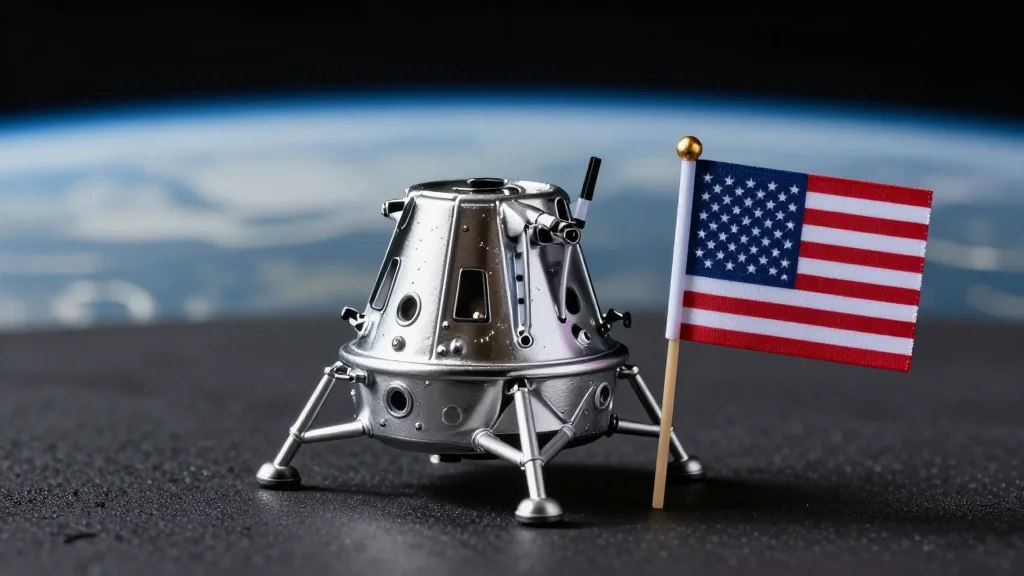
U.S. Space Force Launches Cislunar Acquisition Task Force to Support Lunar Outpost

Why It Matters
The creation of a dedicated acquisition task force signals that the U.S. defense establishment is moving from conceptual policy to concrete procurement for cislunar operations. By institutionalizing coordination across the DoD, NASA and industry, the Space Force aims to close capability gaps that could otherwise leave the United States vulnerable in a domain where adversaries are already fielding lunar‑orbit assets. The roadmap will guide billions of dollars of spending, influence the architecture of lunar communications and domain awareness, and set standards for commercial partners seeking to operate in the cislunar environment. Beyond national security, the task force could catalyze a new commercial market for cislunar services—satellite constellations, high‑throughput links, and rapid‑turnaround launch solutions—mirroring how the GPS and satellite‑internet ecosystems grew from defense origins. The success of this initiative will therefore affect both defense readiness and the broader U.S. space economy.
Key Takeaways
- •Space Force announces Cislunar Coordination Office to map technology needs for lunar outpost
- •Task force led by Jamie Stearns, former AFRL Vehicle Directorate head
- •Office will coordinate with DARPA, AFRL, DNI, NASA and industry partners
- •Gen. Chance Saltzman emphasizes need for cislunar space‑domain awareness and low‑latency communications
- •AFRL plans to launch an experimental cislunar monitoring satellite as a first testbed
Pulse Analysis
The Space Force’s move to institutionalize cislunar acquisition reflects a strategic pivot from a purely defensive posture in low‑Earth orbit to a broader, expeditionary mindset that includes lunar logistics. Historically, defense procurement for space has been fragmented across services, leading to duplication and slower fielding. By consolidating effort under a single coordination office, the DoD can streamline requirements, reduce redundancy, and create a clearer signal to industry about where future dollars will flow.
The timing aligns with President Trump’s 2025 executive order, but the real driver appears to be the convergence of defense and civilian lunar ambitions. As NASA pushes toward a 2030 lunar outpost, the Space Force must ensure that any U.S. presence is protected, resupplied, and integrated into a broader deterrence architecture. This dual‑use approach could lower costs for both sectors, but it also raises questions about export controls, technology sharing, and the balance between open‑commercial and classified capabilities.
From a market perspective, the task force is likely to generate a cascade of contracts for launch providers, satellite manufacturers, and communications firms capable of delivering low‑latency, high‑bandwidth links across the Earth‑Moon distance. Companies that have already invested in lunar‑focused technologies—such as lunar landers, surface power, and habitat modules—may find new customers in the defense sector, accelerating their development cycles. However, the success of this initiative will hinge on the Space Force’s ability to maintain a rapid “ops tempo” without overtaxing existing launch infrastructure, a challenge that will require both public‑private partnership and possibly new launch sites dedicated to cislunar missions.
U.S. Space Force Launches Cislunar Acquisition Task Force to Support Lunar Outpost
Comments
Want to join the conversation?
Loading comments...