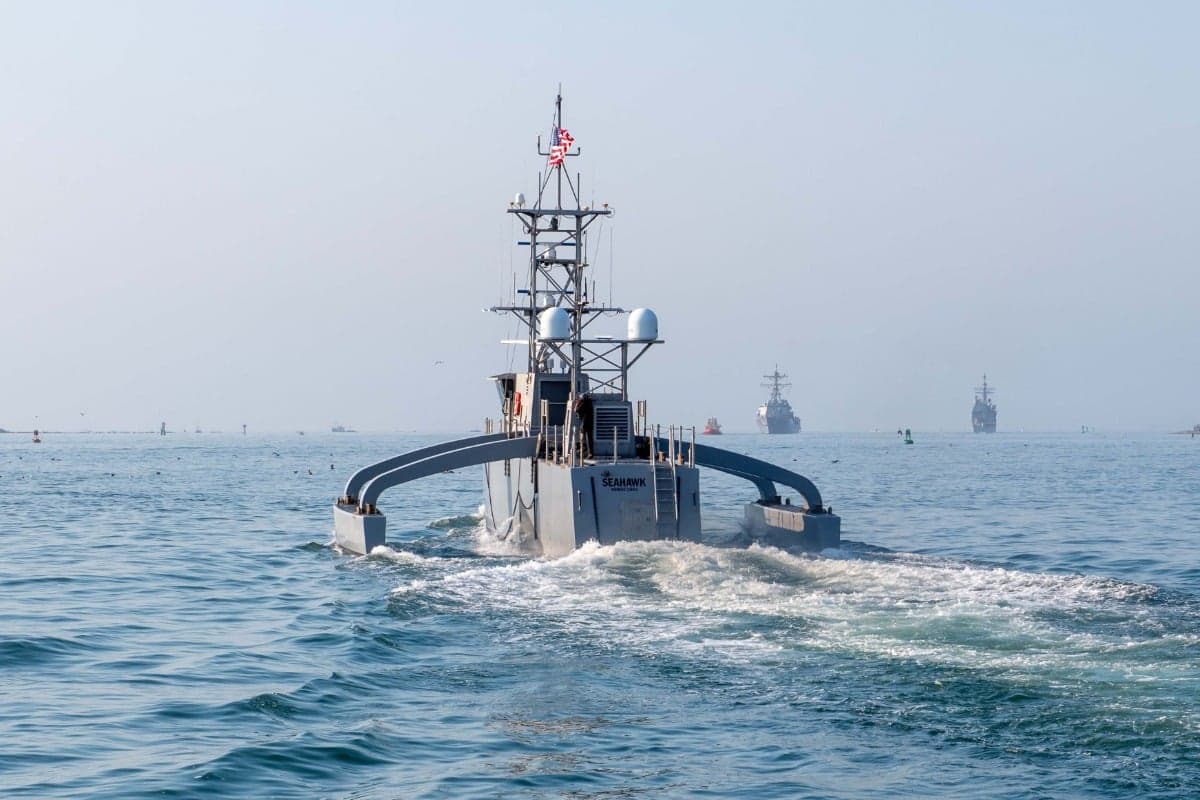
U.S. Special Operations Launches Push for Next-Gen Maritime Weapons
Why It Matters
By leveraging OTA authority, USSOCOM can accelerate acquisition of critical maritime technologies, giving U.S. forces a decisive edge in contested littoral environments.
Key Takeaways
- •USSOCOM issued ANCHOR OTA solicitation on April 24, 2026.
- •Six focus areas include unmanned maritime systems and C5ISR AI analytics.
- •OTA contracts allow rapid prototyping and direct production without competition.
- •Scalable effects seek tunable directed‑energy and electronic‑warfare capabilities.
- •Human‑machine teaming aims to reduce operator workload via voice and gesture interfaces.
Pulse Analysis
The maritime domain has become a contested frontier where adversaries field inexpensive unmanned vessels and swarm tactics that can outpace traditional naval assets. Recognizing this shift, USSOCOM is prioritizing technologies that extend the reach and endurance of special‑operations teams operating from small boats, submarines, or coastal outposts. The ANCHOR Initiative seeks solutions that can persist in denied waters, deliver long‑range surveillance, and reduce the logistical footprint of deployed units. In doing so, the command aims to restore a tactical advantage that conventional procurement cycles have struggled to maintain.
To cut through the bureaucracy that slows traditional defense contracts, USSOCOM is employing Other Transaction Authority, a flexible legal vehicle that sidesteps the Federal Acquisition Regulation. This framework allows the ANCHOR program to award prototype contracts quickly and move successful designs straight into production without a fresh competition. The solicitation outlines six focus areas—unmanned maritime systems, C5ISR with AI‑driven analytics, scalable directed‑energy and electronic‑warfare effects, human performance enhancement, and human‑machine teaming. Companies that demonstrate relevance can secure a foothold in a long‑term partnership that promises sustained funding and rapid fielding.
The ANCHOR Initiative signals a broader shift toward integrated, multi‑domain operations where maritime, air, land, cyber and space effects are synchronized. By demanding tunable capabilities that can be escalated from non‑lethal disruption to permanent neutralization, USSOCOM is addressing the political sensitivities of gray‑zone missions while preserving combat effectiveness. For defense innovators, the program offers a clear pathway from concept to battlefield, encouraging investment in AI‑enabled sensor fusion, autonomous control interfaces, and advanced human performance technologies. Success in ANCHOR could set a new acquisition standard for rapid, adaptable warfighting solutions across the Department of Defense.
U.S. Special Operations launches push for next-gen maritime weapons
Comments
Want to join the conversation?
Loading comments...