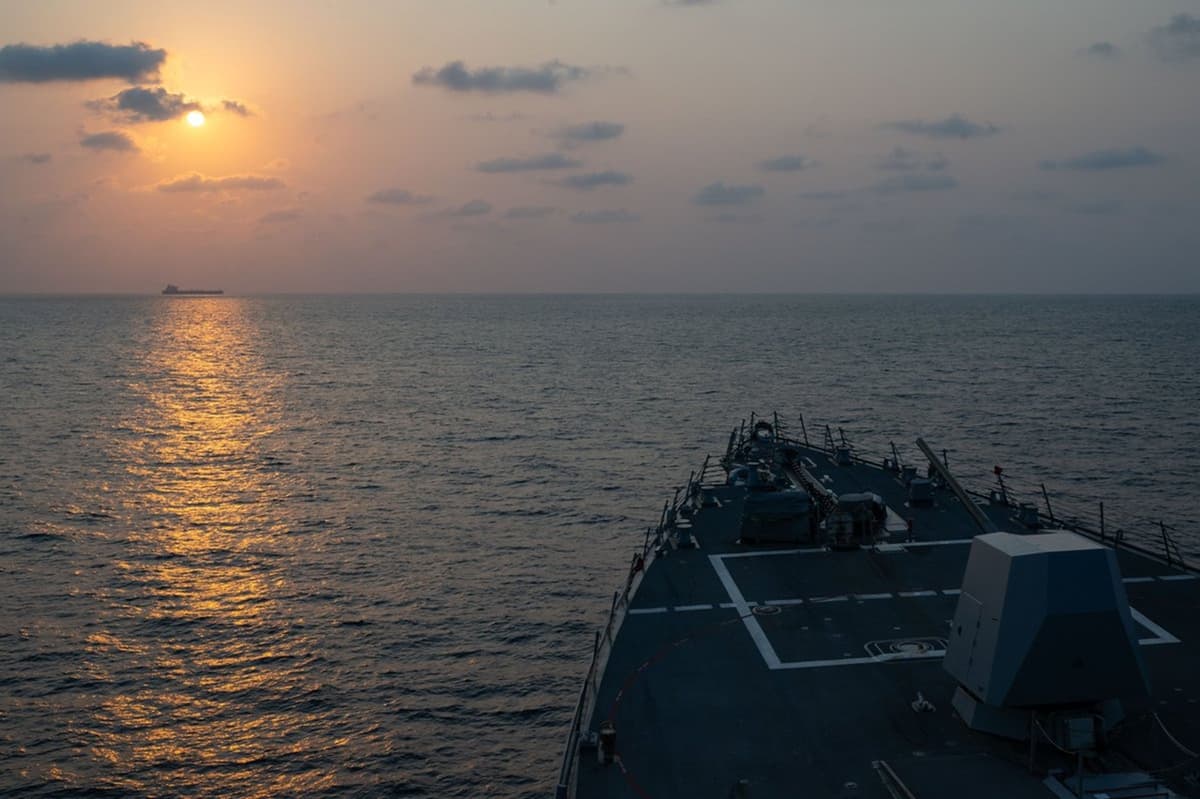
US Strikes Iran Fast Boats, Two Vessels Transit Hormuz
Companies Mentioned
Why It Matters
Project Freedom aims to restore a critical oil transit route, reducing global supply risk, while Iran’s aggressive strikes threaten commercial shipping costs and regional energy stability.
Key Takeaways
- •US eliminated seven Iranian fast‑boat threats in Hormuz
- •Two US‑flagged vessels, including Maersk’s Alliance Fairfax, transited safely
- •Iran hit ships, Fujairah oil terminal, and an ADNOC‑linked tanker
- •Project Freedom has redirected 50 vessels since its April 13 launch
- •Three Indian nationals injured in Fujairah drone attack
Pulse Analysis
The Strait of Hormuz, through which roughly 20% of global oil passes, became the focal point of a coordinated U.S. maritime operation on April 13 known as Project Freedom. The initiative, aimed at safeguarding commercial navigation, saw two U.S.-flagged vessels—most notably Maersk Line’s car carrier Alliance Fairfax—transit the waterway without incident. By neutralizing seven Iranian fast‑boat threats, U.S. Central Command demonstrated a renewed willingness to project power in a region long dominated by Tehran’s asymmetric tactics. The successful passage marks the first tangible step in a broader effort to re‑open the strait for trade.
Simultaneously, Iran escalated its campaign, targeting multiple commercial assets. A drone strike ignited a fire at the Fujairah Petroleum Industries Zone, injuring three Indian workers, while a South Korean‑owned cargo ship and an ADNOC‑affiliated tanker suffered explosions and drone hits respectively. These attacks underscore Tehran’s strategy of using low‑cost, high‑impact weapons to disrupt supply chains and pressure regional economies. For ship owners and insurers, the heightened risk translates into higher freight premiums, rerouting costs, and tighter security protocols across the Gulf.
The twin dynamics of U.S. interdiction and Iranian retaliation carry broader market implications. Any prolonged disruption in Hormuz could tighten global oil supplies, nudging Brent crude above $90 per barrel and prompting volatility in energy‑linked equities. Moreover, the redirection of 50 vessels since the operation’s launch signals a shift in shipping lanes that may persist even after hostilities subside. Stakeholders—from energy traders to logistics firms—must monitor diplomatic developments closely, as the balance between naval deterrence and diplomatic engagement will shape the strait’s stability for months ahead.
US strikes Iran fast boats, two vessels transit Hormuz
Comments
Want to join the conversation?
Loading comments...