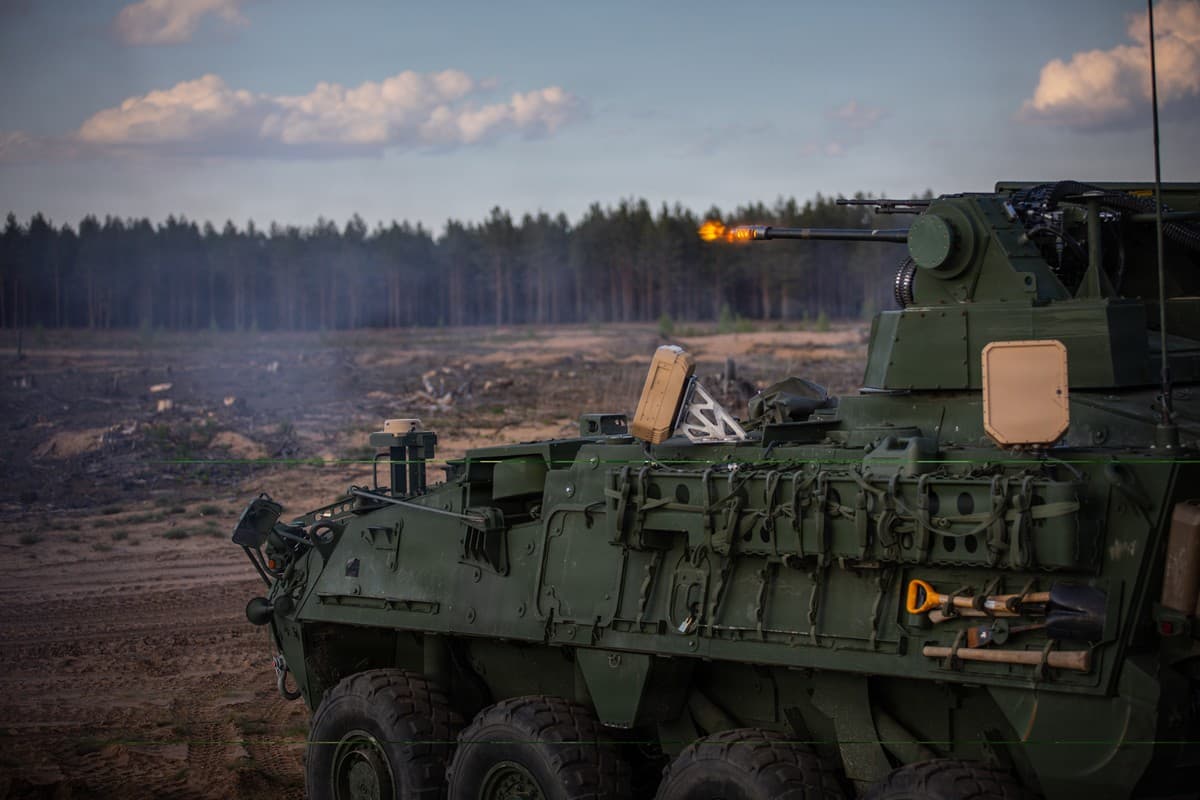
US Stryker Opens Fire, Downs Drones in Lithuania
Key Takeaways
- •M1265A1 Stryker fired its 30mm cannon at drones in Lithuania
- •Turret integrates 30mm cannon, Stinger missiles, and M240 machine gun
- •Project Flytrap tests short-range air defense across multiple NATO exercises
- •Drone threats in Ukraine drive Western armies to modernize air defenses
- •Sergeant Stout program showcases integrated radar and sighting systems
Pulse Analysis
The rapid proliferation of commercial and tactical drones has forced modern militaries to rethink air‑defense doctrine. Traditional medium‑ and long‑range systems struggle to track and engage low‑observable, slow‑moving platforms that operate below conventional radar horizons. In response, the U.S. Army accelerated its Maneuver Short‑Range Air Defense (M‑SRAD) program, fielding a Stryker‑based solution that can accompany ground units and provide on‑the‑move protection. Project Flytrap’s live‑fire trials in Lithuania demonstrate how a mobile platform can fill the critical gap between infantry‑level point defense and higher‑tier missile systems.
At the heart of the M‑SRAD Stryker is General Dynamics’ Reconfigurable Integrated‑Weapons Platform, a modular turret that combines a 30 mm XM914 cannon, a Stinger surface‑to‑air missile launcher, and an M240 7.62 mm machine gun. Coupled with advanced radar and electro‑optical sensors, the suite can detect, track, and engage unmanned aerial vehicles, helicopters, and even low‑altitude fixed‑wing aircraft within a few kilometers. The system’s eight‑wheeled Stryker A1 chassis offers the speed and logistical footprint needed for rapid deployment across Europe’s forward bases, while the integrated fire‑control software streamlines crew workload during high‑tempo engagements.
Strategically, the successful test underscores NATO’s commitment to bolstering collective defense in the face of evolving threats. By fielding a versatile, export‑ready solution, the United States not only enhances the survivability of its own forward‑deployed units but also provides allies with a scalable option to protect critical infrastructure and forward operating bases. As drone technology continues to advance, platforms like the Sergeant Stout Stryker will likely become a staple of allied air‑defense portfolios, shaping procurement decisions and joint training exercises for years to come.
US Stryker opens fire, downs drones in Lithuania
Comments
Want to join the conversation?