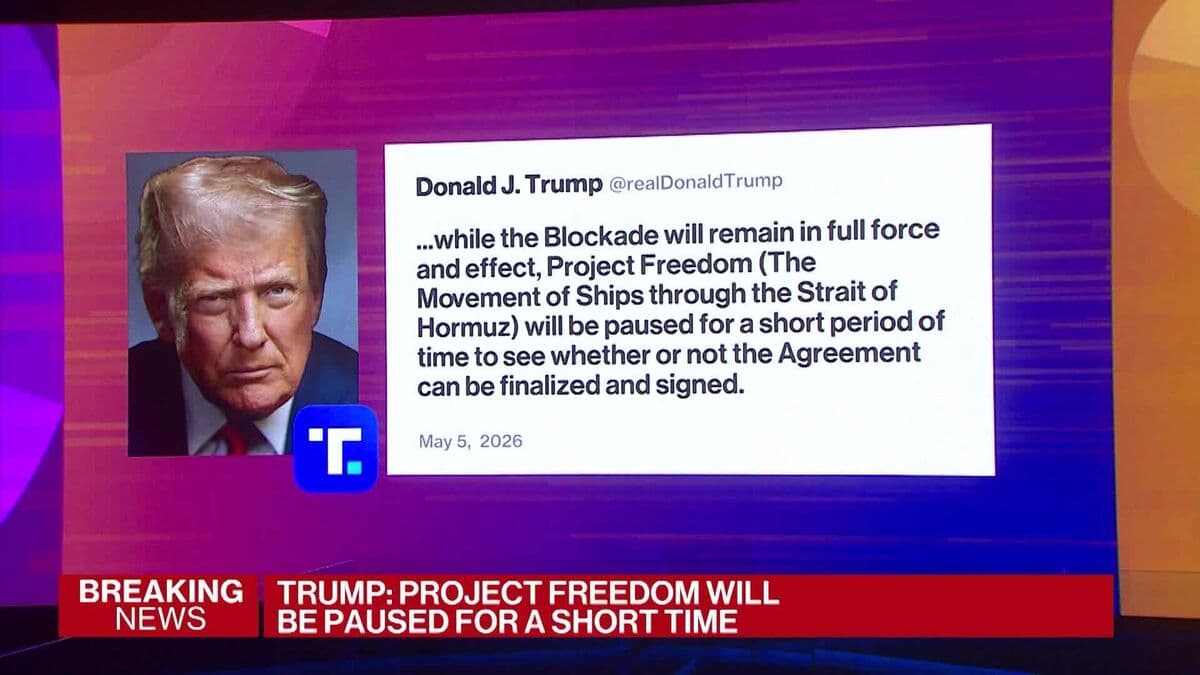
US to Pause Guiding Ships While Seeking Iran Deal: Trump
Why It Matters
Halting ship guidance could tighten global oil flows and raise shipping costs, while the continued blockade signals sustained U.S. leverage over Iran. The decision underscores the delicate balance between applying pressure and avoiding a broader conflict that would disrupt energy markets.
Key Takeaways
- •Project Freedom paused; blockade of Iranian ports stays active
- •1,500 vessels and 22,000 sailors trapped in Gulf
- •Pause requested by Pakistan and regional allies
- •Rubio warns Iran could push US gasoline to $9 per gallon
- •Negotiations stalled; red‑line concessions remain unresolved
Pulse Analysis
The Strait of Hormuz remains one of the world’s most critical chokepoints, funneling roughly 20% of global oil consumption daily. Since early 2026, the United States has operated Project Freedom, a naval escort program designed to protect neutral merchant ships from Iranian threats while maintaining a broader blockade of ports under Tehran’s control. By guiding vessels through the narrow waterway, Washington aimed to preserve maritime freedom without conceding to Iran’s demands, a strategy that has kept the flow of crude and refined products relatively stable despite heightened rhetoric.
Trump’s decision to pause the escort mission reflects growing diplomatic pressure from regional actors, notably Pakistan, which fears that continued U.S. navigation assistance could provoke Iranian retaliation. The pause does not lift the existing blockade, meaning ships bound for Iranian ports remain barred, preserving leverage in the ongoing negotiations. Market participants have already noted a modest uptick in oil price volatility, as traders weigh the risk of delayed cargoes against the possibility of a diplomatic breakthrough. The stranded fleet—over 1,500 vessels and 22,000 crew members—highlights the human and commercial stakes of any shift in policy, with potential ripple effects across global supply chains.
Looking ahead, the United States faces a tightrope walk: sustain pressure on Tehran to secure a nuclear‑related agreement while avoiding actions that could trigger a broader conflict. Senate leaders, including Marco Rubio, warn that a failure to contain Iran could drive U.S. gasoline prices toward $9 per gallon, underscoring the economic fallout of a prolonged standoff. If negotiations yield a viable deal, the pause may be short‑lived, allowing Project Freedom to resume and restore smoother transit. Conversely, a deadlock could see the U.S. revert to more aggressive maritime posturing, further unsettling energy markets and regional stability.
US to Pause Guiding Ships While Seeking Iran Deal: Trump
Comments
Want to join the conversation?
Loading comments...