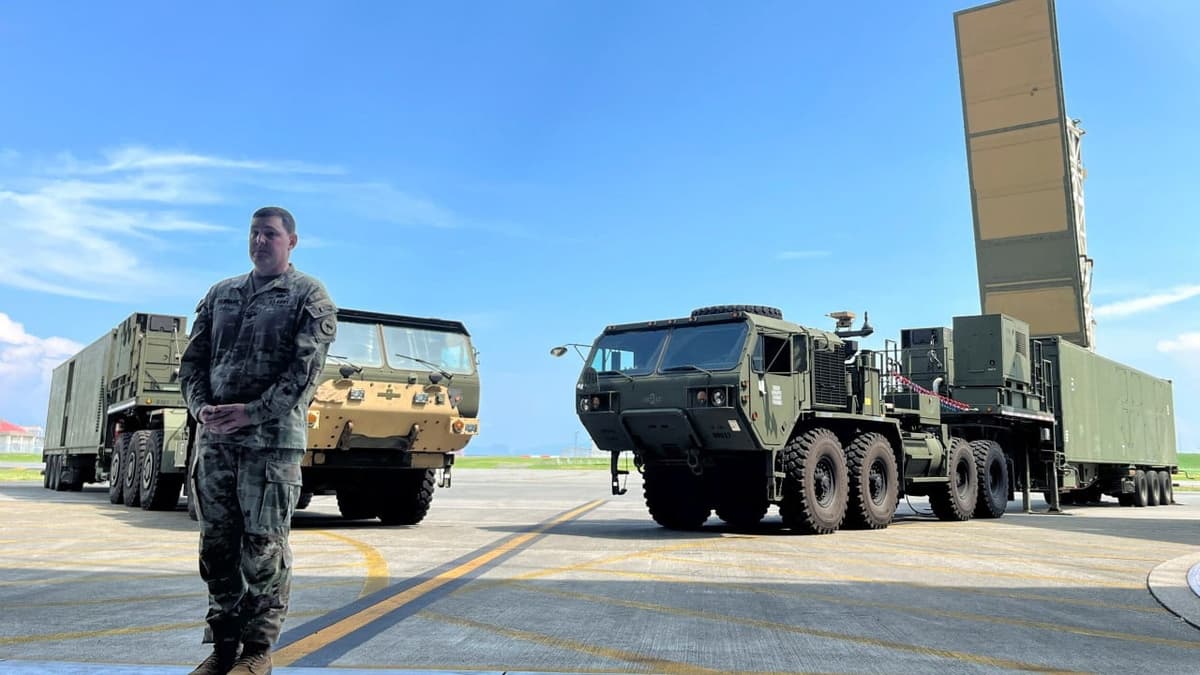
US to Send Typhon, Himars Missile Systems to Japan for Drills Amid China Tensions
Why It Matters
The forward‑positioning of long‑range strike assets underscores U.S. commitment to deter Chinese aggression in the Indo‑Pacific, while reinforcing the U.S.–Japan security partnership.
Key Takeaways
- •Typhon launcher to fire Tomahawk missiles up to 1,600 km
- •Himars system can launch six rockets or one ATACMS
- •Exercises scheduled June‑September at Kanoya Airbase under Valiant Shield
- •No live‑fire drills planned, systems will be stored after exercises
- •China and Russia criticize first overseas Japanese missile launch in 80 years
Pulse Analysis
The United States’ decision to station Typhon and HIMARS systems in southwestern Japan reflects a broader strategic shift toward forward‑deployed, high‑precision strike capabilities in the Indo‑Pacific. By integrating these platforms into the Valiant Shield and Orient Shield drills, Washington signals that it can project power across the East China Sea and beyond, a clear counterweight to Beijing’s expanding naval and missile posture around Taiwan and the South China Sea. The timing aligns with heightened diplomatic activity, including recent U.S.–Japan summit commitments to bolster advanced defense assets on Japanese soil.
Technically, the Typhon launcher offers a versatile launch envelope, capable of delivering Tomahawk cruise missiles at a 1,600‑kilometer range and SM‑6 interceptors beyond 300 km, effectively extending the reach of U.S. strike and air‑defense networks. HIMARS adds a rapid‑response, mobile rocket capability, able to fire six 227‑mm rockets or a single ATACMS ballistic missile, also covering roughly 300 km. While the exercises will avoid live fire, the mere presence of these systems enhances joint operational familiarity and provides a ready‑to‑use deterrent that can be activated on short notice, reinforcing the credibility of the U.S.–Japan alliance.
The deployment has provoked strong rebukes from China and Russia, who view the first overseas Japanese missile launch in eight decades as a destabilizing move. Domestic opposition in Japan also resurfaced, recalling the prolonged stay of Typhon at Iwakuni last year. Nonetheless, the move demonstrates Washington’s willingness to absorb political friction to maintain a forward‑leaning posture. For defense contractors, the drill may spur demand for next‑generation munitions and support services, while regional actors will watch closely to gauge how the enhanced U.S. presence shapes future security calculations in East Asia.
US to send Typhon, Himars missile systems to Japan for drills amid China tensions
Comments
Want to join the conversation?
Loading comments...