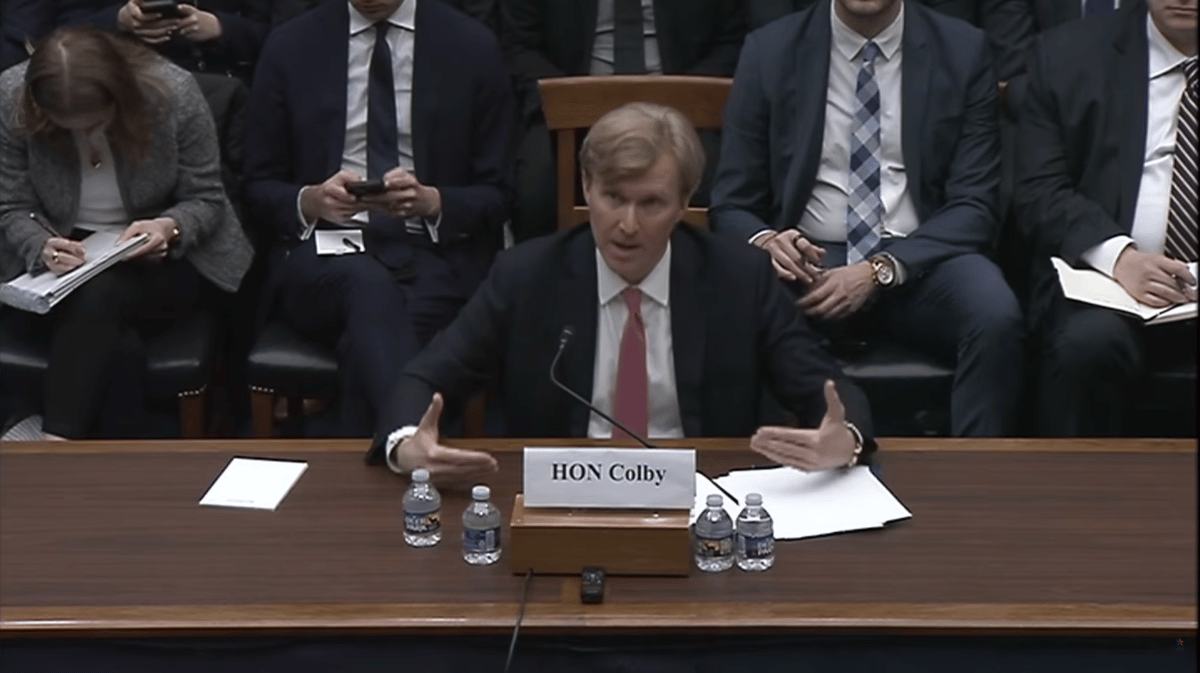
US Won’t Update Nuclear Posture Review: Pentagon Policy Chief
•March 5, 2026
0
Why It Matters
Maintaining the 2018 posture without a fresh review signals continuity amid a shifting strategic landscape, affecting deterrence calculations against Russia and an increasingly capable China.
Key Takeaways
- •Pentagon will not conduct new Nuclear Posture Review
- •2018 review deemed sufficient for current policy
- •China’s expanding arsenal and New START expiry raise concerns
- •Modernization programs like B-21 and Sentinel stay on track
- •Strategic ambiguity remains on first‑strike nuclear options
Pulse Analysis
The decision to forego a fresh Nuclear Posture Review reflects a broader strategic calculus within the Biden administration. By anchoring policy to the 2018 framework, defense officials signal confidence in a doctrine that allows nuclear use only under "extreme circumstances" while preserving flexibility for first‑strike considerations. This continuity avoids the political friction of a comprehensive rewrite, but it also leaves unanswered questions about how the United States will address emerging threats, especially as the New START treaty expired in February, removing a key arms‑control constraint on Russian and American arsenals.
China’s rapid nuclear modernization adds a new dimension to the calculus. Although the 2026 National Defense Strategy mentions deterrence through strength, it omits explicit references to China’s growing triad. Analysts note that the lack of a formal review may limit the Pentagon’s ability to articulate a clear, China‑focused nuclear strategy, potentially increasing strategic uncertainty in the Indo‑Pacific. The 2018 posture’s call for dialogue with Beijing remains unfulfilled, raising concerns about de‑escalation mechanisms and the risk of miscalculation as both powers expand their capabilities.
Meanwhile, the United States continues to push forward with its nuclear modernization agenda. Programs such as the B‑21 stealth bomber, the Long‑Range Standoff Weapon, and the Sentinel ICBM are progressing on schedule, reinforcing the credibility of the deterrent. By prioritizing these upgrades without a new policy document, the Department of Defense underscores that the existing doctrinal foundation is sufficient to guide procurement and operational planning, even as it navigates a complex global environment marked by great‑power competition and the erosion of legacy arms‑control frameworks.
US Won’t Update Nuclear Posture Review: Pentagon Policy Chief
0
Comments
Want to join the conversation?
Loading comments...