USAF to Buy Thousands of New Radios to Help Rescue Downed Pilots
Companies Mentioned
Why It Matters
The NGSR dramatically improves survivability for downed aircrew by providing faster, encrypted communications and accurate location data, reducing rescue times. Its joint‑service deployment also standardizes personnel‑recovery capabilities across the U.S. military.
Key Takeaways
- •NGSR program requests $96 million for 2027 acquisition.
- •6,868 radios to replace legacy CSEL units across services.
- •Software-defined radio offers secure, over‑the‑horizon data and GPS M‑code.
- •General Dynamics’ iPhone‑sized device is lighter, more power‑efficient.
- •Integration with joint personnel‑recovery network slated for 2026 testing.
Pulse Analysis
The recent rescue of an F‑15E crew in Iran highlighted a critical gap in the military’s survivor‑communication toolkit. The legacy Combat Survivor Evader Locator (CSEL) radio, in service since 2006, relied on older satellite links and encryption that could be slow to activate and vulnerable to detection. As a result, downed aircrew often faced prolonged exposure while awaiting location fixes, prompting senior leaders to prioritize a modern replacement that could operate seamlessly in contested environments.
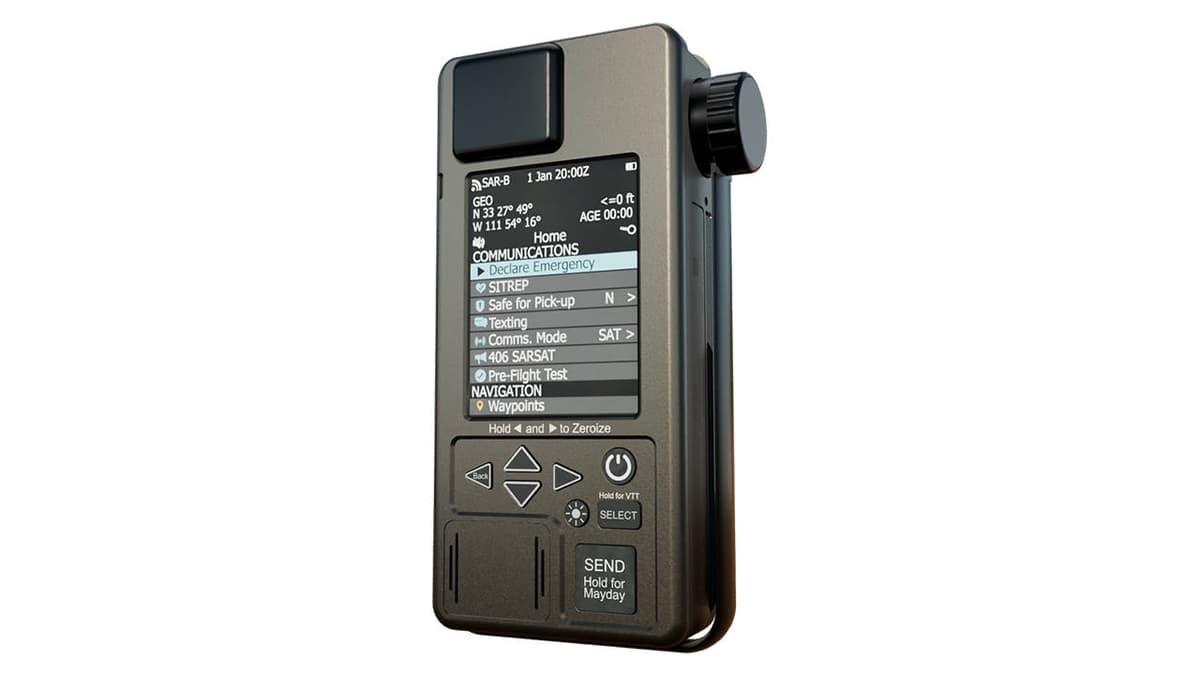
Enter the Next‑Generation Survivor Radio, a software‑defined, iPhone‑sized handset built by General Dynamics. Its compact form belies a suite of advanced capabilities: secure, over‑the‑horizon two‑way voice and data, real‑time geo‑positioning via the encrypted M‑code GPS signal, and NSA‑approved encryption that minimizes interception risk. Because the radio is software‑defined, future waveforms and mission‑specific protocols can be uploaded without hardware swaps, extending its service life and ensuring compatibility with evolving satellite constellations. Integration with the Joint Personnel Recovery Center’s cloud‑based application creates a unified network where air, land, and sea forces share situational awareness instantly.
From a procurement perspective, the $96 million 2027 request—backed by $51.7 million in 2026 R&D—signals a shift toward joint‑service standardization of rescue equipment. The anticipated fielding of nearly 7,000 units will replace aging CSELs across the Air Force, Army, Navy, and Marine Corps, streamlining logistics and training. Moreover, the NGSR’s modular architecture positions it as a platform for future upgrades, potentially opening opportunities for commercial partners in secure communications and satellite services. As the U.S. military modernizes its personnel‑recovery ecosystem, the NGSR stands out as a force multiplier that could shorten rescue timelines and save lives.
USAF to Buy Thousands of New Radios to Help Rescue Downed Pilots
Comments
Want to join the conversation?
Loading comments...