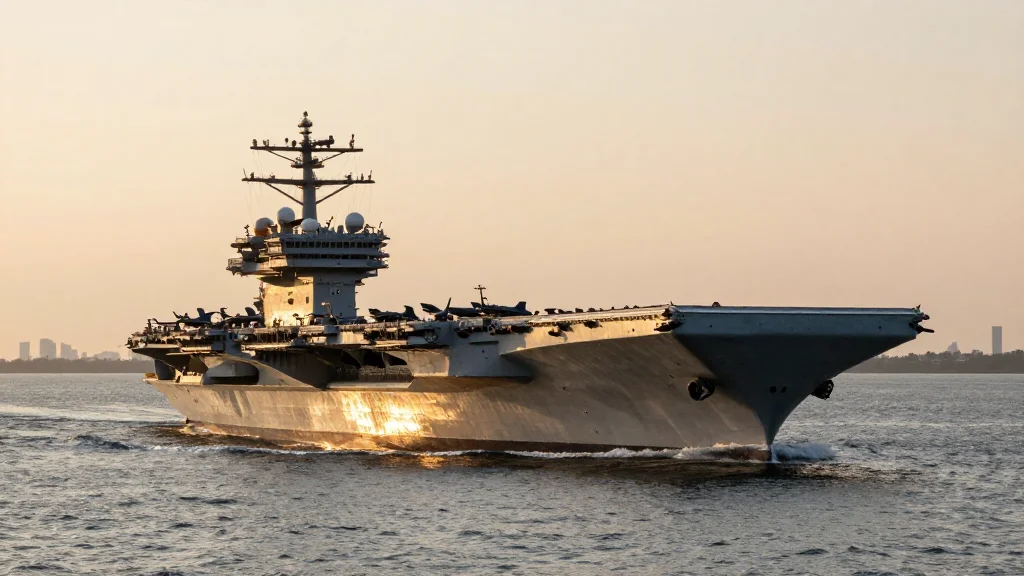
USS Gerald R. Ford Returns to Norfolk After 11‑Month Deployment, Longest Carrier Tour Since Vietnam

Why It Matters
The return of the USS Gerald R. Ford signals a shift from a sustained forward‑deployed posture to a period of recalibration for U.S. naval forces. By concluding the longest carrier deployment in decades, the Navy can assess the performance of next‑generation technologies and crew endurance under prolonged operational stress. The data gathered will inform future fleet composition, especially as the Pentagon seeks to counterbalance rising Chinese naval capabilities and persistent Iranian aggression. Strategically, the carrier’s multi‑theater itinerary demonstrates the United States’ commitment to maintaining freedom of navigation and deterring state and non‑state actors across several flashpoints. The simultaneous drawdown of cargo aircraft and the carrier’s homecoming may also reflect a broader diplomatic overture toward Iran, as Washington prepares for renewed negotiations while keeping a credible deterrent on standby.
Key Takeaways
- •USS Gerald R. Ford completed an 11‑month deployment, the longest U.S. carrier tour since Vietnam
- •Strike group conducted operations in the Middle East, Venezuela and the Caribbean
- •Approximately 4,500 sailors returned to Norfolk, welcomed by Defense Secretary Pete Hegseth
- •Around 11 C‑17 cargo planes left Middle Eastern bases for Europe, indicating a drawdown of U.S. airlift in the region
- •Deployment tested Ford‑class technologies such as EMALS and advanced radar, shaping future procurement
Pulse Analysis
The Gerald R. Ford’s extended deployment reflects a deliberate U.S. strategy to stretch naval assets across multiple theaters, a practice that grew out of the post‑9/11 emphasis on rapid, flexible response. Historically, carrier tours were limited to six months; extending to 11 months pushes the limits of crew endurance and platform reliability, offering a stress test for the Ford‑class’s high‑tech systems. The successful execution of joint operations in the Caribbean and the Middle East suggests that the Navy can sustain a dispersed, high‑tempo presence without over‑relying on forward‑based logistics hubs.
From a market perspective, the carrier’s performance will influence defense contractors tied to the Ford program, including Boeing (airframe), General Atomics (EMALS), and Raytheon (radar). Positive operational data could accelerate follow‑on orders for the next three Ford‑class hulls, while any shortcomings may prompt congressional scrutiny and budget adjustments. Moreover, the concurrent reduction of C‑17 sorties hints at a possible shift toward a more diplomatic posture toward Iran, potentially easing pressure on the defense industrial base that benefits from sustained conflict.
Looking forward, the Navy’s plan to redeploy the Gerald R. Ford to the Pacific by 2027 aligns with the broader Indo‑Pacific pivot, where the carrier will likely serve as a counterweight to China’s expanding carrier fleet. The lessons learned from this marathon deployment—particularly crew fatigue management and maintenance cycles—will be critical as the U.S. seeks to field a truly global, multi‑carrier force capable of simultaneous engagements across the world’s most contested waters.
USS Gerald R. Ford Returns to Norfolk After 11‑Month Deployment, Longest Carrier Tour Since Vietnam
Comments
Want to join the conversation?
Loading comments...