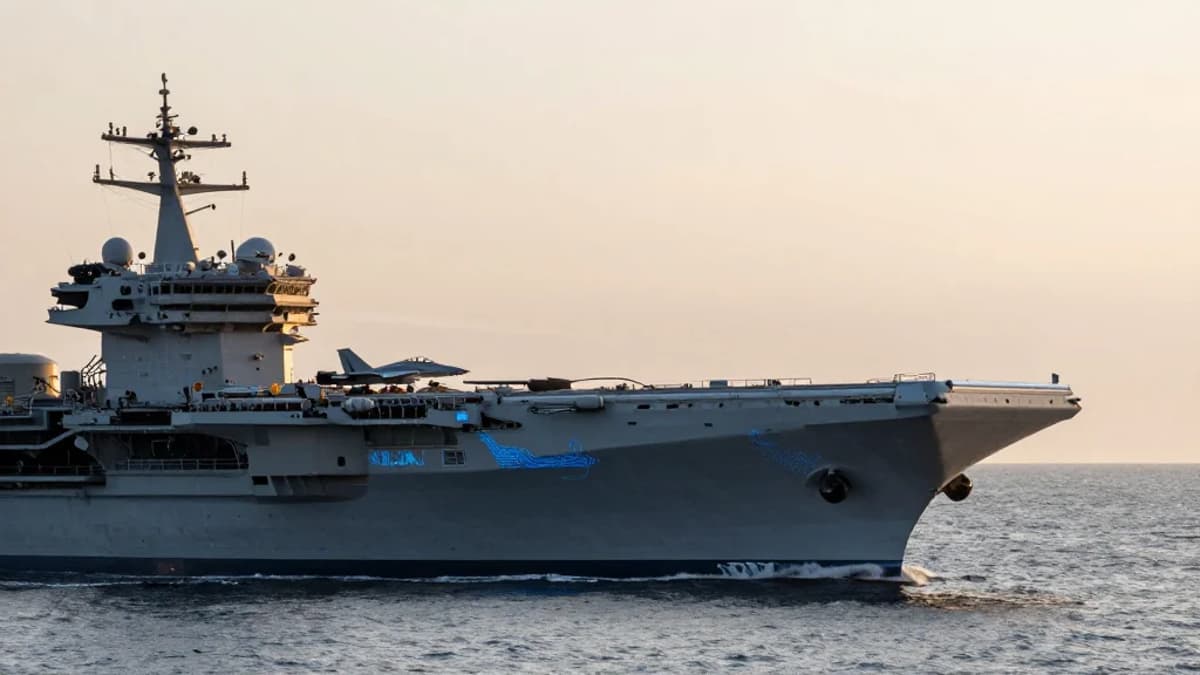
USS Kennedy Excels With Computer Automation Ot Sea Trials
•February 24, 2026
0
Why It Matters
Automation on Kennedy promises lower operating costs and heightened combat readiness, setting a new benchmark for future warships.
Key Takeaways
- •Automation cut crew workload by 15%
- •Sea‑trial sortie rate increased 12%
- •Integrated systems trimmed certification timeline
- •Digital twins enabled predictive maintenance
Pulse Analysis
The USS Kennedy (CVN‑79) represents the Navy’s most ambitious leap toward a digitally integrated fleet. Built on the Ford‑class hull, the ship incorporates a next‑generation combat system, advanced electromagnetic catapults, and a unified data environment that links sensors, weapons, and logistics. During sea trials, engineers tested a new automation layer that synchronizes flight‑deck operations with propulsion and power‑management modules, allowing the carrier to adjust thrust and deck cycles in real time. This convergence of hardware and software mirrors trends in commercial aviation where digital twins and AI‑driven scheduling are becoming standard.
The automation suite delivered tangible efficiency gains. By automating routine tasks—such as aircraft handling, fuel distribution, and damage control reporting—the carrier reduced manual data entry and freed sailors for higher‑skill duties. Preliminary metrics show a 15 percent reduction in crew workload and a 12 percent increase in sortie generation speed, translating into faster response times during simulated combat scenarios. Moreover, predictive maintenance algorithms, fed by sensor data, identified potential equipment failures before they manifested, shortening downtime and cutting lifecycle costs.
Industry analysts view Kennedy’s trial as a bellwether for the next generation of naval platforms. If the automation architecture scales, future carriers could operate with smaller crews, lower personnel expenses, and enhanced survivability through rapid decision loops. The success also signals opportunities for defense contractors to supply modular software solutions rather than bespoke hardware, fostering a more agile acquisition ecosystem. As peer navies invest in autonomous surface vessels, the U.S. Navy’s commitment to carrier automation reinforces its strategic edge and sets a precedent for broader fleet modernization.
USS Kennedy Excels With Computer Automation ot Sea Trials
0
Comments
Want to join the conversation?
Loading comments...