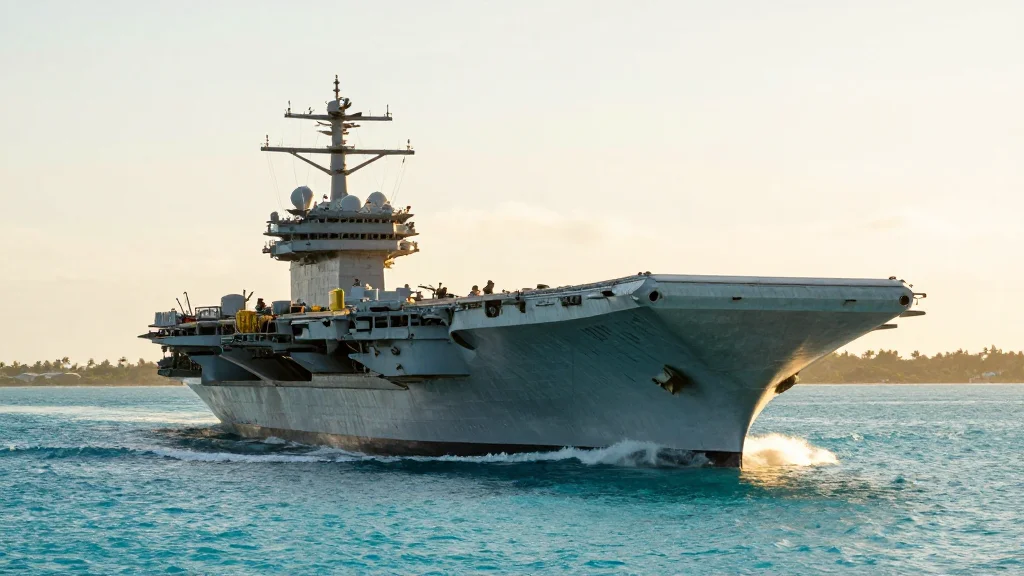
USS Nimitz Deploys to Caribbean as U.S. Steps Up Pressure on Cuba

Why It Matters
The simultaneous naval deployment and high‑profile indictment represent a coordinated escalation that could reshape U.S.-Cuba relations for years to come. By coupling kinetic presence with legal pressure, Washington is signaling that it will use the full spectrum of state power to confront what it perceives as hostile actions by the Cuban regime. For regional partners, the episode underscores the volatility of the Caribbean security environment and may prompt recalibrations of defense postures and procurement decisions. Beyond bilateral dynamics, the episode highlights how the United States is leveraging its military and judicial tools to influence political outcomes in neighboring states. The precedent set here could inform future U.S. strategies toward other regimes deemed adversarial, potentially normalizing the use of carrier groups as instruments of diplomatic coercion.
Key Takeaways
- •USS Nimitz entered the Caribbean on May 21, 2026, marking the first carrier deployment aimed explicitly at pressuring Cuba in over a decade.
- •U.S. Justice Department unsealed an indictment against former Cuban President Raul Castro for conspiracy to kill U.S. nationals and four murder counts.
- •Cuban President Miguel Diaz‑Canel called the indictment a “political maneuver” lacking legal basis.
- •President Donald Trump warned that the U.S. will not tolerate hostile foreign military activity within 90 miles of its shores.
- •The carrier strike group is expected to conduct joint exercises with Southern Command partners before returning to its home port later this summer.
Pulse Analysis
Washington’s dual‑track approach—combining a high‑visibility naval presence with a prosecutorial push against a senior Cuban figure—reflects a broader shift toward integrated coercion. Historically, U.S. pressure on Havana relied on economic sanctions and diplomatic isolation; the Nimitz deployment adds a kinetic dimension that can be leveraged in real time, offering a visible deterrent that sanctions alone cannot provide. This strategy also serves domestic political purposes, allowing the administration to showcase a hard‑line stance on perceived threats while delivering a tangible demonstration of military readiness.
The move may, however, backfire if it provokes a disproportionate response from Cuba or its allies. Havana’s recent acquisition of over 300 drones, as reported by U.S. intelligence sources, suggests a growing asymmetrical capability that could be employed against U.S. assets or regional partners. Moreover, the indictment of Raul Castro—while symbolically potent—faces practical hurdles, including the lack of an extradition treaty and Castro’s advanced age, potentially limiting its immediate impact on Cuban policy.
In the longer term, the episode could set a precedent for using carrier groups as diplomatic tools in low‑intensity conflicts, blurring the line between deterrence and provocation. Regional actors will be watching closely to gauge whether the United States intends to sustain this posture or if the deployment is a one‑off signal. The outcome will shape not only U.S.-Cuba relations but also the broader calculus of power projection in the Western Hemisphere.
USS Nimitz Deploys to Caribbean as U.S. Steps Up Pressure on Cuba
Comments
Want to join the conversation?
Loading comments...