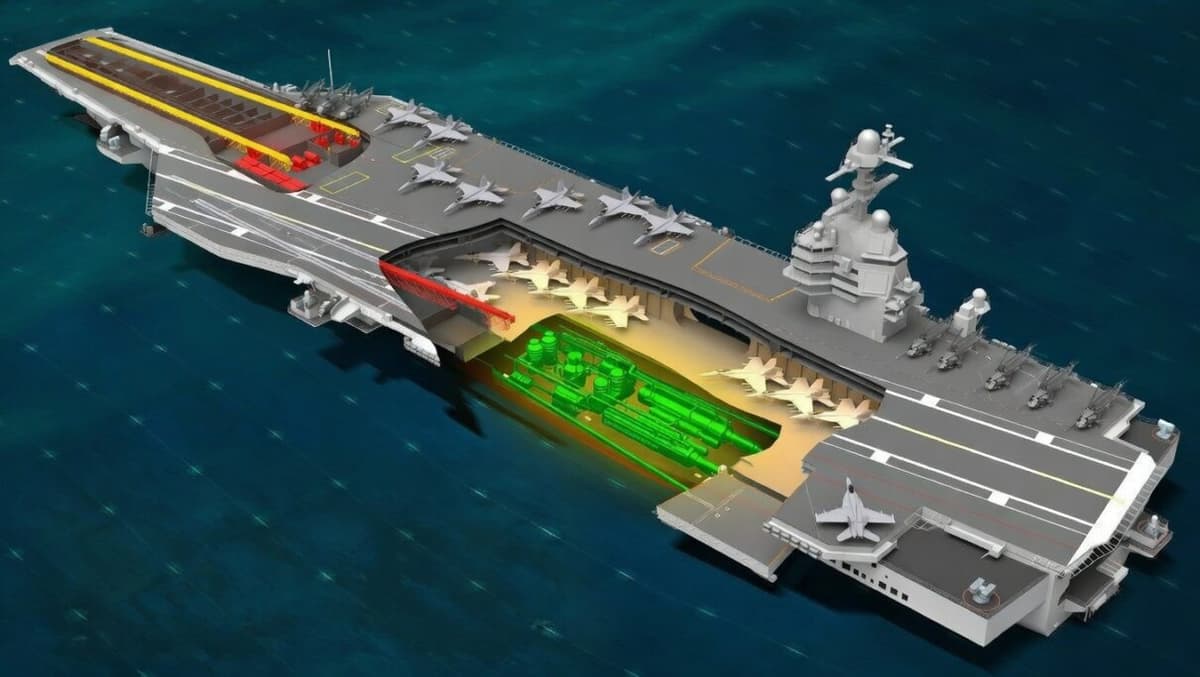
USS Truman’s “Costly Errors”: A Reminder for USS Gerald R. Ford — Is The World’s Most Powerful Carrier Ready For Iran War?
•February 21, 2026
0
Why It Matters
An unready Ford could limit U.S. power projection in a potential Iran conflict and drive up defense spending, while safety lapses risk costly accidents.
Key Takeaways
- •Ford transited Gibraltar, joining 13 US warships in Middle East
- •Extended deployment delays critical flight‑deck repairs
- •Maintenance backlog could inflate operational costs dramatically
- •Truman mishaps highlight risk of fatigue‑driven errors
- •CNO warns against further extending Ford’s sea time
Pulse Analysis
The USS Gerald R. Ford represents the pinnacle of U.S. naval aviation, boasting advanced electromagnetic catapults, a larger flight deck, and a 90‑aircraft air wing. Its recent transit through the Strait of Gibraltar signals a strategic pivot as Washington seeks to reinforce deterrence against Iran. While carriers traditionally spend up to nine months at sea during wartime, peacetime deployments are usually capped at six months to preserve equipment and crew readiness. Extending the Ford’s deployment beyond this norm reflects heightened geopolitical pressure but also strains the ship’s operational envelope.
Maintenance is the Achilles’ heel of any carrier, especially one as technologically sophisticated as the Ford. The vessel was due for a multi‑month refit at Newport News Naval Shipyard, where critical upgrades—such as flight‑deck nonskid resurfacing and elevator system overhauls—are performed. Prolonged sea time accelerates wear on the nonskid coating, forces unscheduled flight‑deck repairs, and can degrade the reliability of elevators that move aircraft between hangar and deck. These issues not only increase repair costs but also reduce sortie generation rates, a vital metric in any high‑intensity conflict.
The broader implication for the U.S. Navy is a potential gap in power projection capability at a time when the Middle East remains volatile. Recent mishaps aboard the USS Harry S. Truman—ranging from friendly‑fire incidents to a collision—highlight how crew fatigue and deferred maintenance can translate into preventable losses. If the Ford follows a similar trajectory, the Navy could face heightened operational risk, budget overruns, and political scrutiny. Senior leaders, including the CNO, are already signaling pushback against further extensions, underscoring the delicate balance between strategic necessity and sustainable force readiness.
USS Truman’s “Costly Errors”: A Reminder for USS Gerald R. Ford — Is The World’s Most Powerful Carrier Ready For Iran War?
0
Comments
Want to join the conversation?
Loading comments...