USSF Budget Offers First Glimpse at Plans for ‘Space Data Network’
Why It Matters
SDN aims to modernize U.S. warfighter communications, reducing latency and increasing resilience across contested domains, while diversifying the industrial base to sustain rapid space proliferation. Its success could set the standard for hybrid military‑commercial satellite networks worldwide.
Key Takeaways
- •$1.5 B allocated for SDN R&D and $1.5 B procurement in FY27.
- •Space Force plans 21 SDN satellites in FY27, up from 13.
- •Competition will open to add a second commercial provider beyond SpaceX.
- •Integration of commercial RF payloads supports Golden Dome interceptor program.
- •$70 M earmarked for transport layer, optical terminals, and testbed development.
Pulse Analysis
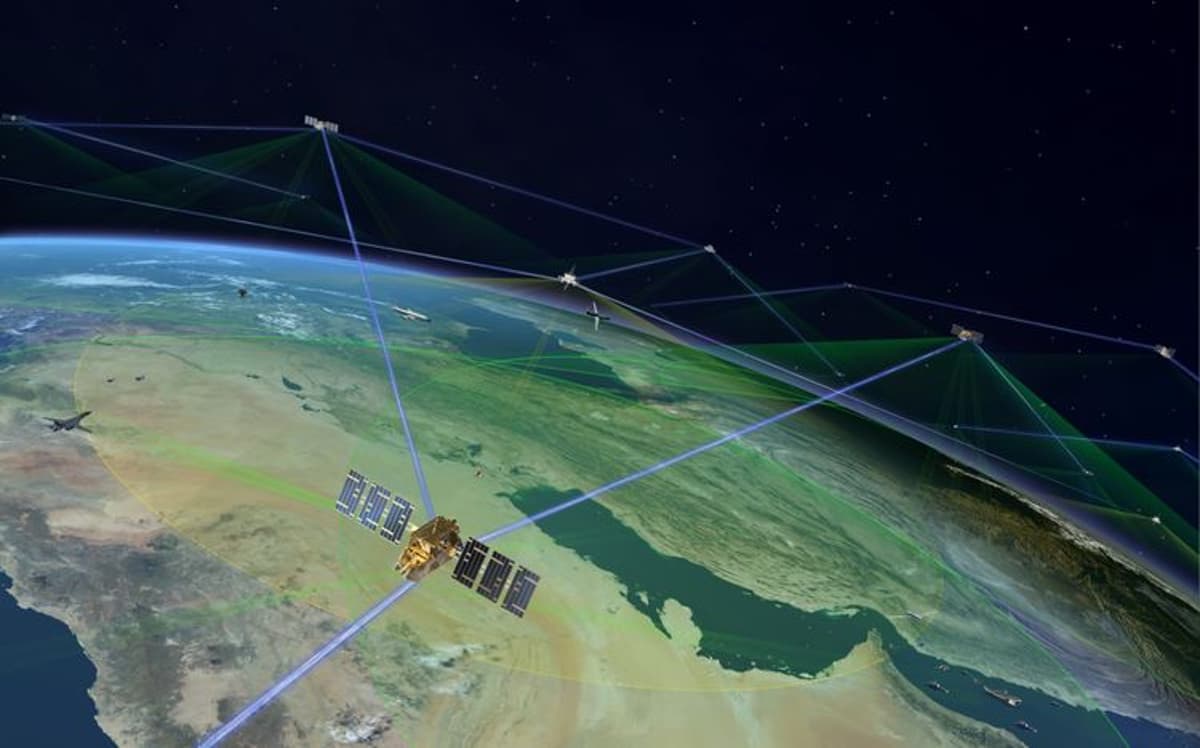
The Space Force’s FY‑2027 budget marks the first detailed glimpse of the Space Data Network, a hybrid satellite communications architecture that blends military and commercial low‑Earth‑orbit assets. By earmarking $1.5 billion for research and development and an equal amount for procurement, the service signals a decisive shift toward a resilient, high‑capacity, low‑latency transport layer capable of supporting sensor‑to‑shooter data flows for missile‑defense and broader enterprise needs. The plan’s emphasis on a “resilient joint network architecture” reflects growing concerns over contested space and the need for rapid, adaptable connectivity.
A notable element of the proposal is the opening of a competitive procurement process to broaden the industrial base beyond SpaceX, the current sole provider. The budget calls for 21 SDN satellites in 2027, up from 13, and allocates funds to integrate commercially derived radio‑frequency payloads that will also serve the Golden Dome interceptor program. By inviting additional vendors, the Space Force hopes to galvanize U.S. industry, drive down costs, and mitigate supply‑chain risks, while fostering innovation in satellite design, propulsion, and on‑orbit servicing.
Technical development receives a further boost with $70 million earmarked for transport‑layer integration, low‑cost reconfigurable optical terminals, and a dedicated testbed. These investments dovetail with ongoing DARPA and Air Force Research Laboratory efforts to create adaptive inter‑satellite links, enhancing cross‑domain command and control. As the SDN matures, it could become the backbone for future joint operations, setting a precedent for hybrid military‑commercial networks that other services and allied nations may emulate.
USSF Budget Offers First Glimpse at Plans for ‘Space Data Network’
Comments
Want to join the conversation?
Loading comments...