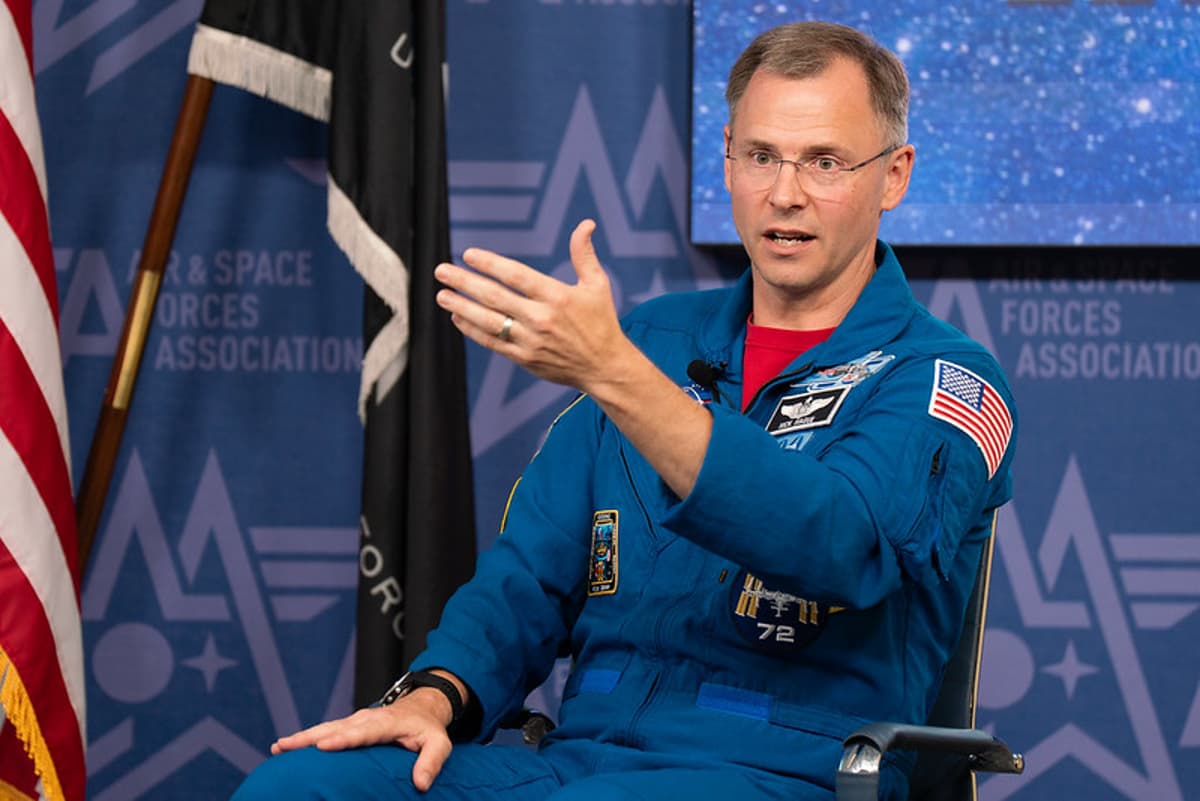
USSF Eyes ‘Dual-Use’ Ways to Boost Space Superiority, Prep for Guardians in Orbit
•March 6, 2026
0
Why It Matters
The discussion signals a strategic race to secure human presence in space, directly affecting U.S. deterrence, technological leadership, and the balance of power with China.
Key Takeaways
- •China integrates military crew into all space missions.
- •USSF debates timing of Guardians in orbit.
- •Dual-use programs bridge current needs and future astronaut roles.
- •NASA partnership offers low‑cost, high‑impact training.
- •Space Test Course creates versatile Guardians for rapid capability fielding.
Pulse Analysis
China’s approach of embedding People’s Liberation Army personnel in every human‑spaceflight mission creates a unified civil‑military capability that could outpace the United States if the gap widens. For the Space Force, the challenge is not merely to match that model but to do so without sacrificing the current focus on space superiority. By framing future Guardians as a dual‑use asset—supporting launch operations, space domain awareness, and rapid testing—the service can justify investment today while preserving flexibility for a later human‑centric force.
Practical steps discussed at the symposium include formalizing a Guardian Liaison office within NASA, leveraging existing launch collaborations, and expanding the Space Test Course at the Air Force Test Pilot School. These initiatives provide Guardians with hands‑on experience in high‑risk, low‑cost environments, sharpening skills that translate to both unmanned and manned missions. The dual‑use mindset also encourages shared technology development, such as resilient communications and latency‑critical decision‑making tools, which benefit both current satellite constellations and any future orbital crew platforms.
The broader implication for industry and policymakers is a clearer pathway to funding and talent pipelines that serve both immediate defense needs and long‑term strategic objectives. As commercial launch providers and lunar resource ventures accelerate, a ready cadre of trained Guardians can act as a force multiplier, enhancing deterrence and ensuring the United States retains a credible human presence in low‑Earth orbit, Lagrange points, and beyond. This alignment of near‑term capability with future aspirations may prove decisive in the emerging space security landscape.
USSF Eyes ‘Dual-Use’ Ways to Boost Space Superiority, Prep for Guardians in Orbit
0
Comments
Want to join the conversation?
Loading comments...