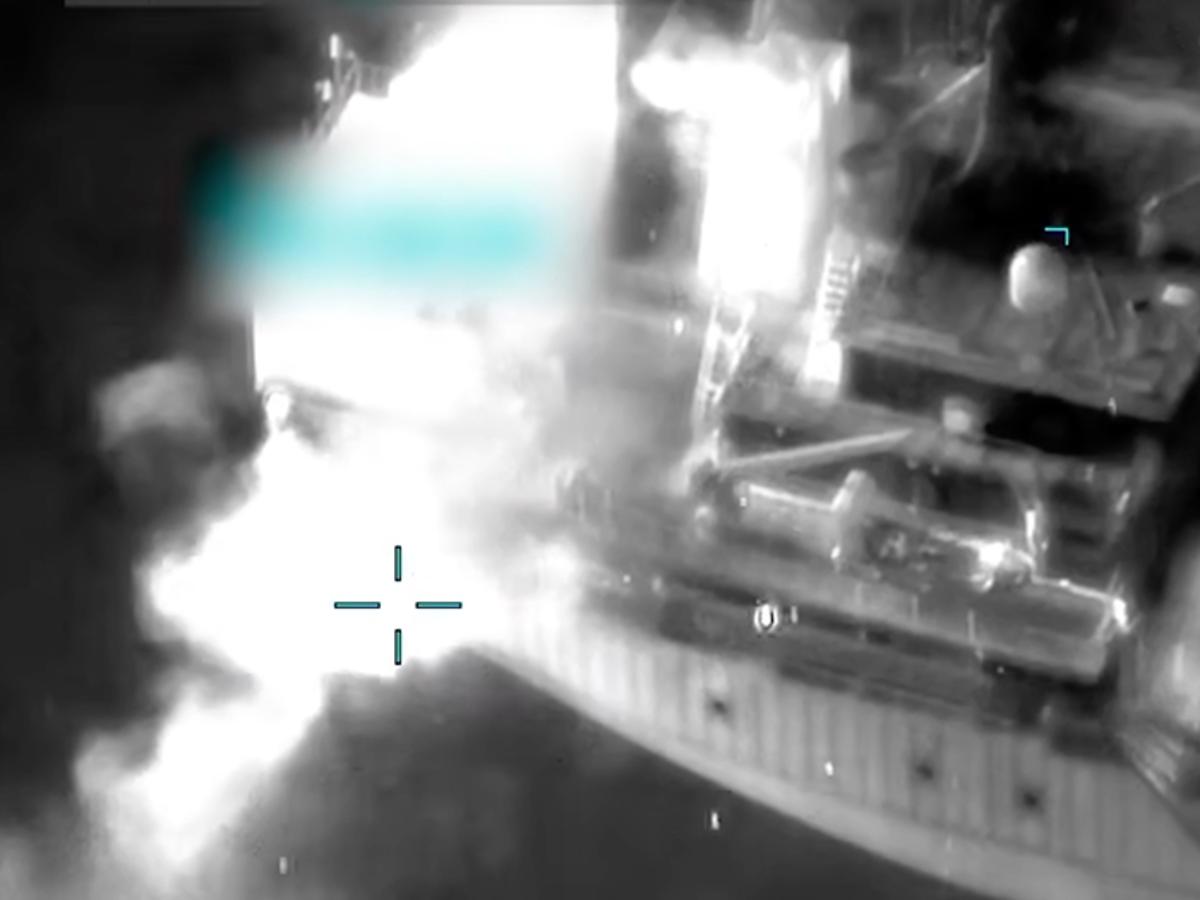
VIDEO: U.S. Hits Blockade-Violating Tanker Jalveer with Two Hellfire Missiles
Why It Matters
The U.S. is demonstrating willingness to use kinetic force to enforce sanctions, raising risks for global shipping and intensifying geopolitical tensions in the Middle East.
Key Takeaways
- •Jalveer struck by two Hellfire missiles after blockade violation
- •Third commercial vessel hit that week, ninth since mid‑April
- •All 20 Indian crew members evacuated safely
- •Three Indian seafarers killed on earlier Settebello attack
Pulse Analysis
The United States has escalated its maritime enforcement strategy by employing precision‑guided Hellfire missiles against civilian tankers that defy the Iran oil blockade. Since the blockade’s inception in April, nine commercial vessels have been disabled, signaling a shift from diplomatic warnings to direct kinetic action. This approach aims to choke Iran’s oil revenue stream, but it also introduces a new level of uncertainty for ship owners, insurers, and charterers operating in the strategically vital Gulf of Oman.
The June 10 incident involving the M/T Jalveer highlights the operational tempo of U.S. forces in the region. After repeated non‑compliance, a U.S. aircraft targeted the tanker’s engine room, effectively immobilizing the vessel while avoiding loss of life. The safe evacuation of the 20 Indian seafarers contrasts sharply with the tragic loss of three Indian crew members on the earlier Settebello strike, which prompted a formal protest from New Delhi. These events underscore the heightened risk profile for crews and the diplomatic sensitivities surrounding any use of force.
Beyond immediate security concerns, the aggressive enforcement of the blockade could reverberate through global oil markets. By curtailing Iran’s ability to export crude, the United States hopes to depress Tehran’s oil price support, yet the collateral impact on freight rates and insurance premiums may offset intended benefits. Moreover, the precedent of targeting commercial vessels raises complex legal questions under international maritime law, potentially inviting challenges in international courts and shaping future sanctions policy. Stakeholders must monitor how this kinetic enforcement evolves and its broader implications for trade routes, regional stability, and energy pricing.
VIDEO: U.S. hits blockade-violating tanker Jalveer with two Hellfire missiles
Comments
Want to join the conversation?
Loading comments...