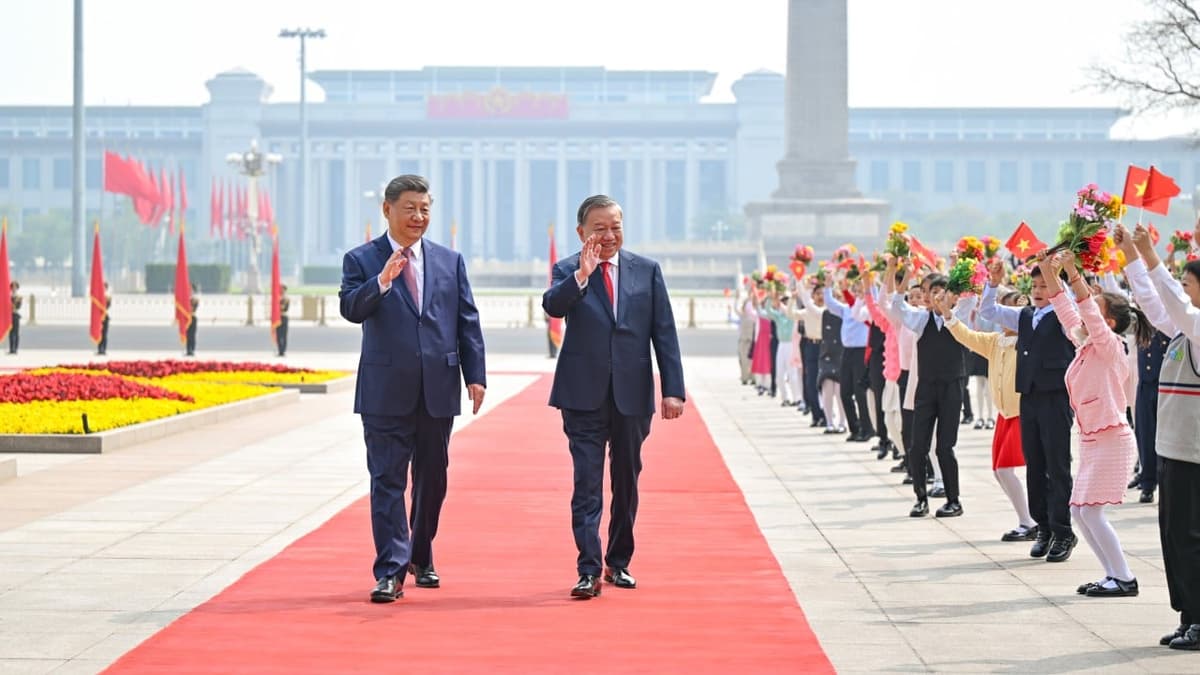
Vietnam and China Are Now Perfectly Aligned
Why It Matters
Vietnam’s tilt toward Beijing reshapes the security calculus in Southeast Asia and reduces its reliance on a potentially hostile United States. The alignment also accelerates supply‑chain shifts that could alter regional trade flows and investment patterns.
Key Takeaways
- •Vietnam drafted a “Second US Invasion” contingency plan in Aug 2024.
- •President To Lam met Xi Jinping, boosting Vietnam‑China strategic partnership.
- •Bilateral trade reached a record $256 billion in 2023.
- •US accounts for 29% of Vietnam’s $142 billion exports in 2024.
- •Vietnam seeks Chinese investment to diversify supply chains away from the US.
Pulse Analysis
Vietnam’s diplomatic overture to Beijing marks a decisive pivot in its foreign‑policy calculus. After President To Lam’s high‑level talks and a joint naval exercise, Hanoi is signaling a willingness to cooperate closely with China on security matters, including contingency planning against a perceived U.S. threat. This alignment challenges the traditional ASEAN principle of non‑alignment and raises questions about how Washington will adjust its containment strategy in the South China Sea and broader Indo‑Pacific arena.
Economically, the partnership is underpinned by record trade volumes—$256 billion in bilateral commerce last year—and a growing share of Chinese capital in Vietnamese manufacturing. While the United States still absorbs nearly a third of Vietnam’s $142 billion export basket, Vietnamese firms are actively seeking Chinese technology, joint‑venture opportunities, and alternative supply‑chain routes to mitigate exposure to U.S. tariff pressures. This diversification could accelerate the relocation of labor‑intensive production from China to Vietnam, reinforcing the latter’s role as the next regional manufacturing hub.
The convergence of security and economic ties has broader implications for regional stability. ASEAN members may face pressure to choose between a U.S.-led order and a China‑Vietnam axis, potentially fracturing the bloc’s consensus on maritime disputes. For investors, the shift signals both risk and opportunity: heightened geopolitical tension may spur defensive positioning, while deeper integration with China could unlock new market access and financing. Policymakers in Washington will need to balance deterrence with engagement to prevent further realignment that could erode U.S. influence in a critical growth corridor.
Vietnam and China are now perfectly aligned
Comments
Want to join the conversation?
Loading comments...