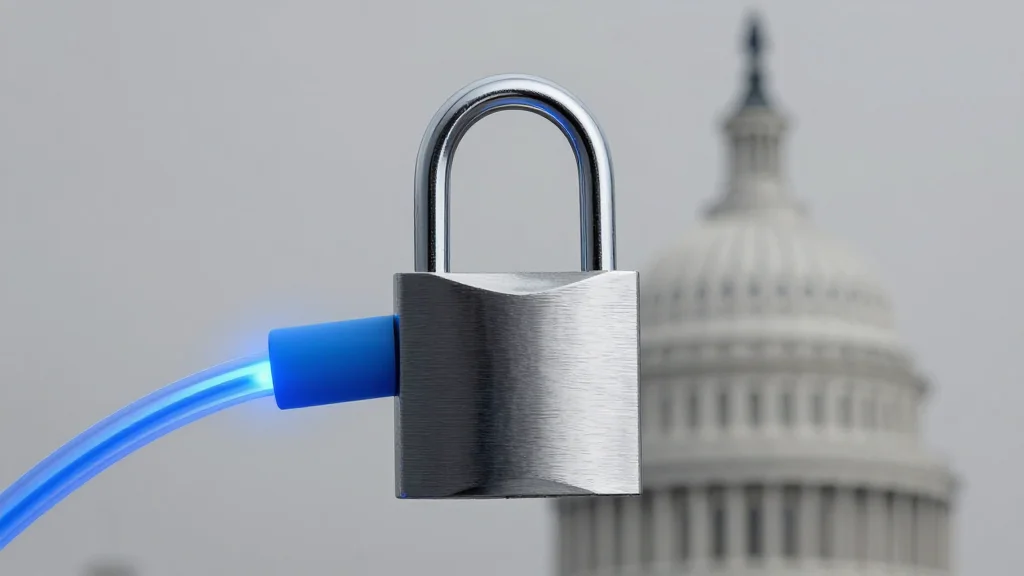
Warrantless Wiretaps Cut Off for a Week Following US Congress Vote
Why It Matters
The interruption creates legal ambiguity for both intelligence operations and corporate data‑privacy programs, forcing security leaders to reassess risk and compliance strategies. It also signals potential shifts in U.S. surveillance policy that could reshape the tech‑industry landscape.
Key Takeaways
- •Congress rejected Section 702 extension, halting warrantless foreign surveillance.
- •Lapse lasts until at least June 28, first since 2008.
- •CISOs must reassess cross‑border data monitoring and compliance.
- •Potential executive order could bypass lapse, creating legal ambiguity.
- •Tech firms may pursue litigation against unauthorized surveillance.
Pulse Analysis
Section 702, the cornerstone of U.S. foreign intelligence gathering, allows agencies to intercept electronic communications of non‑U.S. persons without a warrant. Historically, Congress has renewed the provision biennially, balancing national security priorities against privacy concerns raised by civil‑rights groups. The recent vote failure marks the first interruption since the law’s inception, highlighting growing partisan friction over surveillance authority and the increasing scrutiny of bulk data collection practices.
For cybersecurity executives, the lapse introduces a volatile compliance environment. While the legal authority to collect foreign communications is temporarily suspended, agencies may still retain previously gathered data, and incidental collection of U.S. persons’ information remains a gray area. CISOs must audit data‑flow architectures, update incident‑response playbooks, and engage legal counsel to ensure that any cross‑border data transfers remain within the bounds of existing privacy frameworks such as GDPR and the CLOUD Act.
Looking ahead, the administration could issue an executive order to temporarily restore surveillance powers, a move that would likely trigger litigation from technology firms and privacy advocates. Industry players may preemptively challenge any de‑facto extensions, citing constitutional concerns and potential violations of the Fourth Amendment. The outcome of the June 28 vote will set the tone for future reforms, possibly prompting Congress to consider a more narrowly tailored, court‑overseen model that balances security imperatives with robust oversight.
Warrantless wiretaps cut off for a week following US Congress vote
Comments
Want to join the conversation?
Loading comments...