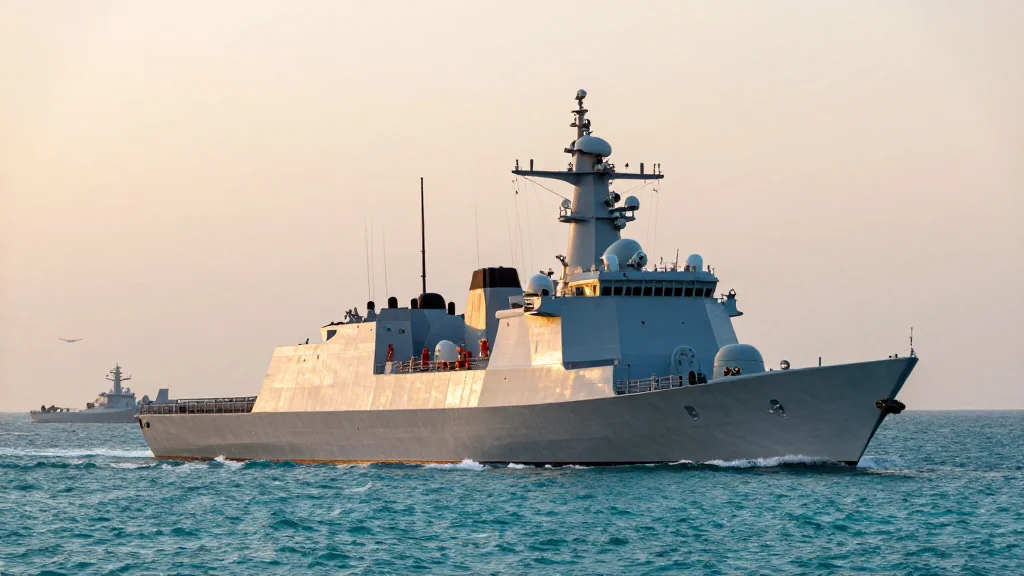
Warships 'Could Absolutely Deploy' To Iran if Asked, Defence Chief Says
Why It Matters
The ability to project naval power in the Strait of Hormuz gives Australia leverage in a volatile Middle‑East flashpoint and signals its commitment to multilateral security coalitions, while shaping the nation’s defence posture ahead of the 2026 strategy.
Key Takeaways
- •Admiral Johnston says Australia can deploy a warship to Strait of Hormuz
- •Deployment decision hinges on strategic priorities, not fleet capability
- •Australia operates E‑7 Wedgetail for defensive surveillance, filters data from US
- •Hobart‑class destroyers provide modern air‑warfare capability alongside older frigates
- •Upcoming 2026 National Defence Strategy will incorporate lessons from Iran conflict
Pulse Analysis
The Strait of Hormuz remains one of the world’s most contested maritime chokepoints, handling roughly 20% of global oil shipments. As tensions between the United States and Iran flare, allied nations are scrambling to assure the waterway stays open. Australia’s participation in a multilateral coalition—alongside the UK, France and Canada—underscores its willingness to contribute to collective security, even as the region’s volatility tests diplomatic resolve.
Domestically, the debate centers on capability versus intent. Critics point to the aging Anzac‑class frigates, yet the navy’s three Hobart‑class destroyers bring advanced air‑defence and missile‑intercept systems that can counter modern threats. Complementing the surface fleet, the E‑7 Wedgetail provides high‑altitude surveillance, with operators deliberately filtering intelligence to prevent offensive use by U.S. forces. This nuanced approach balances Australia’s defensive posture with the strategic advantage of sharing situational awareness in a joint command environment.
Looking ahead, the forthcoming 2026 National Defence Strategy will likely codify these operational lessons. Incorporating insights from the Iran conflict, Ukraine war and Indo‑Pacific challenges, the strategy is expected to prioritize flexible force projection, enhanced electronic warfare, and tighter integration with allied command structures. For defence contractors and policymakers, the shift signals heightened demand for next‑generation sensors, missile‑defence upgrades, and interoperable command‑and‑control platforms, reshaping Australia’s defence procurement landscape for the next decade.
Warships 'could absolutely deploy' to Iran if asked, defence chief says
Comments
Want to join the conversation?
Loading comments...