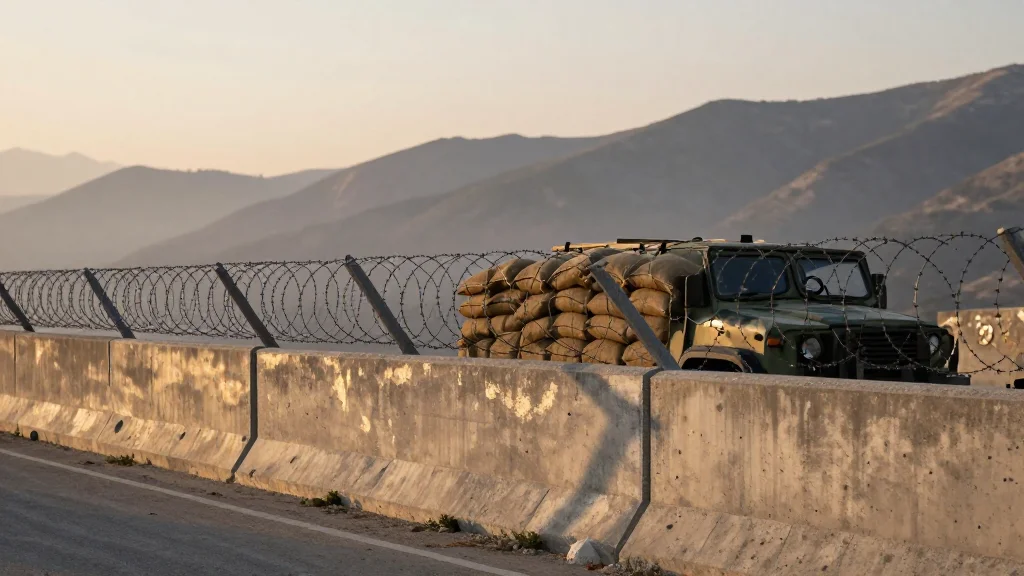
'We Are Not Leaving': What Israel's Occupation Could Mean for Lebanon's Future
Why It Matters
The de‑facto annexation reshapes Lebanon’s security landscape, undermines its territorial integrity and could lock the region into a new, volatile status quo.
Key Takeaways
- •Israel’s “Yellow Line” buffer zone covers 560 sq km, 5.5% of Lebanon.
- •IDF has destroyed homes in 39 villages, labeling them terrorist outposts.
- •Hezbollah vows to resist any Israeli‑imposed lines, threatening renewed fighting.
- •Negotiations in Washington hinge on Hezbollah disarmament and Israeli withdrawal.
Pulse Analysis
The latest Israeli incursion into southern Lebanon revives a pattern first seen during the 1978‑2000 occupation, when Israel created a security strip to curb Hezbollah’s cross‑border attacks. By mapping a 5‑10 km deep “Forward Defense Line,” the IDF seeks to isolate guerrilla infrastructure while projecting a permanent foothold that could be leveraged in future negotiations. Analysts warn that the buffer zone’s size—560 sq km—signals a strategic shift from a temporary cease‑fire measure to a quasi‑territorial claim, complicating any quick Israeli pull‑out.
Humanitarian fallout is already stark. Satellite imagery and eyewitness accounts confirm the demolition of homes in 39 villages, displacing over 800,000 residents and prompting accusations of war crimes. The destruction extends beyond Shia strongholds, threatening mixed‑religion communities and jeopardizing Lebanon’s already fragile social fabric. Moreover, the buffer zone brushes against Lebanon’s exclusive economic zone, where untapped gas fields could become a flashpoint for maritime disputes, despite the 2022 land‑sea border agreement remaining legally intact.
Diplomatically, the Washington talks place Hezbollah’s disarmament at the heart of any Israeli withdrawal, a demand that Lebanon views as untenable without substantial international guarantees. The United States, balancing its security alliance with Israel against regional stability, may push for a reconstruction package to offset Lebanon’s economic collapse. Yet without a clear roadmap for restoring Lebanese sovereignty, the “Yellow Line” risks cementing a new reality—a semi‑occupied south that erodes state authority and fuels a cycle of retaliation, with broader implications for Middle‑East peace prospects.
'We are not leaving': What Israel's occupation could mean for Lebanon's future
Comments
Want to join the conversation?
Loading comments...