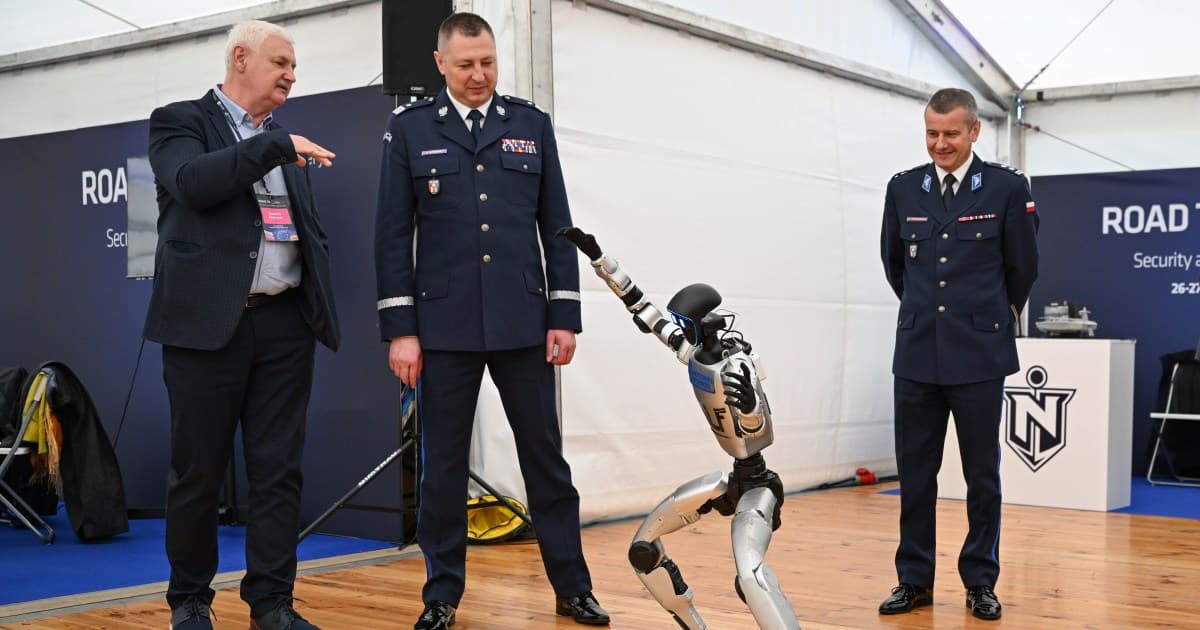
What Do Ukraine’s Robot Soldiers Mean for the Future of Warfare?
Why It Matters
AI‑powered weapons are reshaping combat speed and lethality, forcing governments to confront urgent legal and moral questions about autonomous decision‑making in war.
Key Takeaways
- •Ground robots completed over 22,000 missions in three months
- •Robotic systems now deliver up to 70% of frontline supplies
- •US defense awarded $200 million to OpenAI for generative AI
- •UN to convene June meeting on AI's impact on peace
Pulse Analysis
Ukraine has become a live laboratory for autonomous ground combat platforms. Companies like DevDroid have fielded AI‑guided robots that not only transport ammunition, food and medical kits but can also engage enemy troops, as demonstrated by the captured Russian soldiers. The scale is striking: within a single quarter, these machines have logged tens of thousands of missions, effectively shouldering logistics and combat roles that traditionally required human presence. This operational tempo showcases how AI can amplify force projection while reducing soldier exposure on the front line.
The Ukrainian experience sits atop a decades‑long trajectory that began with the MQ‑1 Predator drone’s first combat strike in 2002. Since then, unmanned aerial systems have evolved from remote‑piloted tools to semi‑autonomous platforms capable of target identification and strike prioritisation. Today, the conversation has shifted from "who pilots the drone?" to "how much decision‑making can a machine make without human oversight?" Experts warn that without clear rules, the line between assistance and lethal autonomy blurs, raising profound concerns about proportionality, civilian protection and accountability under international humanitarian law.
Globally, policymakers are scrambling to catch up. The U.S. Department of Defense recently awarded $200 million contracts to OpenAI, xAI and Anthropic to embed generative AI into military workflows, while the Stockholm International Peace Research Institute highlights a fragmented AI supply chain that complicates oversight. In response, the United Nations Institute for Disarmament Research will convene a June summit to examine AI’s implications for peace and security, echoing calls for regional norms and stricter regulation of semi‑autonomous weapons. The outcome of these debates will shape whether AI accelerates conflict or becomes a controlled tool of deterrence.
What do Ukraine’s robot soldiers mean for the future of warfare?
Comments
Want to join the conversation?
Loading comments...