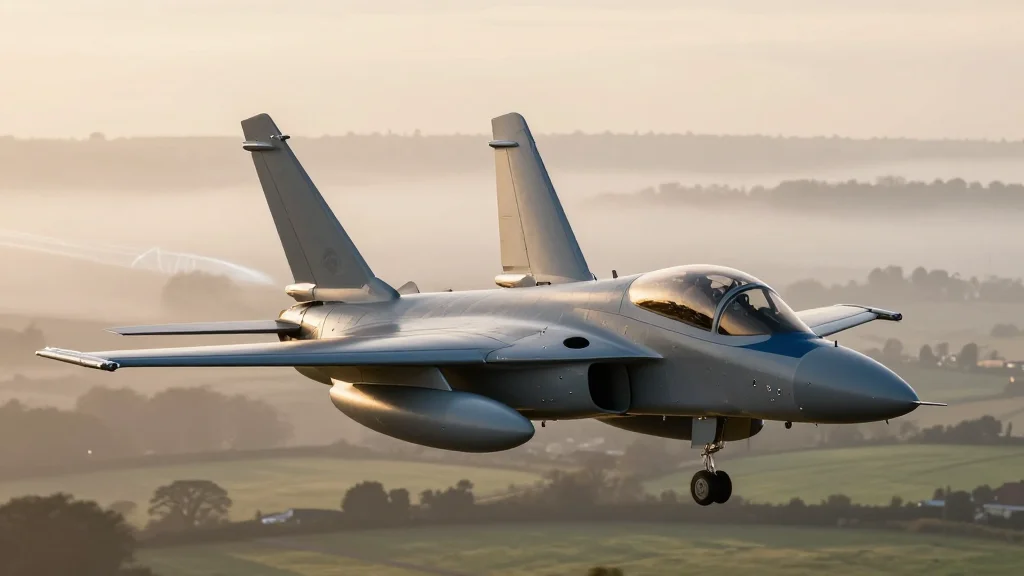
What Is the Skyhammer Air Defence System?
Companies Mentioned
Why It Matters
Skyhammer offers a low‑cost, rapid‑response option against cheap attack drones, reducing reliance on multi‑million‑dollar missiles and strengthening UK and Gulf air‑defence postures.
Key Takeaways
- •Skyhammer intercepts Shahed drones up to 30 km away.
- •Jet‑powered interceptor reaches 700 km/h, faster than electric drones.
- •UK to receive first units May 2026, six‑month delivery window.
- •System uses retractable wings, tube launch, compact storage.
- •Cost‑effective alternative to $3.7 million PAC‑3 missiles.
Pulse Analysis
The proliferation of inexpensive, one‑way attack drones—exemplified by Iran‑supplied Shahed UAVs—has forced militaries to rethink traditional air‑defence economics. Conventional interceptors such as PAC‑3 missiles can cost upwards of $3.7 million per shot, making them unsustainable against swarms of low‑cost threats. This market pressure has accelerated the development of dedicated counter‑UAS (C‑UAS) systems that blend affordability with sufficient kinetic performance, creating a new niche for specialized interceptors.
Skyhammer, Cambridge Aerospace’s flagship C‑UAS munition, embodies that niche. The jet‑powered interceptor reaches 700 km/h, a speed unattainable for electric‑propulsion designs of comparable size, and can engage targets at 30 km—roughly 19 miles—providing a layered defence envelope. Its retractable wings and tube‑launch architecture keep the system compact for ship‑board or ground‑based storage, while the inverted V‑tail fins enhance manoeuvrability. Developed in just over a year, the program moved from concept to flight testing within six weeks, illustrating the UK’s push for rapid, sovereign procurement cycles.
The UK’s decision to field Skyhammer, alongside Gulf partners, signals a broader shift toward home‑grown, cost‑effective C‑UAS solutions. By sidestepping reliance on heavyweight platforms like THAAD or Patriot, which are ill‑suited for low‑altitude drone threats, Britain and its allies can field a scalable defence that aligns with budget constraints and operational tempo. The procurement also positions Cambridge Aerospace as a potential export contender, as other nations confront the same drone‑asymmetry challenge, potentially reshaping the global air‑defence market toward lighter, faster, and cheaper interceptors.
What is the Skyhammer air defence system?
Comments
Want to join the conversation?
Loading comments...