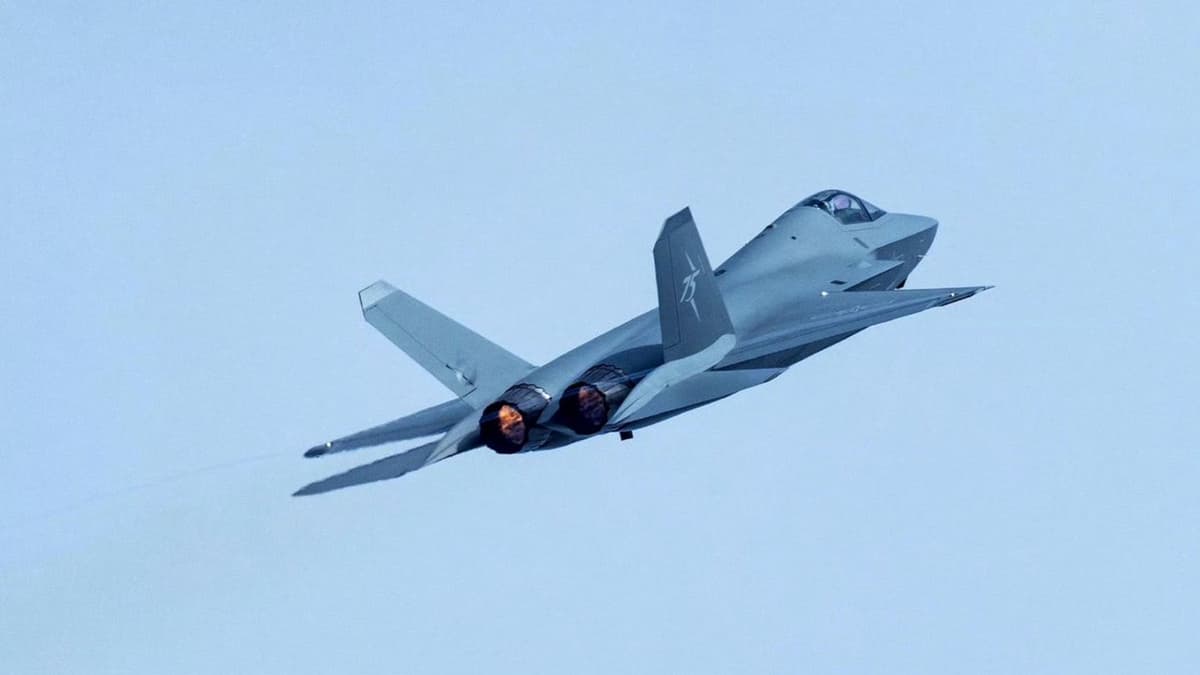
What the Reports Say About Pakistan’s J-35 Stealth Fighter Deal
•March 7, 2026
0
Why It Matters
The acquisition would provide Pakistan with a low‑observable, fifth‑generation fighter, narrowing the capability gap with India’s modernising air force. It also signals China’s growing role as a stealth‑fighter supplier to nations barred from Western alternatives.
Key Takeaways
- •Pakistan eyes 40 J-35 fighters from China.
- •Deal offers fifth‑generation capability at ~$50 million each.
- •Training already underway for PAF pilots in China.
- •Potential KJ‑500 AEW&C to complement J‑35 fleet.
- •India may accelerate its own stealth programs.
Pulse Analysis
The South Asian air‑power race has accelerated in recent years, with India investing heavily in the AMCA program and additional Rafale purchases. Pakistan’s pursuit of the J‑35 reflects a strategic calculus to secure a stealth capability that can contest Indian air superiority without relying on Western suppliers, which have been off‑limits due to geopolitical constraints. By aligning with China’s fifth‑generation offering, Islamabad hopes to achieve a credible deterrent while keeping procurement costs well below those of the U.S. F‑35.
Technically, the J‑35AE builds on the FC‑31 lineage, featuring an AESA radar, advanced electronic‑warfare suite, and internal weapon bays designed for PL‑15E, PL‑10E, PL‑12AE and LD‑8A missiles. The estimated $50 million unit price represents roughly half the cost of a comparable Western stealth fighter, making it attractive for budget‑constrained air forces. Ongoing pilot conversion training in China and reported integration of the KJ‑500 airborne early‑warning platform suggest a holistic approach to network‑centric warfare, rather than a stand‑alone aircraft acquisition.
If the deal materialises, the J‑35 could become a catalyst for broader defence collaboration between Beijing and Islamabad, potentially including licensed production or component transfer. Such technology sharing would bolster Pakistan’s indigenous aerospace sector and create a new market foothold for Chinese stealth fighters. Conversely, the introduction of a fifth‑generation platform in the region is likely to prompt India to expedite its own modernisation, intensifying an arms‑race dynamic that could reshape procurement timelines and strategic postures across South Asia.
What the Reports Say About Pakistan’s J-35 Stealth Fighter Deal
0
Comments
Want to join the conversation?
Loading comments...