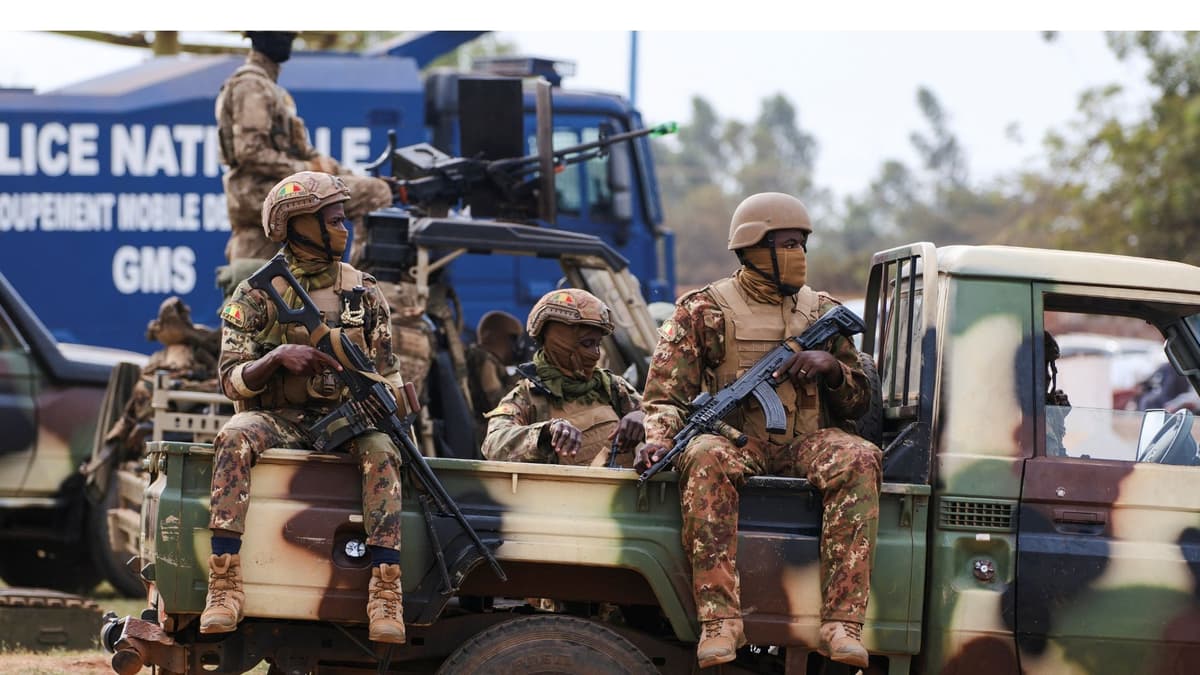
What’s Driving Attacks Against Gov’t and Russian Forces in Mali?
Why It Matters
The escalation signals a deepening security crisis that could cripple Mali’s state capacity and deter investment in the Sahel, affecting regional stability and global supply chains.
Key Takeaways
- •Al‑Qaeda‑linked insurgents united to strike government forces
- •Russian Wagner contractors faced intensified ambushes across northern Mali
- •Defense minister’s assassination escalated power struggle in Bamako
- •Ethnic militias exploiting security vacuum increase civilian casualties
- •Regional instability threatens Sahel trade routes and foreign investment
Pulse Analysis
The latest wave of violence in Mali reflects a strategic shift among jihadist groups, most notably an al‑Qaeda‑affiliated network that has set aside historic rivalries to concentrate on state targets. By pooling resources and intelligence, these groups have been able to coordinate simultaneous assaults on army bases and the Russian Wagner contingent that backs the government. This newfound unity amplifies their operational reach, making previously secure installations vulnerable and forcing the Malian military to divert scarce resources to defensive postures.
The killing of Defense Minister Souleymane Doucouré has further destabilized the political landscape, creating a power vacuum that emboldens both insurgents and opportunistic ethnic militias. These militias, often rooted in local grievances over land and resources, are now leveraging the chaos to expand their influence, leading to a rise in civilian casualties and displacement. The convergence of jihadist ambition and militia opportunism complicates any straightforward counter‑insurgency strategy, as forces must now contend with a multi‑layered threat environment.
Beyond Mali’s borders, the deteriorating security situation threatens the broader Sahel corridor, a critical conduit for trade and humanitarian aid. Investors eyeing mining, agriculture, and renewable energy projects are reassessing risk exposure, while neighboring states worry about spillover effects that could ignite further unrest. International partners, including France and the United States, face mounting pressure to recalibrate their engagement, balancing the need to curb extremist expansion with the imperative to support a fragile government struggling to maintain legitimacy.
What’s driving attacks against gov’t and Russian forces in Mali?
Comments
Want to join the conversation?
Loading comments...