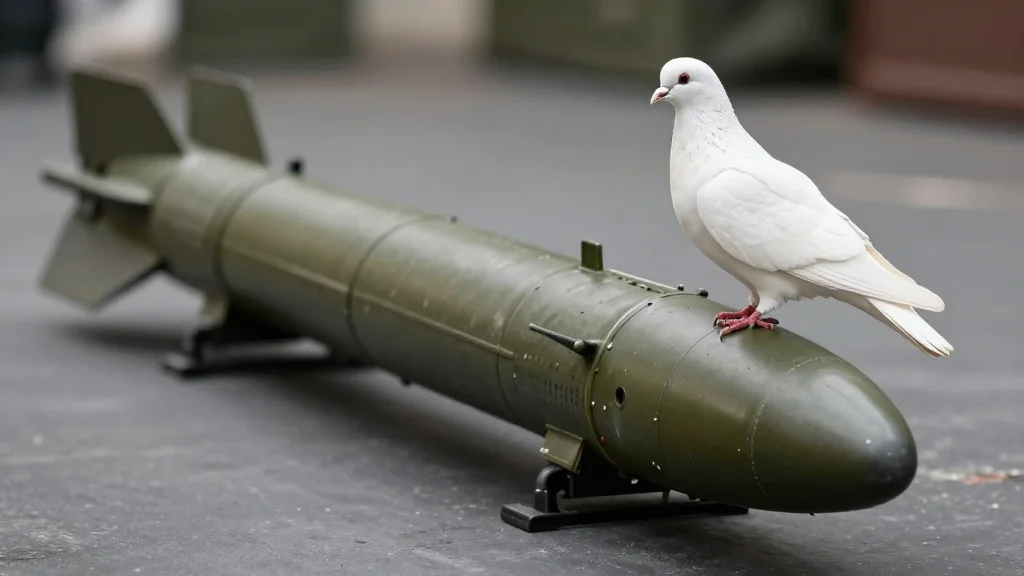
When Gorbachev and Reagan Tried to End the Nuclear Threat
Why It Matters
The Gorbachev‑Reagan era shows how diplomatic boldness and popular anti‑nuclear sentiment can achieve deep cuts, a lesson vital as the U.S. and Russia still maintain roughly 10,000 warheads amid renewed great‑power tensions.
Key Takeaways
- •Gorbachev’s 1986 “disarmament by 2000” proposal sparked Reykjavik talks
- •Combined U.S.-Soviet warheads fell from ~60,000 (1986) to ~8,000 (2018)
- •INF Treaty eliminated ~2,700 intermediate‑range nuclear missiles, the first class‑wide ban
- •U.S. “hedge” warheads allow rapid doubling of deployed arsenal if needed
- •Public anti‑nuclear movements in the 1980s pressured leaders to pursue cuts
Pulse Analysis
The 1980s marked a turning point in Cold War security when Soviet premier Mikhail Gorbachev used a full‑page New York Times ad to announce an ambitious “disarmament by the year 2000.” By framing nuclear reduction as a joint, time‑bound goal, Gorbachev forced Washington onto the diplomatic table, culminating in the Reykjavik summit of October 1986. Although the talks produced no treaty, they energized bilateral negotiations and set the political climate for the 1987 Intermediate‑Range Nuclear Forces (INF) Treaty, the first agreement to eliminate an entire weapons class, and later the 1991 Strategic Arms Reduction Treaty (START). These milestones demonstrated that high‑level political vision, combined with public pressure, could translate into concrete arms‑control outcomes.
The ensuing decades saw a dramatic contraction of the nuclear arsenals once poised at roughly 60,000 warheads in 1986. START, followed by the 1993 and 2010 extensions and the 2010 New START treaty, drove strategic warhead limits down to about 1,700 per side, while the INF Treaty removed roughly 2,700 intermediate‑range missiles. Parallel efforts eliminated most tactical nuclear weapons in Europe, and a unilateral Soviet moratorium on testing paved the way for the Comprehensive Test Ban Treaty, though it remains unsigned by the United States. Yet, the United States retains a “hedge” of non‑deployed warheads that could double the deployed stockpile quickly, a capability highlighted in recent strategic posture reviews responding to China’s growing nuclear force.
Today, the legacy of Gorbachev and Reagan offers a cautionary blueprint for contemporary policymakers. With about 10,000 warheads still in service and emerging great‑power rivalries, the article stresses that arms‑control progress cannot rely solely on military technocrats; it requires sustained public engagement and bold political leadership. Reviving the spirit of the 1980s anti‑nuclear movements could help rebuild trust, extend verification regimes, and ultimately prevent a new arms race that threatens global security.
When Gorbachev and Reagan Tried to End the Nuclear Threat
Comments
Want to join the conversation?
Loading comments...