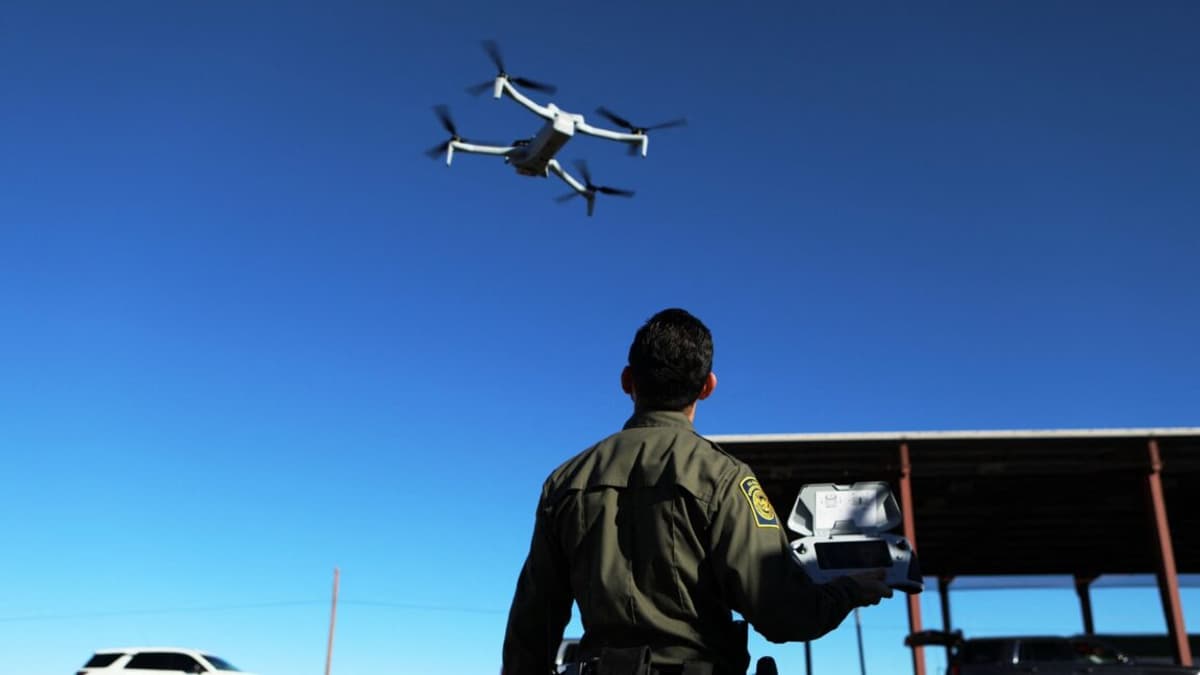
Whoops: US Military Laser Strike Takes Down CBP Drone Near Mexican Border
•February 27, 2026
0
Why It Matters
The incident exposes dangerous inter‑agency communication failures in emerging counter‑drone operations, risking aviation safety and prompting calls for stricter oversight.
Key Takeaways
- •Pentagon laser downed CBP border surveillance drone
- •No FAA coordination; airspace temporarily closed
- •Prior laser incident hit a party balloon, not a drone
- •Democrats call incident evidence of administration incompetence
- •Calls for stricter C‑UAS training and inter‑agency protocols
Pulse Analysis
The rapid deployment of high‑energy laser systems to counter illicit unmanned aircraft reflects a growing security focus on the U.S.-Mexico border. Agencies such as the Department of Defense, Customs and Border Protection, and the FAA are racing to integrate cutting‑edge technology that can neutralize drug‑smuggling drones and potential terrorist threats. However, the technology’s effectiveness hinges on clear operational protocols, real‑time data sharing, and a unified command structure—elements that remain fragmented across federal entities.
When the Pentagon’s laser unit engaged an unidentified drone on Thursday, the lack of prior notification to the FAA and CBP resulted in a friendly‑fire incident that forced the agency to close airspace temporarily. This follows a February mishap where CBP’s own laser mistakenly targeted a party balloon, underscoring a pattern of uncoordinated laser use. Both events have raised alarms among aviation safety experts, who argue that operating high‑risk counter‑UAS tools without FAA approval violates existing airspace regulations and endangers civilian aircraft.
Politically, the episode has ignited bipartisan criticism of the Trump administration’s border‑security strategy. Lawmakers are demanding an independent investigation and pushing for legislation that mandates comprehensive training, certification, and inter‑agency communication for C‑UAS operators. As Congress evaluates these proposals, the incident may accelerate the development of a unified framework that balances border enforcement with the safety of national airspace, shaping the future of counter‑drone policy in the United States.
Whoops: US military laser strike takes down CBP drone near Mexican border
0
Comments
Want to join the conversation?
Loading comments...