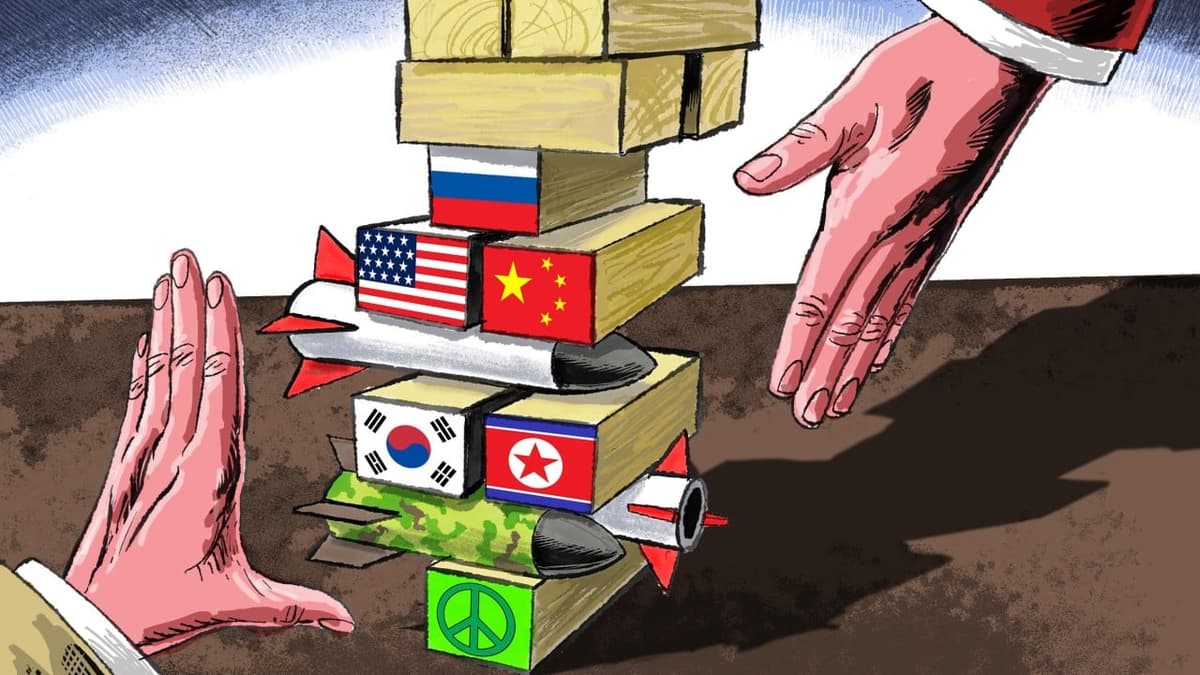
Why Stability Must Come Before Denuclearisation on the Korean Peninsula
Why It Matters
Without a stable security environment, any push for denuclearisation could trigger uncontrolled escalation, jeopardizing regional and global peace.
Key Takeaways
- •North Korea estimates at least 50 nuclear warheads.
- •US, China, and Russia share overlapping interests on the peninsula.
- •Escalation control remains informal but crucial for regional stability.
- •Iran‑style pressure is unsuitable for the Korean peninsula’s security dynamics.
- •Russia‑North Korea military cooperation heightens threat perception for the United States.
Pulse Analysis
The United States’ recent kinetic campaign against Iran sent a clear signal to Pyongyang, prompting the North Korean regime to double down on its deterrent capabilities. Rather than retreating, North Korea has tightened security around its leadership and increased missile activity, underscoring a strategic calculus that its nuclear arsenal—estimated at a minimum of 50 warheads—creates a buffer against conventional pressure. This shift reflects a broader pattern where nuclear-armed states use heightened posturing to test the limits of external coercion, making diplomatic overtures more complex.
The Korean peninsula sits at a geopolitical crossroads where the strategic objectives of Washington, Beijing, and Moscow intersect. Russia’s expanding military cooperation with North Korea, highlighted in recent U.S. intelligence assessments, adds a new layer of risk, as any conflict could quickly draw multiple great powers into a broader confrontation. The peninsula’s dense military infrastructure and proximity to major population centers mean that escalation control—an informal but long‑standing logic—remains essential to prevent a flashpoint from spiraling into full‑scale war. This environment differentiates the Korean case from the Middle East, where U.S. pressure on Iran follows a distinct set of calculations.
Policy experts argue that stability must precede any credible denuclearisation agenda. By reinforcing mechanisms that manage escalation—such as hot‑line communications, joint crisis‑management protocols, and confidence‑building measures—regional actors can create a predictable security baseline. Once that baseline is secured, diplomatic pathways, including phased sanctions relief and reciprocal security guarantees, become viable. In essence, a disciplined focus on stability not only reduces the immediate risk of conflict but also lays the groundwork for a sustainable, negotiated resolution to North Korea’s nuclear program.
Why stability must come before denuclearisation on the Korean peninsula
Comments
Want to join the conversation?
Loading comments...