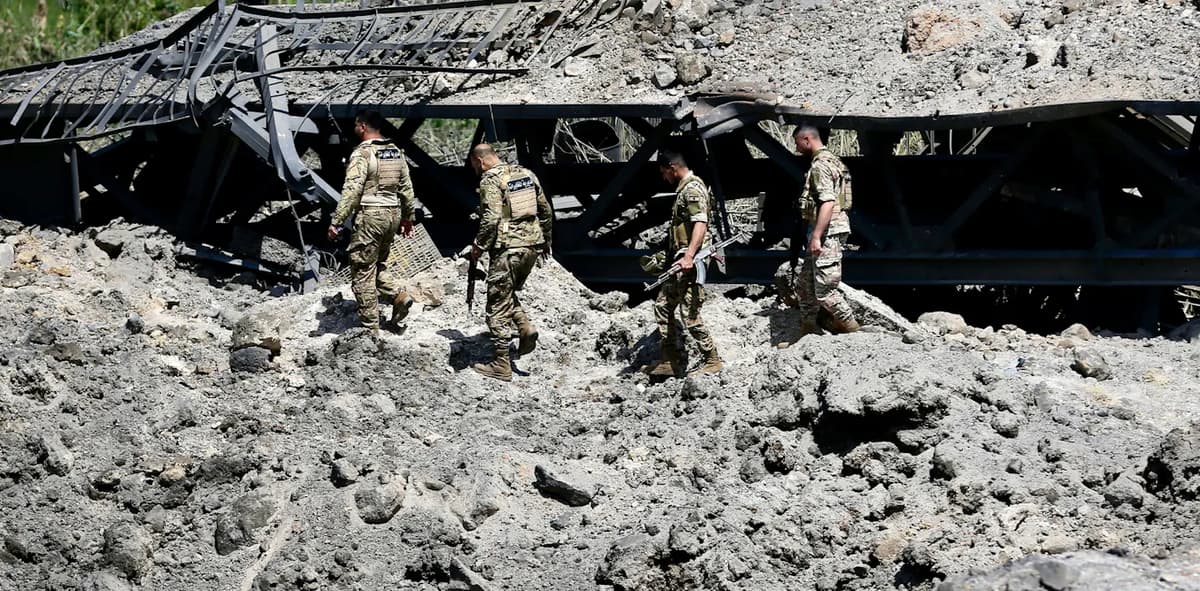
Why the Ceasefire in Lebanon Is Unlikely to Change Much on the Ground
Why It Matters
The fragile truce underscores Lebanon’s governance crisis and Israel’s strategic push for a buffer zone, shaping regional stability and the risk of renewed conflict.
Key Takeaways
- •Ten‑day ceasefire signed between Lebanon and Israel, Hezbollah’s participation unclear
- •Lebanese government seeks full Israeli withdrawal but lacks leverage over Hezbollah
- •Israel aims to keep a security zone up to 30 km border
- •Domestic opposition in Lebanon and Israel hampers any lasting peace treaty
- •Ceasefire likely to be fragile, with sporadic Israeli strikes continuing
Pulse Analysis
The newly announced ten‑day cessation of hostilities offers a brief window for diplomatic maneuvering, yet it arrives amid a humanitarian crisis that has displaced more than a million Lebanese citizens. Beirut’s administration is scrambling to provide shelter and restore basic services, while simultaneously attempting to curtail Hezbollah’s military influence after the March 2 ban on the group’s armed activities. This internal pressure amplifies the urgency of securing a durable pause in fighting, but the lack of Hezbollah’s explicit commitment casts a long shadow over any immediate de‑escalation.
From Israel’s perspective, the ceasefire is less a concession than a tactical interlude. Israeli officials have articulated a demand for a security buffer extending up to 30 km from the border, effectively institutionalising a presence deep within Lebanese territory. Such a zone would serve to deter future Hezbollah rocket launches but also entrenches Israel’s foothold, complicating any future withdrawal negotiations. The move reflects broader strategic calculations in the region, where Tehran’s backing of Hezbollah and Washington’s push for stability intersect with Israeli security doctrines.
Looking ahead, the durability of the truce hinges on three volatile factors: Lebanese domestic politics, Israeli cabinet divisions, and Hezbollah’s existential mandate. Public sentiment in Lebanon remains sharply split over any normalization with Israel, while Israel’s own leadership is divided between diplomatic overtures and hard‑line annexationist rhetoric. Without a credible mechanism to bring Hezbollah into the talks, the ceasefire is likely to lapse into a fragile status quo, leaving both sides poised for renewed clashes and the broader Middle East on edge.
Why the ceasefire in Lebanon is unlikely to change much on the ground
Comments
Want to join the conversation?
Loading comments...