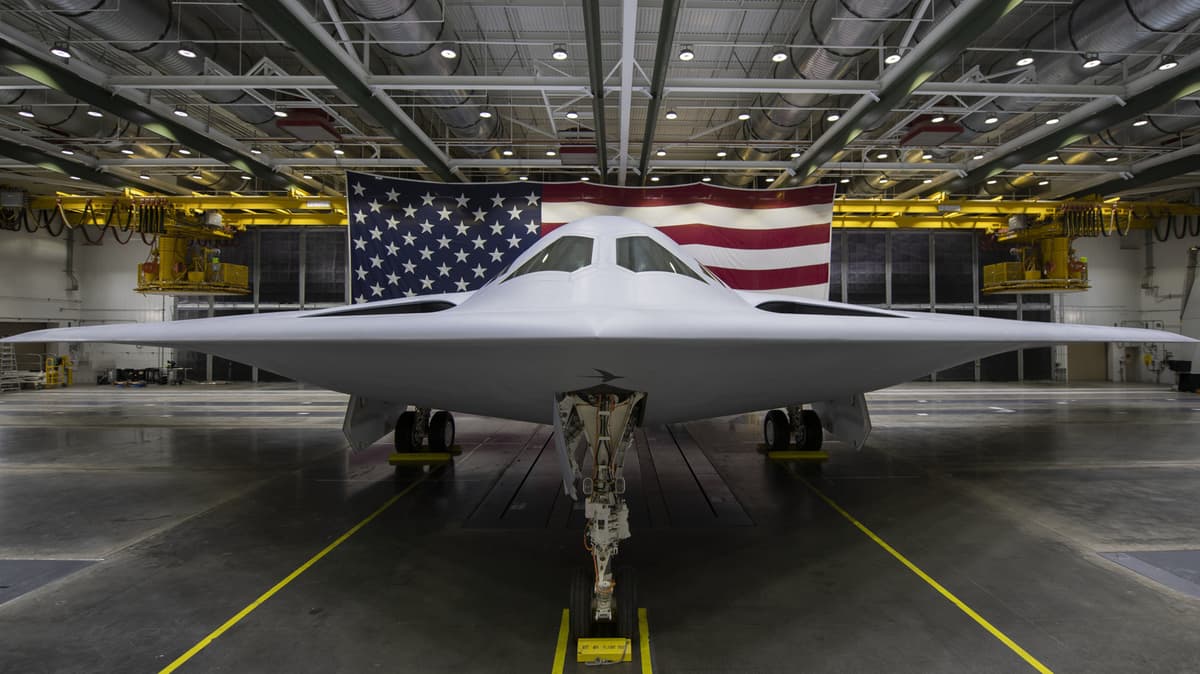
Why The Northrop Grumman B-21 Raider Is Smaller Than The B-2
Why It Matters
A smaller, less expensive stealth bomber lets the Air Force expand its long‑range strike capability without the prohibitive costs of the B‑2, strengthening deterrence and operational flexibility.
Key Takeaways
- •B‑21 wingspan ~140 ft, length ~55 ft, smaller than B‑2
- •Reduced radar cross‑section improves survivability in contested airspace
- •Unit cost $692 million, less than half B‑2’s $2.2 billion price
- •Air Force plans 100 Raiders, replacing 20 B‑2s and augmenting B‑52 fleet
Pulse Analysis
The B‑21 Raider reflects a shift in bomber design philosophy, where compactness and advanced materials replace the brute‑force approach of earlier stealth platforms. By shrinking the airframe, engineers have been able to embed engine inlets deeper within the fuselage and integrate next‑generation radar‑absorbing structures, resulting in a markedly lower radar cross‑section. This size reduction also simplifies maintenance and opens up more options for basing, as the aircraft can fit into a broader range of hardened shelters and forward operating locations.
Cost considerations drive much of the Raider’s appeal. At roughly $692 million per unit, the program delivers a modern stealth capability at a fraction of the B‑2’s $2.2 billion price tag, while still outperforming older platforms like the B‑1B Lancer, which cost about $317 million each in today’s dollars. The lower unit cost supports the Air Force’s goal of fielding up to 100 Raiders, a scale that would be financially untenable with the B‑2. Economies of scale, combined with a streamlined production line, promise faster delivery schedules and reduced lifecycle expenses, positioning the Raider as a cost‑effective cornerstone of America’s strategic bomber fleet.
Strategically, the Raider’s introduction reshapes the United States’ long‑range strike posture. Its enhanced stealth, coupled with a more affordable price point, allows for a larger, more dispersed fleet that can operate from diverse bases worldwide, complicating adversary air‑defense planning. The aircraft is poised to replace the aging B‑2 fleet entirely and to augment the venerable B‑52s, ensuring that the U.S. retains a credible, survivable deterrent well into the next decade. As peer competitors invest in hypersonic and anti‑access capabilities, the Raider offers a flexible platform that can integrate emerging weapons and sensors, keeping the Air Force ahead in the evolving high‑tech battlespace.
Why The Northrop Grumman B-21 Raider Is Smaller Than The B-2
Comments
Want to join the conversation?
Loading comments...