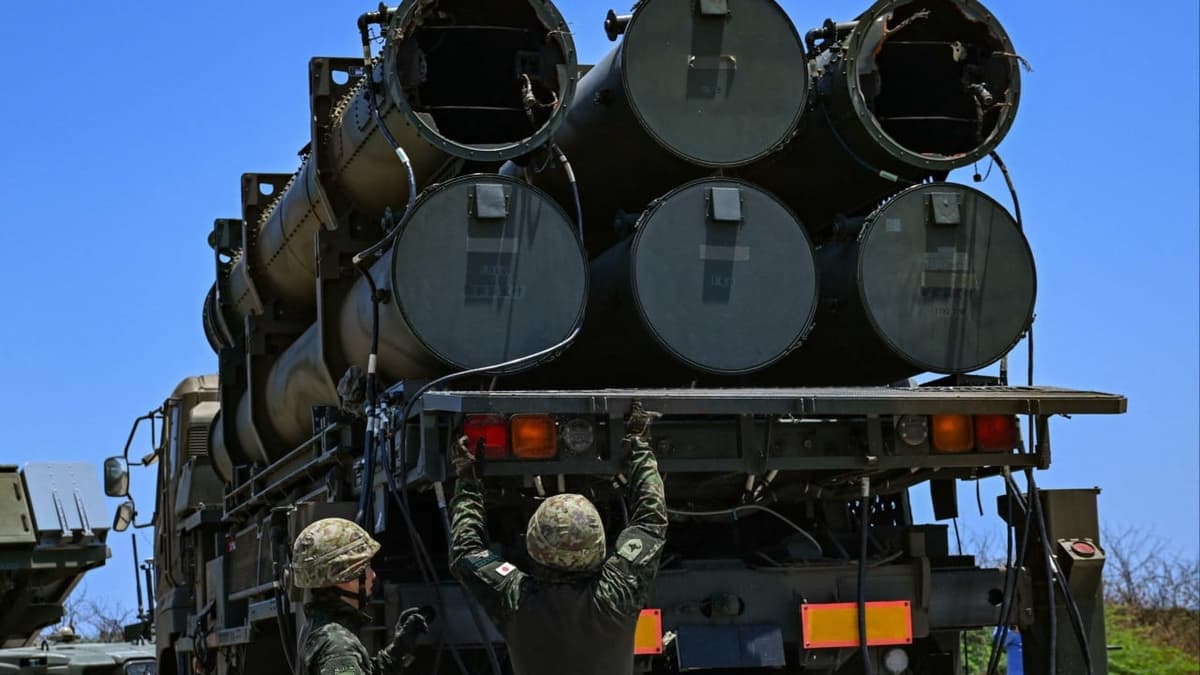
Why the Philippines Wants Japan’s Old Type 88 Missiles
Why It Matters
The transfer illustrates Japan’s pivot toward active defence exports, strengthening the Philippines’ anti‑ship capability and reshaping the strategic balance in the South China Sea.
Key Takeaways
- •Japan relaxed export rules, enabling Type 88 transfer to Philippines
- •Type 88 adds mobile, sea‑skimming capability to Manila’s arsenal
- •Enhances joint training with US and Japan during Balikatan drills
- •Signals Japan’s growing role in Indo‑Pacific security partnerships
Pulse Analysis
Japan’s decision to sell the aging Type 88 anti‑ship missile marks a watershed in its post‑war defence policy. After decades of strict export bans, Tokyo has opened its market to allies, allowing the Philippines—locked in a protracted dispute with China—to acquire a low‑cost, transportable missile system. Although the Type 88’s 100‑kilometre range pales beside the BrahMos supersonic missile already in Manila’s inventory, its sea‑skimming profile and quick‑deployment launchers provide a valuable layer of coastal denial for an archipelago of over 7,000 islands. The acquisition also dovetails with recent joint live‑fire drills at Balikatan, where Japanese crews demonstrated the missile from Philippine soil, offering Filipino operators hands‑on experience that is hard to replicate through simulations alone.
Beyond the hardware, the transfer signals a broader strategic realignment. Japan’s Reciprocal Access Agreement and talks on supplying Abukuma‑class destroyer escorts and TC‑90 maritime patrol aircraft suggest a deepening security partnership that extends past single‑system sales. For the regional defence market, this shift opens new revenue streams for Japanese manufacturers and encourages other nations to consider similar legacy‑system transfers as cost‑effective force multipliers. The Philippines, meanwhile, can augment its dispersed maritime posture without the hefty price tag of cutting‑edge missiles, freeing budget for larger platform acquisitions.
Analysts warn that the Type 88 alone will not deter a determined adversary, but its integration into a multi‑layered defence architecture enhances interoperability with U.S. and Japanese forces. By standardising training and tactics across allied platforms, the Philippines improves its situational awareness and response speed in contested waters. As Japan continues to recalibrate its security doctrine, further arms exports could become a staple of its foreign‑policy toolkit, reshaping the Indo‑Pacific’s defence economics and prompting neighboring states to reassess their own procurement strategies.
Why the Philippines wants Japan’s old Type 88 missiles
Comments
Want to join the conversation?
Loading comments...