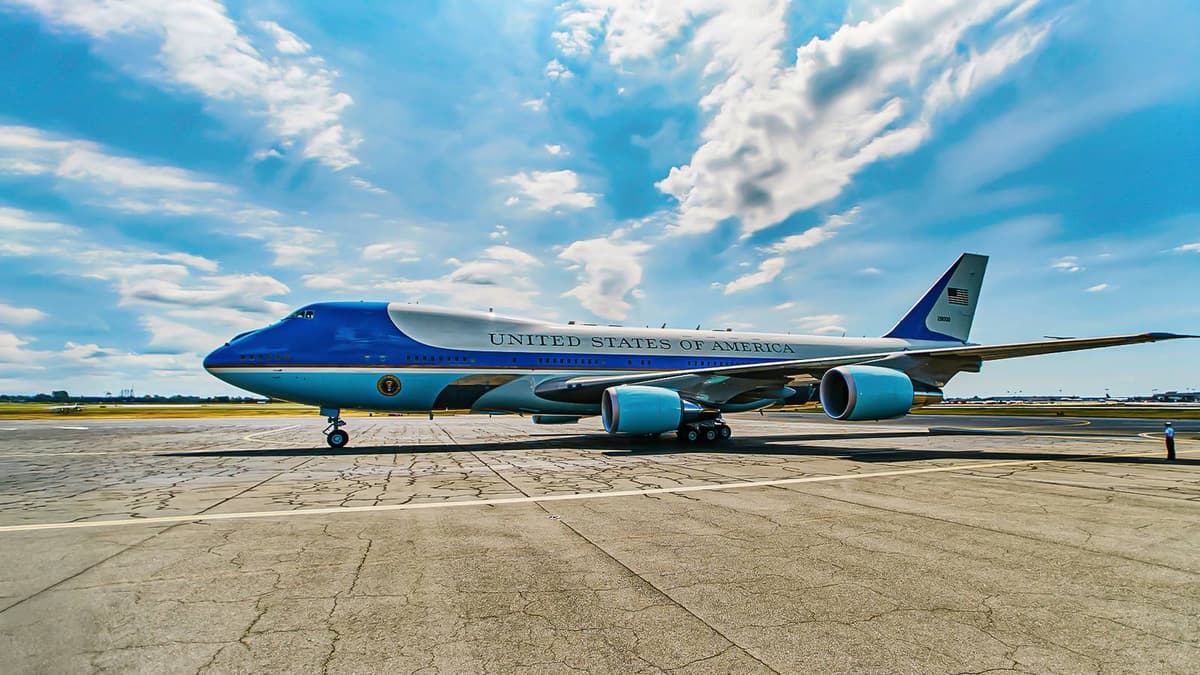
Why The US Air Force Still Uses Modified Boeing 747s For Presidential Transport
Companies Mentioned
Why It Matters
Presidential air transport is a mobile national command center; maintaining a reliable, domestically sourced platform is critical for continuity of government and U.S. strategic signaling. The high‑cost, delayed VC‑25B rollout underscores the challenges of modernizing legacy defense assets.
Key Takeaways
- •VC-25B replacements cost $3.9 billion, delivery 2028‑2029
- •Air Force acquiring ex‑Qatari 747‑8 as interim “bridge” aircraft
- •Four‑engine 747 offers redundancy crucial for command‑center role
- •Boeing sole US supplier after Lockheed, McDonnell‑Douglas exits market
- •Aging 747‑200s require costly maintenance, extending service life
Pulse Analysis
The Boeing 747’s dominance in presidential transport stems from its sheer size, four‑engine reliability and the ability to house a self‑contained command suite. Unlike the Airbus A380, which entered service after the market shifted toward twin‑jets, the 747 remains the only platform that can accommodate the extensive communications, defensive systems and staff required for a flying White House. Its versatility has also made it a workhorse for NASA and the Space Shuttle program, reinforcing its status as an aerospace workhorse.
The Air Force’s current modernization effort is a patchwork of new builds and second‑hand acquisitions. Boeing’s VC‑25B, a heavily modified 747‑8, is slated for delivery in the late 2020s at a price tag of $3.9 billion. To bridge the gap, the service has repurposed an ex‑Qatari 747‑8 and two retired Lufthansa 747‑8s, retrofitting them with secure communications and defensive suites. These interim aircraft, dubbed "bridge" assets, have already required a billion dollars diverted from other missile‑defense programs, highlighting the fiscal strain of maintaining a legacy fleet while awaiting next‑generation replacements.
Strategically, the reliance on a domestically produced, four‑engine jet sends a clear geopolitical message: the United States will not entrust its head of state to foreign manufacturers. With Lockheed and McDonnell‑Douglas no longer producing large airliners, Boeing remains the sole viable partner. The redundancy of four engines, combined with in‑flight refueling capability, ensures uninterrupted operation even under hostile conditions, a non‑negotiable requirement for continuity of government. As the VC‑25B program progresses, future discussions may explore hybrid or electric propulsion, but for now the 747’s proven platform continues to underpin U.S. presidential mobility and national security.
Why The US Air Force Still Uses Modified Boeing 747s For Presidential Transport
Comments
Want to join the conversation?
Loading comments...