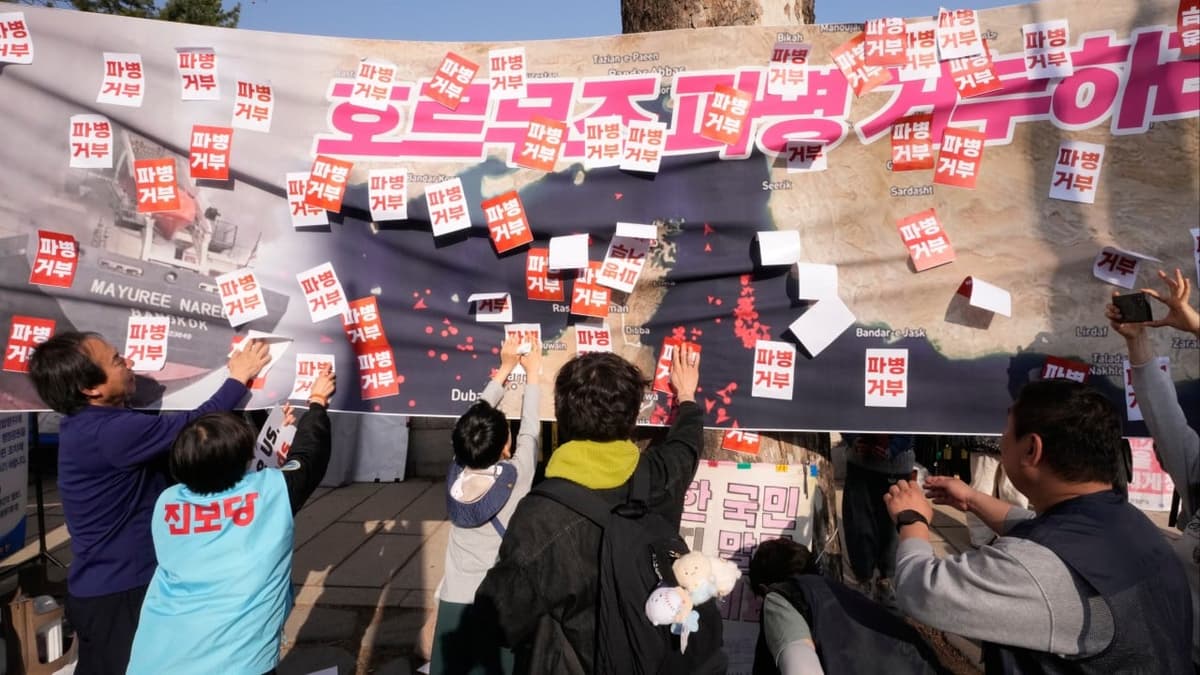
Why Trump’s Hormuz Rebuke Won’t Derail South Korea’s ‘Very Strong’ Alliance with US
Why It Matters
The dispute tests the durability of the US‑South Korea security pact and could ripple through regional stability and global energy markets.
Key Takeaways
- •Trump criticized Seoul for refusing Hormuz warship deployment
- •South Korea will send five merchant vessels to support oil routes
- •Alliance durability rests on institutional ties and elite public backing
- •US‑Korea troops count misrepresented; actual 28,500 soldiers stationed
- •Seoul must expand security role beyond Korean Peninsula
Pulse Analysis
The Hormuz crisis has thrust the US‑South Korea alliance into an unexpected spotlight. After Iran’s retaliation for US‑Israeli strikes blocked a chokepoint that moves roughly 20% of the world’s seaborne oil, Trump demanded that Seoul contribute naval assets. South Korea’s refusal sparked a public tirade, with the president inflating the U.S. troop presence in the peninsula and framing Seoul as a "money machine" for the cost of American forces. While the rebuke was sharp, the underlying strategic calculus remains rooted in the mutual defence treaty and shared concerns over regional security.
Despite the rhetoric, the alliance’s resilience is anchored in decades‑long institutional mechanisms. Joint military exercises, integrated command structures, and a network of working groups on trade, nuclear deterrence, and emerging technologies create a robust framework that outlasts individual leaders. Public opinion in both countries continues to favor the partnership, and other allies have shown little appetite for endorsing Trump’s unilateral approach to Iran. These factors collectively dampen the risk of a rupture, even as Washington’s Middle‑East posture creates friction.
Looking ahead, Seoul faces a dual challenge: managing U.S. expectations while expanding its own strategic horizon. The Korean government must balance the immediate pressure to support US‑led operations with a broader security agenda that includes countering China’s influence and securing energy supplies. By dispatching merchant ships to alternative routes and signaling willingness to keep Hormuz open, Seoul demonstrates a pragmatic, if cautious, contribution. This measured response may preserve the alliance’s core while allowing South Korea to negotiate a more autonomous role in regional geopolitics.
Why Trump’s Hormuz rebuke won’t derail South Korea’s ‘very strong’ alliance with US
Comments
Want to join the conversation?
Loading comments...