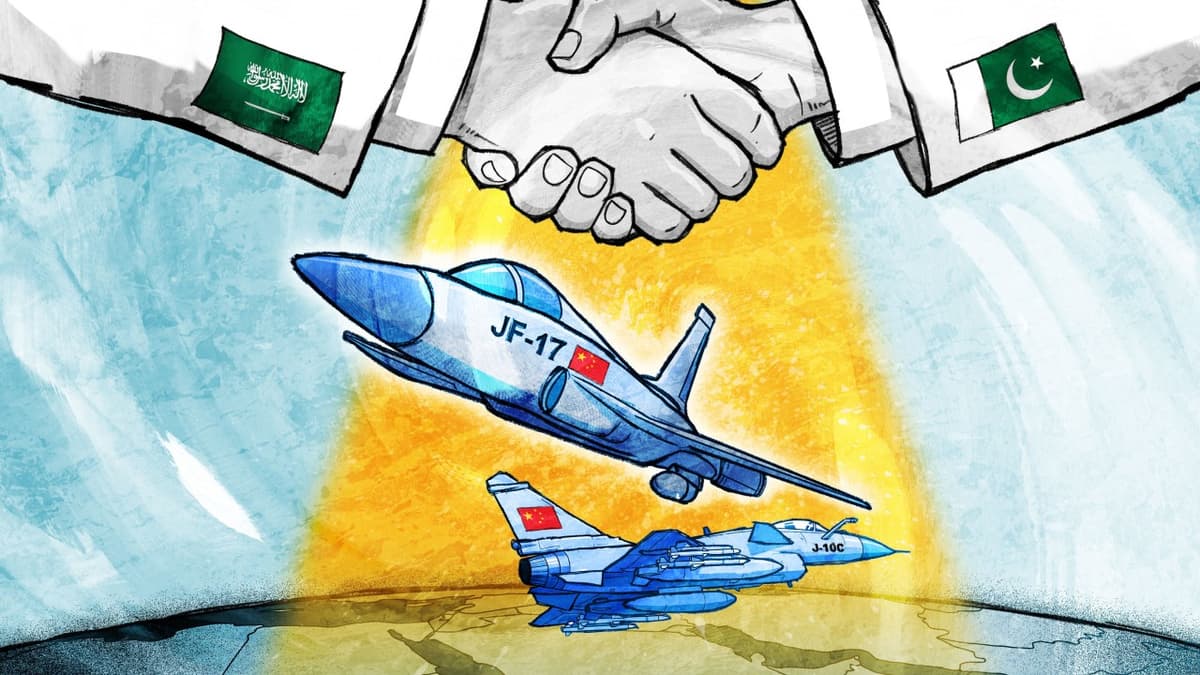
Will Pakistan’s New Defence Pact with Saudi Arabia Give Chinese Arms Risk-Free Exposure?
Why It Matters
The arrangement could grant China operational exposure to its defence hardware in the Middle East without committing its own forces, reshaping the regional balance of power and challenging US influence.
Key Takeaways
- •Pakistan, Saudi Arabia sign defence cooperation pact
- •Pact may channel Chinese weapons into Gulf via Pakistan
- •Gives China operational presence without direct combat risk
- •Raises US strategic concerns over regional arms balance
Pulse Analysis
The Pakistan‑Saudi defence pact marks a strategic pivot for Islamabad, elevating its role as a security bridge between Beijing and Riyadh. By formalising joint exercises and intelligence sharing, the agreement deepens Pakistan’s military integration with the Gulf kingdom, while simultaneously opening a pathway for Chinese arms to be stationed or operated from Pakistani bases. This indirect deployment model allows Beijing to showcase its weaponry—such as the JF‑17 fighter, HQ‑9 radar and various drone platforms—in a high‑visibility theater without exposing its forces to direct conflict, thereby mitigating political and reputational risk.
For China, the arrangement offers a rare opportunity to test and refine its defence systems in a real‑world environment that is traditionally dominated by US‑led coalitions. Access to Saudi airspace and maritime routes could enable Chinese manufacturers to secure lucrative export contracts and gather operational data, accelerating the maturation of next‑generation platforms. Meanwhile, Pakistan stands to benefit from upgraded capabilities and financial inflows, bolstering its defence budget and enhancing its strategic relevance in the Middle East. The pact also aligns with Saudi Arabia’s broader diversification strategy, seeking alternative suppliers to reduce dependence on Western arms.
Washington is likely to view the development as a direct challenge to its long‑standing security architecture in the region. The United States may respond with diplomatic pressure, increased arms sales to regional allies, or heightened naval presence to counterbalance any Chinese‑linked deployments. The pact thus underscores a growing multipolar contest for influence, where emerging partnerships can reshape procurement patterns, alliance structures, and the calculus of risk for all parties involved.
Will Pakistan’s new defence pact with Saudi Arabia give Chinese arms risk-free exposure?
Comments
Want to join the conversation?
Loading comments...