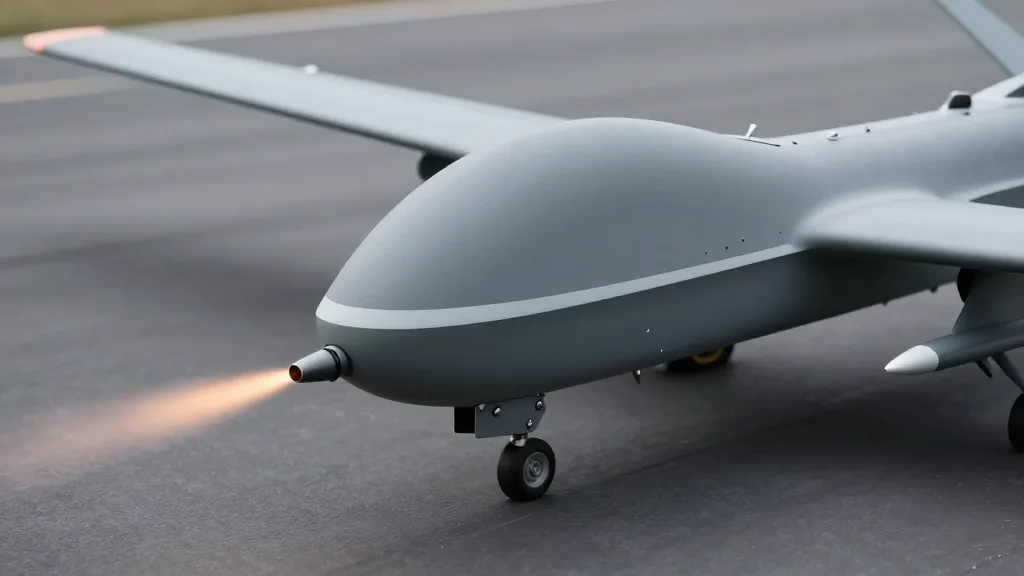
With the US Army Watching, Defense Industry Operators Turned a Logistics Drone Into a Flying Rocket Launcher
Why It Matters
Equipping logistics drones with weapons gives ground forces a low‑cost, low‑risk precision strike platform, expanding operational flexibility. It also aligns with Pentagon priorities for modular payloads and lessons learned from Ukraine’s drone‑centric warfare.
Key Takeaways
- •TRV 150 drone fired three 70mm APKWS rockets in test
- •Payload capacity 150 lb enables rapid switch between supply and strike
- •Autonomous targeting reduces crew workload and response time
- •Modular weapons meet Pentagon’s swappable‑payload directive
Pulse Analysis
The rise of autonomous logistics drones has reshaped how the Army thinks about battlefield support. Traditionally used to ferry ammunition, medical kits, and spare parts, platforms like the TRV 150 are now being evaluated for combat roles. At Fort Rucker, engineers paired the drone with BAE Systems’ Advanced Precision Kill Weapon System, a 70mm guided rocket already proven on Apache helicopters. By demonstrating three successful firings, the test proved that a payload‑heavy, "pickup‑truck" UAV can deliver precision fire without the overhead of a manned aircraft, opening new avenues for rapid, low‑signature engagements.
Technically, the TRV 150’s 150‑pound payload capacity and plug‑and‑play architecture enable quick reconfiguration between supply and strike missions. Its onboard autonomous flight computer handles target acquisition, route planning, and launch sequencing, dramatically reducing crew workload and response times. Compared with a helicopter, the drone offers a fraction of the operating cost and eliminates the risk to pilots, while still delivering the same 70mm APKWS munition that can engage soft targets, light vehicles, and fortified positions with high accuracy. The ability to fire from a stable hover or while in motion adds tactical flexibility for units operating in contested environments.
Strategically, the test reflects a Pentagon push for swappable payloads across all uncrewed aerial systems, a lesson reinforced by Ukraine’s extensive use of weaponized drones. Modular weapons allow commanders to tailor UAV capabilities to mission demands, terrain, and threat levels, reducing the need for multiple specialized platforms. As the Army integrates lethal options into its logistics fleet, procurement cycles may shorten, and force structures could evolve to rely more on autonomous strike assets. This shift promises to enhance expeditionary forces’ firepower while preserving personnel, signaling a new era of hybrid logistics‑combat UAVs in modern warfare.
With the US Army watching, defense industry operators turned a logistics drone into a flying rocket launcher
Comments
Want to join the conversation?
Loading comments...